Overview
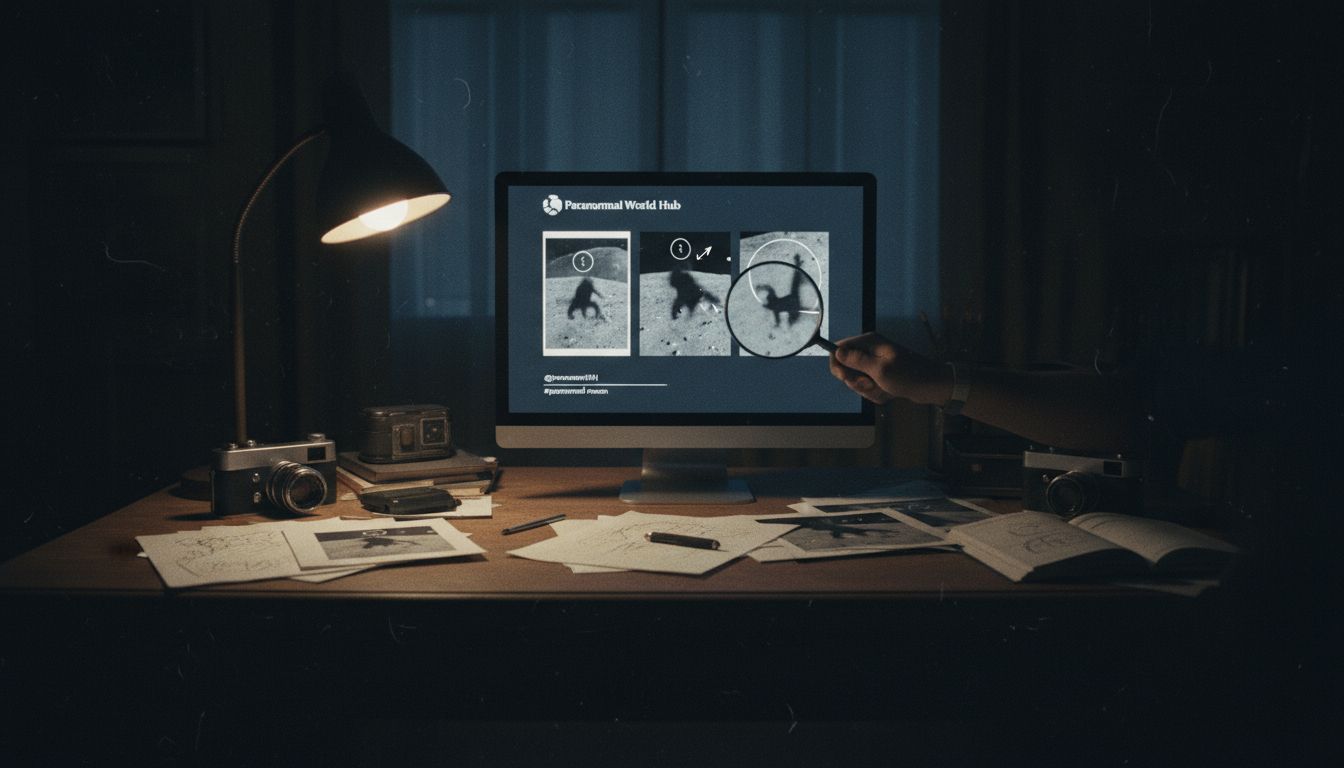
A recent paranormal-themed social media discussion has revived one of the internet’s recurring space-age mysteries: whether NASA’s Apollo 11 mission may have captured an image of a “lunar creature” on the Moon. The claim circulated through a post by @ParanormalWH, accompanied by the hashtags #paranormal and #moon, and appeared to reference an image or screenshot said to show something unusual in Apollo-era footage. However, the linked source itself now returns a 404 Not Found error, leaving the original context unverified and the underlying image unavailable for review.
The post fits into a familiar pattern seen across social platforms, where historic space imagery is periodically reinterpreted through a paranormal lens. Apollo 11, the first crewed Moon landing in 1969, remains a frequent target of speculation because its photographs and video footage are often low-resolution by modern standards, making them especially vulnerable to misreadings, optical distortions, and the human tendency to see patterns in ambiguous shapes. In this case, no credible evidence accompanies the claim, and the available source material does not identify what object or image allegedly shows a creature.
What the claim appears to be based on
Without the original image or supporting documentation, it is impossible to determine whether the post refers to a shadow, a rock formation, a camera artifact, or a cropped frame from lunar footage. That uncertainty is significant, because many viral “Moon anomaly” claims ultimately trace back to pareidolia — the psychological phenomenon in which people interpret random visual information as meaningful forms, such as faces, figures, or animals. In lunar photography, this is particularly common when high-contrast lighting and uneven terrain create silhouettes that can look strange when viewed out of context.
Apollo 11’s visual record has long been examined by historians, space enthusiasts, and skeptics alike. Yet the mission’s photography and video do not provide evidence of any biological entity on the Moon. NASA has consistently maintained that the Apollo missions were carefully documented and that the available imagery reflects the technical limitations of 1960s equipment, not hidden objects or unexplained lifeforms. Claims suggesting otherwise generally rely on isolated frames or edited images rather than original mission archives.
Broader context and why these claims persist
The renewed discussion also highlights how quickly speculative interpretations can spread when a striking image is detached from its source. A missing or inaccessible link, as in this case, makes verification harder and allows the claim to travel further than the evidence. Paranormal communities often treat such gaps as intriguing rather than problematic, while skeptics note that the absence of source material should be a warning sign, not confirmation of something extraordinary. In the age of social media, that distinction is often lost in the rush for engagement.
For now, the Apollo 11 “creature” claim remains unsubstantiated. The post from @ParanormalWH may have sparked curiosity, but the archived source no longer resolves what the image was, where it came from, or whether it shows anything more than a visual illusion. As with many viral space mysteries, the story says as much about the power of interpretation online as it does about the Moon itself.