Overview
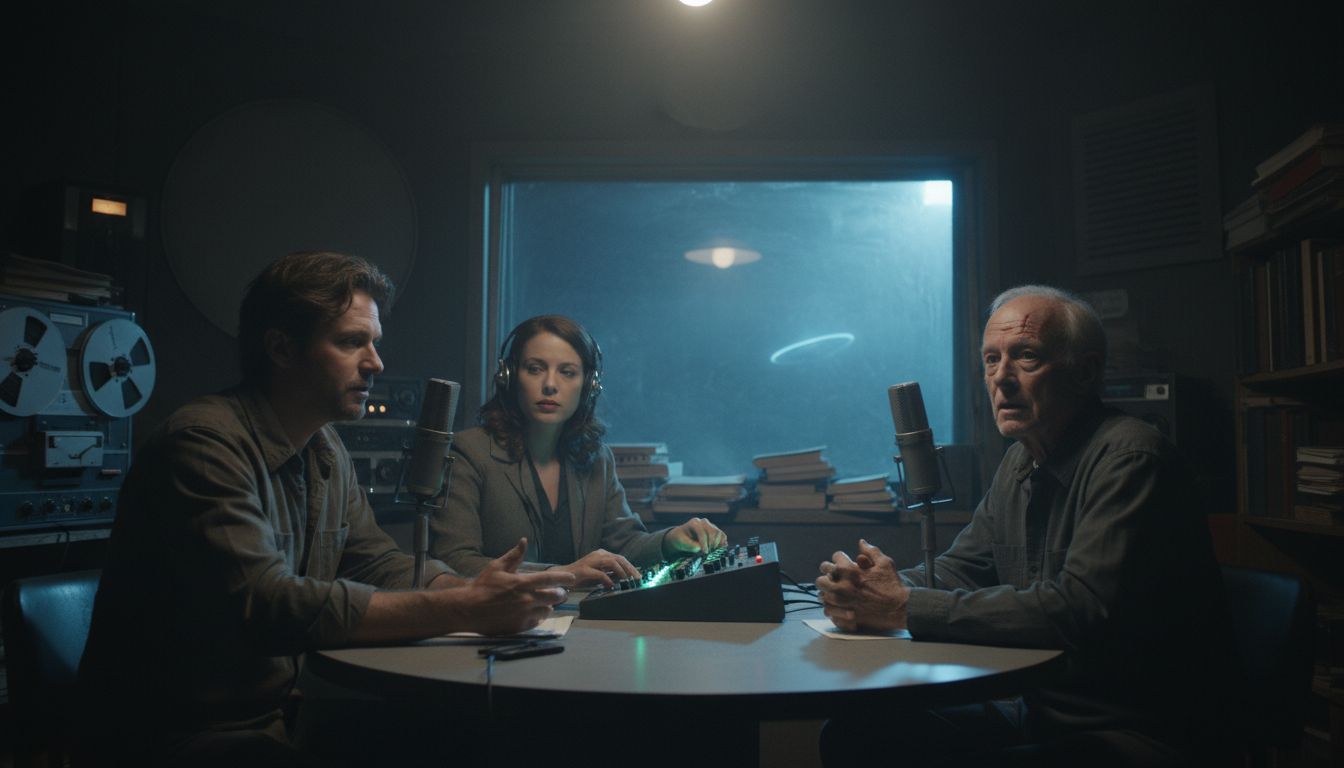
A long‑shelved interview with Jack Weiner, one of the four men who claim to have been taken aboard an unidentified craft during a 1976 canoe trip on Maine’s Allagash Wilderness, was aired for the first time on the UFO Talker podcast on Jan. 7, 2026. Host Michael Ryan and guest Bernie O’Connor, author of The Official History of Official UFO Magazine, introduced the recording, noting that it had never been released publicly despite the case’s prominence in ufology circles for five decades.
Background of the Allagash Incident
In the summer of 1976, Jack Weiner, his twin brother Jim, and friends Chuck Rak and Charlie Foltz set out on a multi‑day canoe expedition along the Allagash Waterway. While fishing on Eagle Lake, they reported a “very bright light” that hovered over the water. The men later recalled waking on shore with no memory of the intervening minutes. Decades later, under hypnosis, each participant described being taken aboard a metallic, low‑flying craft, examined by “non‑human entities,” and then returned to the lake. Their accounts were compiled by paranormal researcher Raymond Fowler in the 1990s, cementing the Allagash abductions as a classic case study.
The Never‑Aired Interview
The 2026 episode marks the first public broadcast of a 2008 interview conducted by Bernie O’Connor with Jack Weiner. In the conversation, Weiner recounts the original sighting and the subsequent hypnotic sessions that, he says, “filled in the blanks.” He emphasizes that the group’s memories “were consistent, down to the color of the lights and the layout of the interior.” The interview also references a polygraph test administered in the early 1990s, which the men passed, and a logger’s testimony from a nearby logging road who reported an unexplained bright object hovering over Eagle Lake that same night.
Evidence, Corroboration, and Controversy
While the Allagash case has been cited by researchers as a rare instance of multiple‑witness abduction with supporting physical evidence, it is not without dispute. In 2005, Chuck Rak publicly recanted parts of his story, suggesting that “memory distortion” and “group dynamics” may have influenced their recollections. Critics point to the reliance on hypnosis—a technique whose reliability is debated in scientific circles—and the lack of contemporaneous documentation beyond the logger’s brief report. Nonetheless, proponents highlight the polygraph results and the fact that all four men, aside from Rak’s later statements, have consistently maintained their narratives for over four decades.
Community Reaction and Ongoing Significance
The release of the interview has reignited discussion at recent UFO gatherings. At the Minnesota MUFON meeting, speaker Camille Harmon referenced the Allagash account as “a benchmark for multi‑witness consistency.” Similarly, the Swamp Gas UFO Conference scheduled for later this year lists the Allagash case in its program, underscoring its status as a “milestone in ufology.” Organizers note that the episode’s airing provides fresh material for scholars examining how memory, media, and investigative techniques intersect in UFO research.
Looking Ahead
As the UFO Talker episode circulates, researchers anticipate renewed scrutiny of the Allagash narrative, particularly in light of emerging standards for evaluating abduction claims. The podcast’s decision to finally share the unedited interview reflects a broader trend toward transparency within the UFO community, aiming to separate anecdotal intrigue from verifiable data. Whether the Allagash abductions will withstand future scientific analysis remains uncertain, but the case continues to shape the discourse surrounding unidentified aerial phenomena and the human experience of the unknown.