Overview
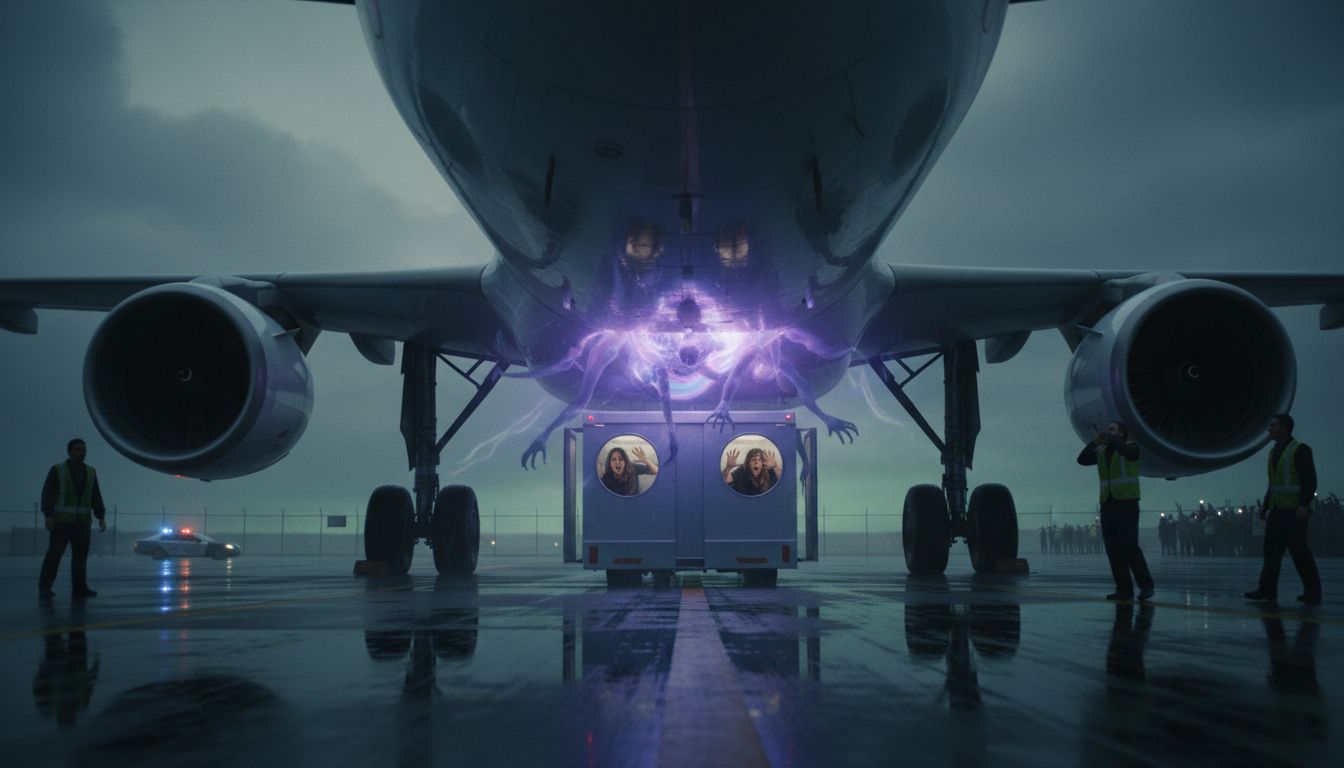
On January 13, 2026, passengers aboard an Air Canada flight reported hearing a series of high‑pitched screams that seemed to emanate from beneath the aircraft while it was taxiing on the runway at Toronto Pearson International Airport. The unexpected noises caused confusion and alarm among the travelers, prompting immediate speculation on social media that the sounds might be linked to an unidentified aerial phenomenon (UAP). Neither the airline nor Canadian aviation authorities have confirmed any link to a UFO, and both have launched formal investigations to determine the source of the disturbance.
Incident Details
The aircraft, a Boeing 777‑300ER scheduled for a trans‑continental flight to Vancouver, began its push‑back and taxi sequence at approximately 16:45 local time. According to several eyewitnesses, a “sharp, ear‑piercing scream” reverberated from the undercarriage area just as the plane entered the taxiway. “It was like someone was screaming right under the plane,” said Maria Lopez, a passenger seated in row 22. “For a few seconds we all looked at each other, wondering if something was wrong with the aircraft.”
Other passengers reported that the sound was brief, lasting no more than a few seconds, and that the flight crew continued normal procedures without any visible reaction. No visual phenomena—such as lights or objects—were reported by the cabin crew, and the aircraft completed its taxi, take‑off, and subsequent climb without further incident.
Official Response
Air Canada released a statement shortly after the incident, emphasizing passenger safety and the airline’s commitment to a thorough review. “We are aware of the reports of unusual sounds heard by some passengers during taxi. Our flight crew followed all standard operating procedures, and the aircraft performed normally throughout the flight,” the statement read. James McAllister, spokesperson for Air Canada, added, “We have opened an internal investigation and are cooperating fully with Transport Canada and the Canadian Transportation Safety Board (TSB).”
Transport Canada confirmed that it had been notified and would conduct its own assessment. Sandra Patel, a senior official with Transport Canada’s Aviation Safety Division, said, “Our priority is to ensure that any potential safety issue is identified and addressed. We will examine aircraft data recordings, crew reports, and any available audio evidence to determine the cause of the reported sounds.” The TSB, which investigates aviation accidents and serious incidents, noted that it had not yet been formally requested to open a probe but remains on standby.
Investigation & Context
Investigators will likely review the aircraft’s flight data recorder (FDR) and cockpit voice recorder (CVR) for any acoustic anomalies, as well as examine maintenance logs for recent work on the landing gear, hydraulic systems, or cargo door mechanisms. Similar reports of unexplained noises have appeared sporadically in aviation history—most often traced to mechanical sources such as hydraulic pressure releases, cargo door seals, or wind‑tunnel effects during high‑speed taxi.
The episode has also reignited public interest in UAPs, a topic that has received heightened attention since the U.S. Department of Defense de‑classified several sightings in 2020. However, experts caution against jumping to conclusions. Dr. Elaine Cheng, a professor of aerospace engineering at the University of Toronto, remarked, “While the public imagination is quick to associate mysterious sounds with extraterrestrial activity, the aviation industry has a long history of explaining such events through engineering and environmental factors.”
Outlook
As of now, no definitive evidence linking the incident to a UFO or any other external object has emerged. Air Canada and Canadian authorities have pledged to release preliminary findings within the next two weeks, pending analysis of the aircraft’s recorded data. Passengers who experienced the incident have been offered the option to submit written statements to aid the investigation.
The episode underscores the importance of transparent communication in aviation incidents, especially when unusual sensory reports arise. Whether the cause proves to be a mundane mechanical issue or something more enigmatic, the ongoing inquiry will help ensure that flight safety standards remain robust and that passengers receive clear, factual information about any anomalies they encounter.


