Overview
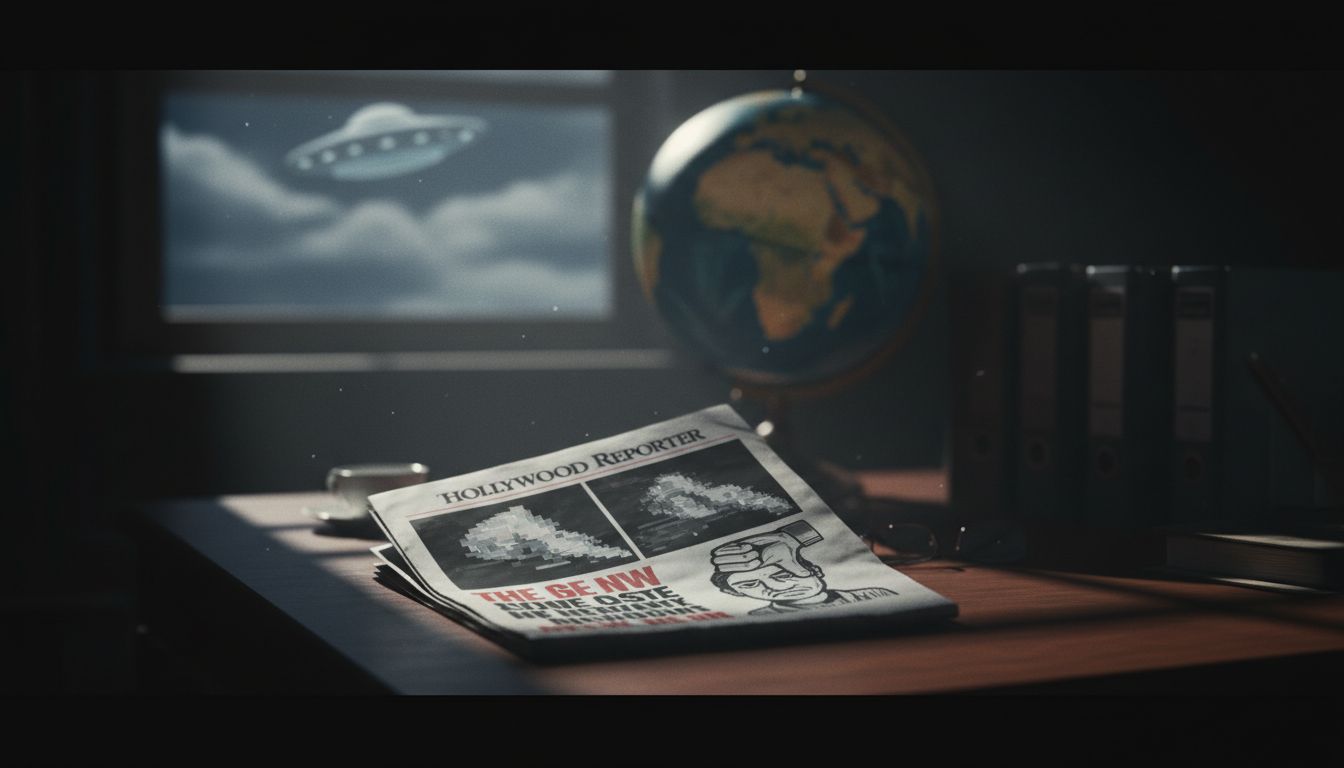
The Hollywood Reporter published a scathing commentary on the Department of Defense’s latest release of unidentified aerial phenomena (UAP) footage, declaring the videos “terrible” and urging the Pentagon to improve both production quality and transparency. The piece, titled “Pentagon, Do Better. Your UFO Videos Look Terrible,” reflects growing frustration among media outlets and the public that the government’s visual evidence of anomalous objects is being presented in a manner that undermines credibility.
What the Pentagon Released
On May 10, the Defense Department made public three additional UAP clips, joining the three declassified videos released in 2023 (the “FLIR,” “Gimbal,” and “GoFast” recordings). The new material, captured by Navy pilots during training exercises over the Atlantic and Pacific, shows fast‑moving lights and metallic‑shaped objects against a night sky. According to a DoD statement, the videos are “authentic recordings from operational platforms” and are being released to satisfy a congressional mandate for greater openness on the UAP issue.
While the Pentagon emphasizes that the footage is unedited and authentic, the clips are low‑resolution, suffer from heavy grain, and lack any contextual metadata such as altitude, speed, or sensor specifications. The agency has not provided a narrative explanation, leaving viewers with raw, jittery images that many observers find difficult to interpret.
Hollywood Reporter’s Critique
The Hollywood Reporter’s editorial team argues that the videos fall short of basic journalistic standards. “What we see are shaky, night‑vision shots that look like they belong in a low‑budget sci‑fi trailer, not a credible government briefing,” the article reads. The piece points out several production flaws:
- Poor lighting and contrast that obscure the shape of the objects.
- Excessive digital noise that creates visual artifacts, making it hard to distinguish genuine phenomena from camera glitches.
- Lack of framing or reference points, which prevents any reliable assessment of size or distance.
The article also criticizes the Pentagon’s decision to release the footage without accompanying analysis, noting that “the absence of expert commentary or even a basic fact sheet turns these releases into a guessing game for the public and the press.” By framing the videos as “movies,” the reporter suggests the Department is inadvertently feeding conspiracy narratives rather than fostering informed discussion.
Official Response
When contacted for comment, Pentagon spokesperson Lt. Col. Megan Hayes said the agency is “committed to transparency while also protecting operational security.” She acknowledged the visual limitations of the recordings, explaining that “the sensors used were not intended for cinematic quality; they are functional tools for pilots in real‑time threat environments.” Hayes added that the Department is working with the All‑Domain Anomaly Resolution Office (AARO) to develop a “standardized release protocol” that will eventually include higher‑resolution imagery, sensor data, and expert analysis.
A senior member of the Senate Armed Services Committee, Sen. James Morrison (R‑WA), echoed the call for better presentation, stating that “if the public is to trust the government’s assessment of these phenomena, we need clear, contextual evidence—not blurry clips that raise more questions than they answer.”
Implications for Transparency
The Hollywood Reporter’s condemnation highlights a broader tension between national‑security concerns and public demand for openness. Since the 2020 establishment of the UAP Task Force, the Pentagon has gradually declassified material, but the quality of that material has remained a sticking point. Analysts argue that without proper context—such as radar tracks, sensor specifications, and pilot testimonies—the footage cannot be meaningfully evaluated by scientists or the media.
Experts in aerospace imaging, like Dr. Lena Ortiz of the Air Force Research Laboratory, note that “modern infrared and electro‑optical sensors can produce high‑definition data, but the challenge lies in balancing classification levels with the desire to share.” Ortiz suggests that a “redacted but technically robust” data package would satisfy both security and scientific scrutiny.
Looking Ahead
The Hollywood Reporter’s editorial may spur the Pentagon to accelerate its efforts to produce more polished, data‑rich releases. As congressional oversight intensifies and public curiosity grows—fueled by recent mainstream media coverage and popular culture—government agencies face mounting pressure to deliver evidence that can withstand journalistic and scientific examination.
If the Department can pair clearer visuals with comprehensive technical documentation, it could shift the narrative from speculative “UFO movies” to a credible, evidence‑based discussion of UAPs. Until then, critics like the Hollywood Reporter will continue to call out what they see as “terrible” footage, reminding policymakers that transparency is only as effective as the quality of the information presented.


