Overview
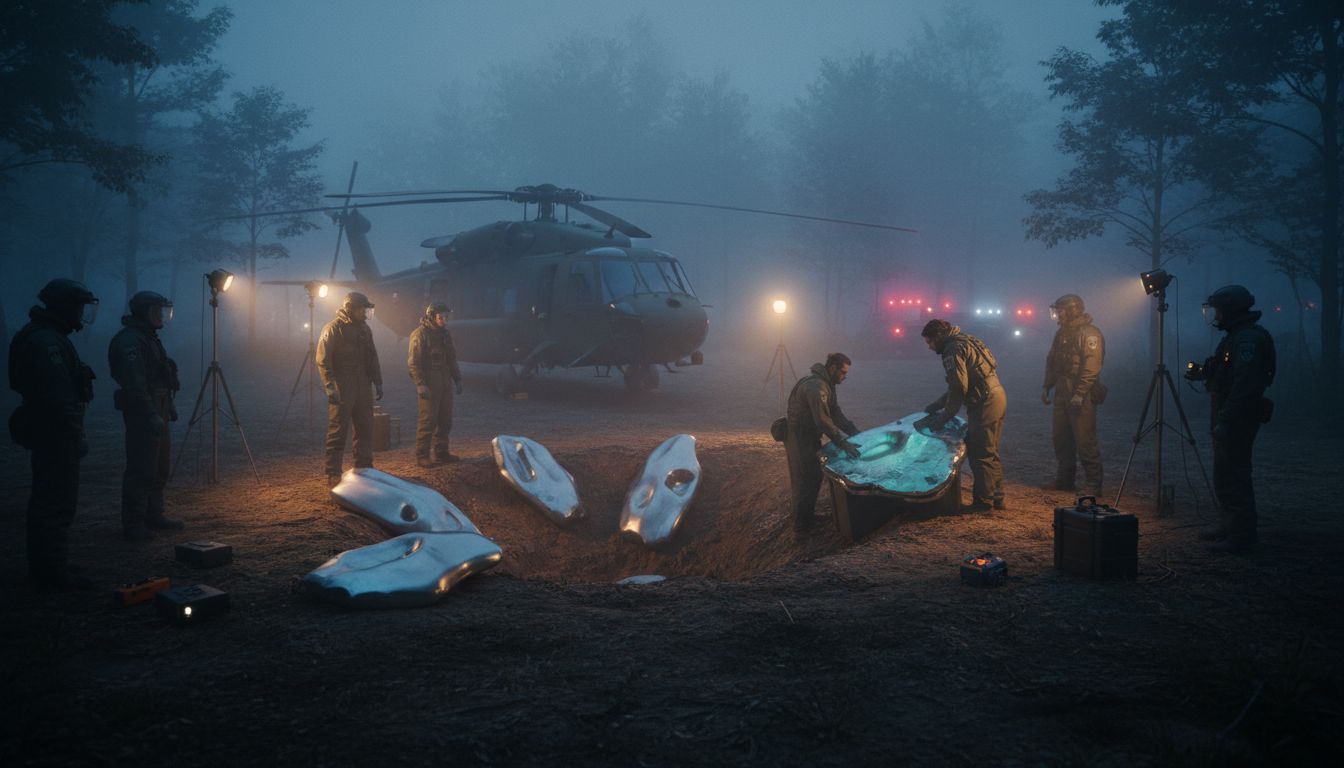
The Pentagon’s latest tranche of declassified Unidentified Anomalous Phenomena (UAP) files, released on May 8, 2026, includes a 1947 memorandum that details the recovery of unusual metal fragments in West Rindge, New Hampshire. The document, addressed to the Director of the FBI, describes cast‑iron particles that had been heated to a “significant degree” and were deemed inconsistent with conventional aircraft or train debris. Federal officials flagged the find as a potential security concern, noting that the fragments resembled components used in contemporary missile research in New Mexico. The memo, stamped “internal security,” was later marked “Copies Destroyed 27 Nov 1964,” underscoring its classified handling.
The 1947 West Rindge Memo
The July 7, 1947 note, reproduced in the Pentagon release, reads in part:
“The cast‑iron particles recovered at West Rindge appear to have been exposed to intense heat. Scientific review by a team at the Massachusetts Institute of Technology rules out origin from any known aircraft or rail vehicle. The pieces seem to be part of a hollow cylinder similar to those employed in missile research in New Mexico.”
The memo adds a handwritten annotation, “flying discs,” and records that the FBI’s Boston office intended to destroy the samples by August 1947 unless higher authority intervened. MIT’s involvement was described as “secret,” with the institute tasked to collect as many fragments as possible while keeping the investigation insulated from the Bureau’s knowledge.
Scientific Analysis and Security Implications
MIT scientists conducted metallurgical testing that confirmed the fragments were cast iron and exhibited surface oxidation patterns indicative of rapid, high‑temperature exposure. The analysis explicitly ruled out conventional sources such as aircraft engines or railway components, a conclusion that prompted the “internal security” designation.
While the memo references missile research in New Mexico, it stops short of linking the West Rindge pieces to any specific program. The document states, “There has been no speculation that a guided missile originating in a foreign land landed in New Hampshire.” Nonetheless, the combination of exotic material properties and the Cold War‑era secrecy surrounding missile development raised concerns that the fragments could represent a foreign technological test or an unreported domestic experiment.
Historical Context in New Hampshire
New Hampshire’s UFO record stretches back decades. The state gained national attention with the 1965 “Incident at Exeter,” when a teenager reported luminous objects performing coordinated maneuvers over the town. More famously, Betty and Barney Hill claimed an abduction in Franconia Notch in 1961, a case that continues to shape public perception of extraterrestrial encounters. A forthcoming exhibit at the Portsmouth Museum, slated for May 19, will spotlight the Hills’ story, illustrating the region’s enduring fascination with unidentified aerial phenomena. The West Rindge memo adds a tangible, physical artifact to this narrative, linking a Cold War‑era investigation to the broader cultural legacy.
Reactions and Next Steps
Federal officials have not disclosed any new investigative actions stemming from the West Rindge fragments, but the Pentagon’s release signals an ongoing effort to catalog and assess historical UAP evidence. A spokesperson for the Department of Defense said, “We are reviewing all declassified material to better understand past incidents and to inform current UAP reporting protocols.”
Academic experts caution against jumping to extraterrestrial conclusions. Dr. Elaine Ramirez, a professor of aerospace engineering at MIT, noted, “The data points to a high‑energy event involving known materials. Without additional context—flight logs, launch records, or eyewitness accounts—we cannot determine the source.” As the newly available files continue to be examined, scholars and the public alike will watch for any further revelations that might clarify whether West Rindge’s metal fragments were a relic of early missile testing, an anomalous atmospheric event, or something else entirely.


