Overview
A recently declassified Freedom of Information Act (FOIA) packet reveals that the Pentagon deliberately invited a small group of journalists it deemed “friendly” to attend a classified briefing on unidentified aerial phenomena (UAP). The documents, released by the National Archives in late January, show that the Department of Defense is not only tracking UAP incidents but is also actively shaping how the story is reported in the media. The briefing, held in early 2025, was limited to reporters with established contacts in the defense‑media community, underscoring the agency’s intent to manage the narrative while still providing limited access to information.
Background
Since the 2020 establishment of the All‑Domain Anomaly Resolution Office (AARO), the Pentagon has moved from a posture of secrecy to one of cautious openness. In June 2022, the intelligence community released an unclassified report acknowledging 144 UAP sightings by military personnel, a milestone that prompted congressional hearings and heightened public interest. However, officials have repeatedly warned that many details remain “classified to protect sources and methods.” The latest FOIA release adds a new layer, showing that the Pentagon’s outreach to the press is itself a controlled, selective process.
FOIA Findings
The FOIA documents include a briefing agenda, a list of invitees, and internal memos describing the selection criteria. According to a memorandum dated March 12, 2025, the Defense Department’s Public Affairs Office identified “journalists with a history of responsible reporting on defense matters and who have demonstrated a willingness to engage constructively with the DoD.” The memo explicitly uses the term “friendly journalists” to denote those who “are unlikely to sensationalize the material.”
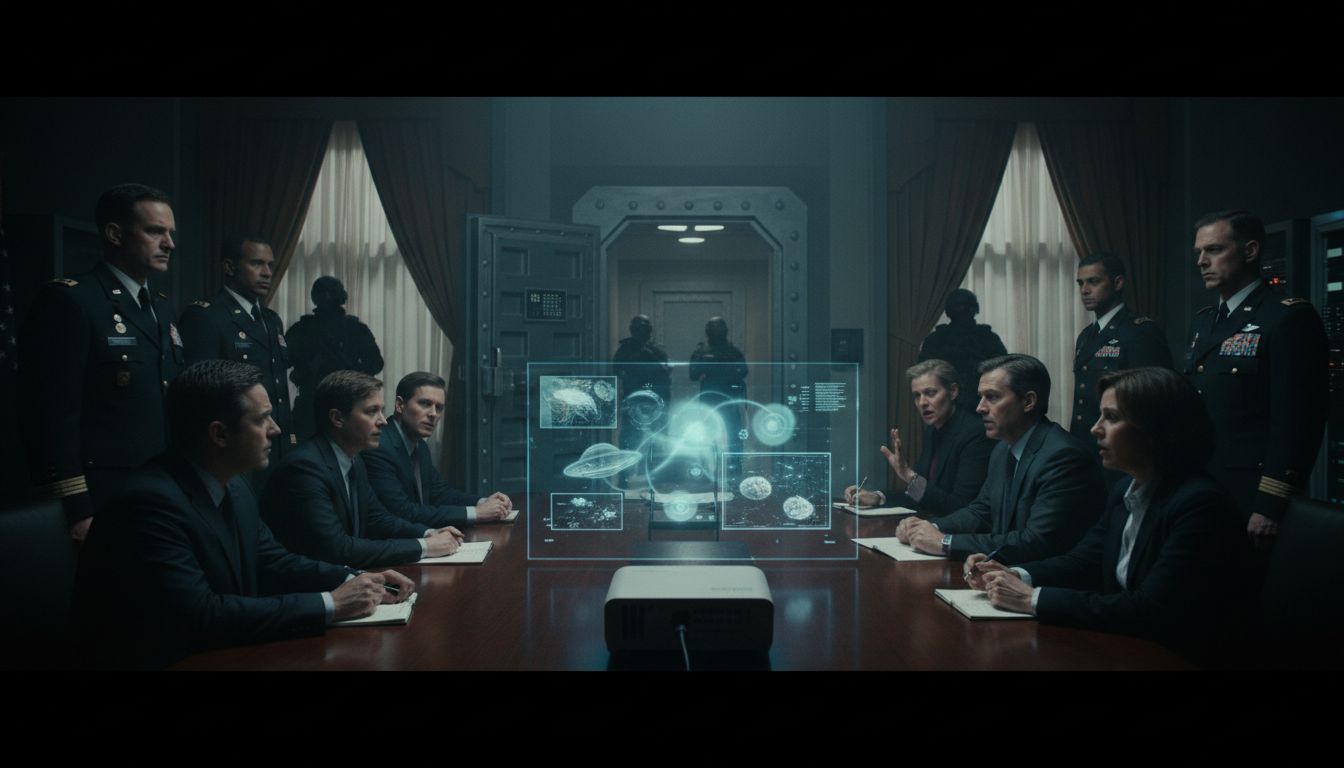
The briefing, held at the Pentagon’s AARO conference room, was attended by eight reporters from outlets such as The Wall Street Journal, BBC News, and The Intercept. Participants received a slide deck summarizing recent UAP incidents, data‑collection protocols, and the department’s ongoing partnership with the Office of the Director of National Intelligence. The briefing was classified at the “Secret” level, and attendees were required to sign non‑disclosure agreements. No audio or video recordings were permitted, and the documents note that “questions will be vetted by AARO staff before being answered.”
Reactions
Journalists who were invited described the experience as “informative but tightly scripted.” The Intercept reporter Maya Patel, who attended the session, told us, “The Pentagon provided a clear picture of what they know, yet the constraints on follow‑up questions were evident.” By contrast, media watchdog groups such as the Reporters Without Borders UK chapter expressed concern. “When the government labels journalists as ‘friendly,’ it raises red flags about editorial independence and the public’s right to full disclosure,” said RWB spokesperson Liam O’Connor. A senior congressional aide, who requested anonymity, noted that the briefing “could be a double‑edged sword—helpful for oversight but potentially limiting broader scrutiny.”
Implications for Transparency
The revelation that the Pentagon curates its media outreach highlights the ongoing tension between national‑security secrecy and democratic transparency. Proponents argue that selective briefings protect sensitive information while still informing the public, whereas critics contend that such gatekeeping may impede independent journalism and fuel speculation. The FOIA release may prompt lawmakers to demand clearer guidelines for media engagements on UAP matters, possibly leading to legislative proposals that require the Defense Department to disclose the criteria used for selecting journalists. As the UAP issue moves from fringe curiosity to a mainstream security concern, the balance struck by the Pentagon in the coming months will shape public trust and the future of government‑media relations on this enigmatic topic.