Overview
A Cybernews report says the Pentagon’s UFO office attempted to persuade retired Navy rear admiral Tim Gallaudet that the famous “Tic Tac” UAP seen by Navy pilots in 2004 may have been U.S. military technology rather than something unexplained. Gallaudet, who has emerged as a public voice in the UAP debate, described the encounter as an “influence operation” during an appearance on The Good Trouble Show with Matt Ford. The account adds a new layer to the long-running dispute over the object, which has become one of the most cited cases in modern UAP history.
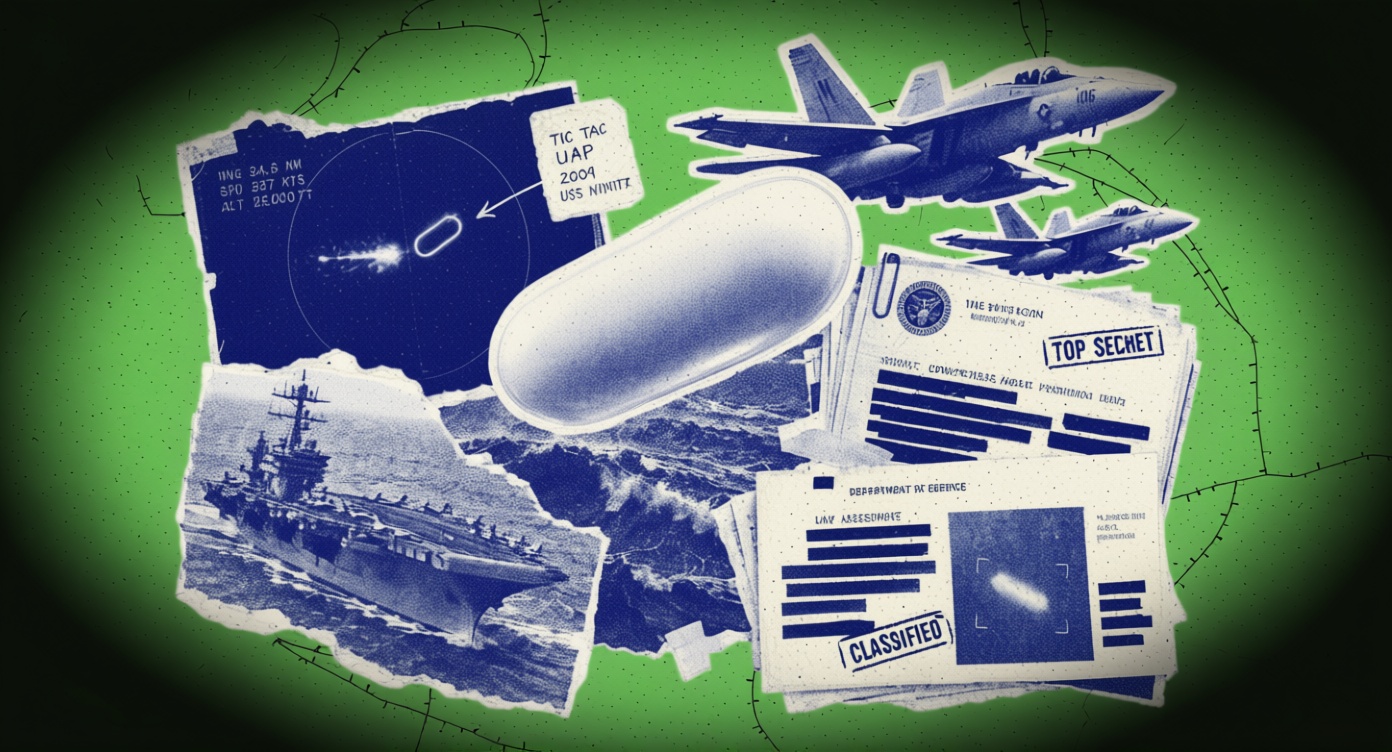
The Tic Tac incident refers to the 2004 sighting by pilots from the USS Nimitz strike group, who reported a white, oblong object moving in ways they could not explain. Over the years, the case has been used by both skeptics and advocates: skeptics point to the possibility of classified aerospace programs, while others argue the performance and behavior described by witnesses remain difficult to reconcile with known aircraft. According to Gallaudet, the Pentagon’s All-domain Anomaly Resolution Office (AARO) leaned into the first explanation.
What Gallaudet Says Happened
Gallaudet said the meeting with AARO acting director Tim Phillips was initially scheduled for 90 minutes but stretched to roughly two and a half hours. He described the conversation as beginning with unrelated topics, including the U.S. withdrawal from Afghanistan, before shifting to UAP policy and criticism of AARO’s historical report by former defense official Chris Mellon. Gallaudet recalled Phillips dismissing Mellon bluntly, saying he was “full of shit,” and emphasizing his own counterintelligence background.
From Gallaudet’s perspective, that moment marked the point where the discussion turned from briefing to persuasion. He said officials began pressing the idea that the Tic Tac could have been secret American technology, and that the conversation continued even as he was leaving Phillips’ office. “I think that was the bit, that was the whole beginning of the rest of the meeting, that was attempting to basically turn me and my thoughts,” Gallaudet said, according to the report. The implication, he suggested, was that the Pentagon was trying to shape his view of the case rather than merely inform it.
The Broader UAP Debate
The allegation lands in the middle of an already contentious debate about how the U.S. government handles UAP sightings. AARO was created to investigate reports across military and civilian channels, but it has also faced criticism from lawmakers, whistleblowers, and former officials who say the office has not been sufficiently transparent. In that environment, claims that an intelligence or counterintelligence mindset is being used to explain away famous encounters are likely to draw significant attention.
At the same time, Gallaudet was careful to frame his account as his interpretation, not definitive proof of a coordinated disinformation campaign. That distinction matters. His criticism is not that he can prove a cover-up, but that the explanation offered to him did not make operational sense. As he put it, it seems implausible that revolutionary military technology would remain hidden from battlefield use for nearly two decades if it were truly in U.S. hands.
Why It Matters
The episode underscores a familiar tension in UAP reporting: whether extraordinary sightings reflect classified technology, misidentification, or genuinely unexplained phenomena. The Tic Tac case remains powerful precisely because it sits at the intersection of all three possibilities. For skeptics, the Pentagon’s approach could be an attempt to keep public discussion grounded in plausible national security explanations. For advocates of greater disclosure, it can look like another example of officials steering witnesses away from the unknown.
What Gallaudet’s account shows most clearly is that the debate is still far from settled. Even two decades after the original sighting, the Tic Tac remains a flashpoint in the larger struggle over what the U.S. knows, what it is willing to say, and whether the public can trust official explanations when the evidence is still incomplete.