Since its invention in the 1830s, photography has been employed not only to document the material world but also to chase what lies beyond the lens. The Walker Art Center’s current exhibition, accompanied by a series of richly illustrated essays titled Photography and the Invisible, revisits that long‑standing fascination. Curated by photographer and author Shannon Taggart, the project surveys how photographers have tried to capture ghosts, dreams, psychic phenomena and even the human soul, positioning those efforts alongside contemporary artistic practice and scientific inquiry.
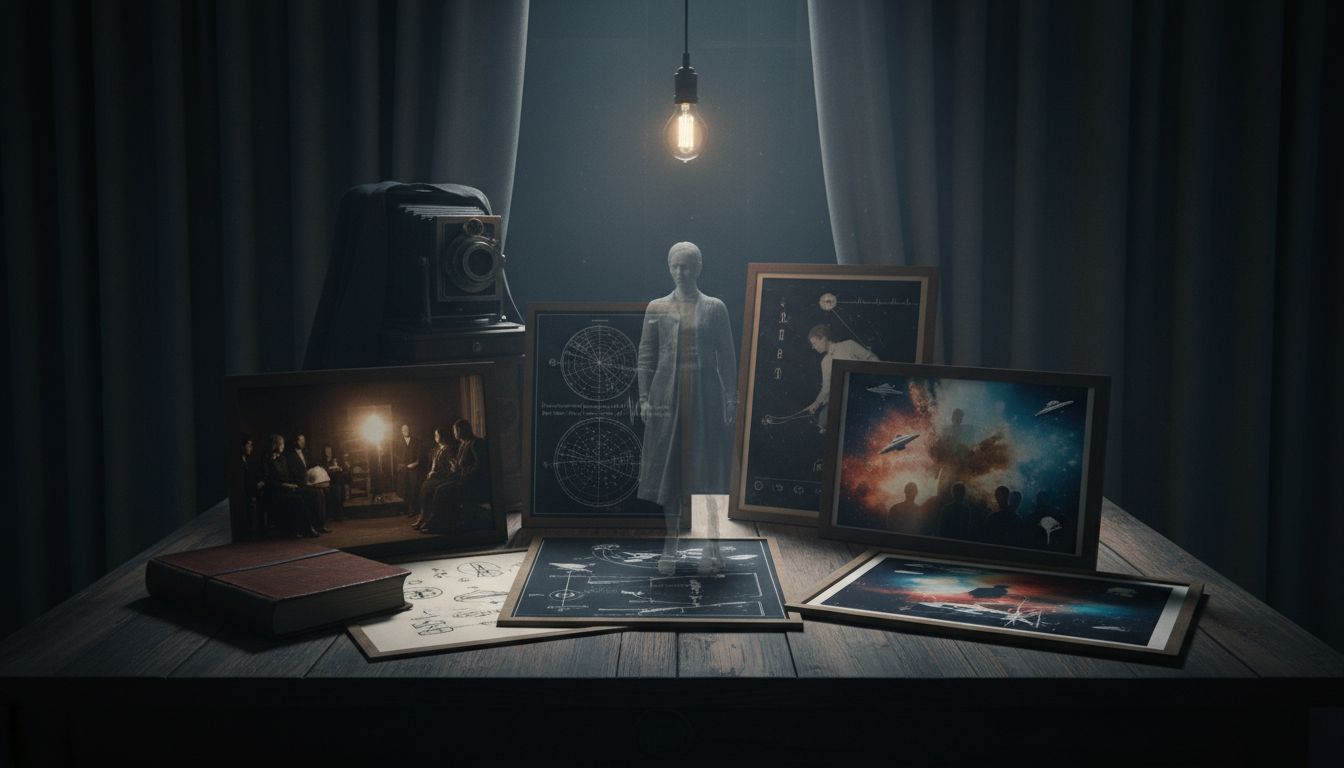
Taggart’s introductory essay, “Every Picture is a Ghost,” traces the roots of spirit photography to the late‑19th‑century spiritualist movement, when séances and “psychic photography” were mainstream curiosities. Early practitioners such as William H. Mumler claimed to reveal departed loved ones on glass‑plate negatives, a claim that provoked both public enthusiasm and legal challenges. “The camera became a conduit for the unseen, a device that could give material form to belief,” Taggart writes, noting that the period’s newspapers were filled with both skeptical exposés and earnest testimonies. By foregrounding this history, the essay argues that contemporary interest in the invisible—whether in the form of augmented‑reality filters or data visualizations— echoes the same impulse to make intangible experience visible.
The second installment, “Psychic Possibilities: Spirit Photography in the 20th Century and Beyond,” moves the narrative forward to post‑war America, where the medium intersected with avant‑garde experimentation. Taggart highlights a Chicago bellhop who allegedly projected images onto film using only his mind, a story that underscores how personal mythmaking continued to shape photographic practice. The essay also surveys the rise of Kirlian photography in the 1970s, a technique that records electrical coronas around objects and was quickly co‑opted by paranormal investigators as evidence of “auras.” While scientific explanations attribute the effect to moisture and voltage, the visual allure of glowing outlines kept the method alive in both fringe and mainstream circles.
A third essay, “Can You Imagine Anything Better?,” situates spirit photography within the broader context of conceptual art. In conversation with gallerist Christine Burgin, Taggart examines how artists such as Hilma af Klint, whose abstract, theosophical paintings pre‑date abstract expressionism, and the West Coast conceptualists of the 1970s have used photographic processes to question the limits of perception. Burgin points out that “the act of photographing the invisible is itself a conceptual gesture—it asks viewers to confront what is omitted as much as what is shown.” The discussion also references Jackie Gleason’s private library of paranormal material, illustrating how collecting and curating “unseen” artifacts can become an artistic statement.
Beyond historical survey, the Walker exhibition uses the essays as a framework for a series of installations that blend archival prints, contemporary photographs, and interactive displays. One room features a darkroom‑style setup where visitors can experiment with long‑exposure techniques that historically produced “orbs” and other ambiguous forms. Another installation invites participants to generate Kirlian images of everyday objects, prompting reflection on how scientific instrumentation can be repurposed for aesthetic inquiry. According to Taggart, the goal is not to validate supernatural claims but to “expose the cultural circuitry that links belief, technology and visual culture.”
By weaving together archival research, artist interviews and hands‑on experiments, Photography and the Invisible offers a measured look at a persistent thread in photographic history. It reminds readers that the desire to see the unseen is as much a cultural and artistic concern as it is a scientific one, and that the camera—whether analog or digital—continues to serve as a bridge between the observable world and the mysteries that lie just beyond its reach.