Overview
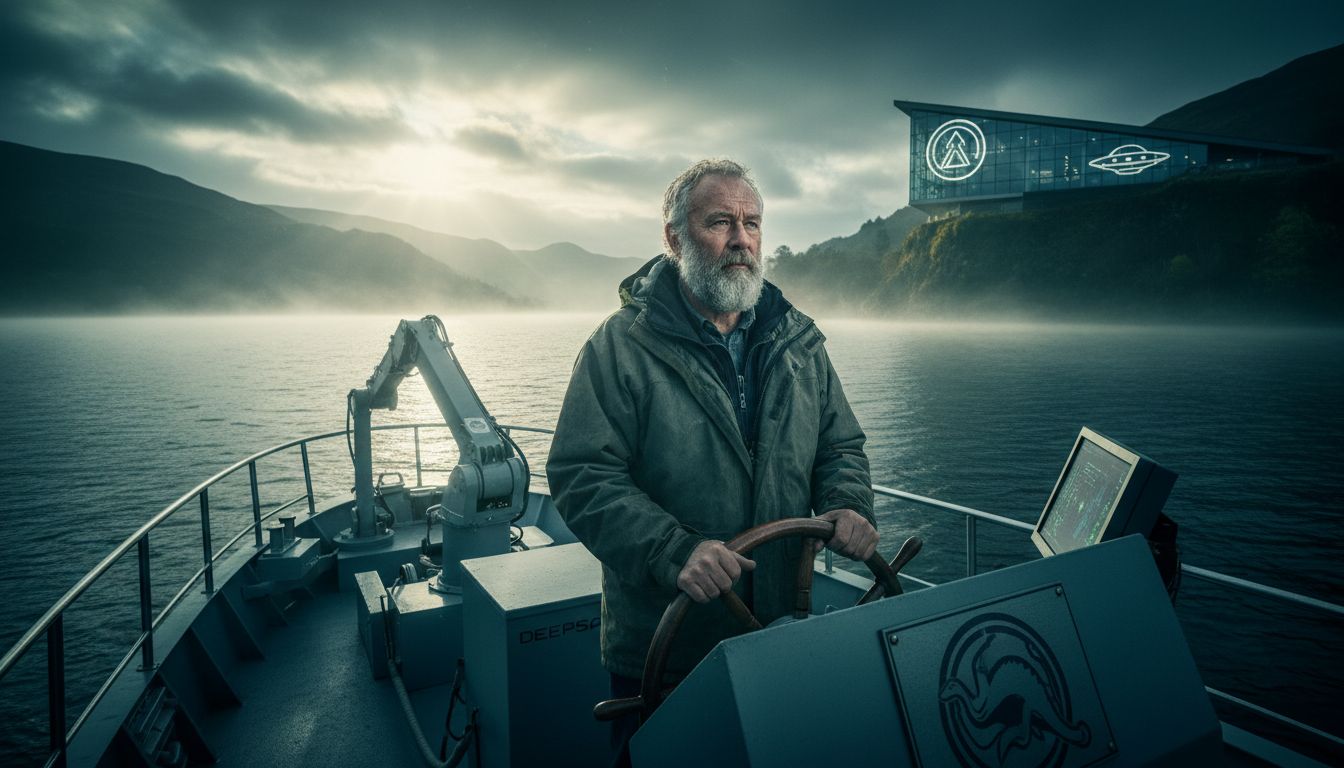
The Loch Ness Centre announced on 29 July 2025 that veteran outdoor instructor Steve Glew has been appointed skipper of its research vessel Deepscan. Glew, a lifelong Nessie enthusiast who has piloted boats on the loch since 2003, joins a team that blends tourism with scientific investigation. The centre highlighted his recent personal encounter with an unexplained surface anomaly and paired the news with a reference to Captain Alastair Mackintosh’s 1961 memoir, which recounts a near‑miss sighting of the legendary creature. Together, these elements underscore the centre’s ongoing effort to balance folklore with empirical study.
New Skipper and Recent Sighting
Glew’s maritime résumé spans more than three decades, including qualifications as a Powerboat Instructor (2003) and Advanced Powerboat operator (2004). While operating a speedboat on the loch’s southern side on a calm, sunny morning, he reported an “unusual wave off the port side” that revealed “classic humps” emerging and disappearing repeatedly. Glew captured a photograph of a “distinct, dark mass rising from the surface,” which he believes may have been a glimpse of the monster.
“Suddenly, the classic humps emerged from the water, then vanished, only to resurface a few more times. I quickly grabbed my phone and managed to get an image of what looked like a distinct, dark mass rising from the surface. To this day, I believe I caught a glimpse of the monster itself,” Glew said.
General Manager Nagina Ishaq praised Glew’s “authentic connection to the legend” and his “deep knowledge of the loch,” noting that his presence adds “a fresh dose of energy and excitement” to the Deepscan experience. The vessel, equipped with modern sonar and imaging tools, now benefits from Glew’s hands‑on familiarity with the water’s subtle currents and potential hotspots for anomalous activity.
Historical Context: Mackintosh’s 1961 Memoir
The centre’s announcement also referenced Captain Alastair Mackintosh’s 1961 memoir, a primary source in Nessie scholarship. Mackintosh, a former Royal Navy officer turned loch skipper, documented a “near‑miss” where his vessel’s wake revealed a large, undulating form that vanished beneath the surface within seconds. Historians regard the memoir as one of the earliest first‑hand accounts that contributed to the post‑World‑War II surge in Nessie reports. By juxtaposing Glew’s modern sighting with Mackintosh’s decades‑old narrative, the centre highlights both continuity and evolution in eyewitness testimony, prompting renewed scrutiny of archival material alongside contemporary data.
Centre’s Research Approach
The Deepscan cruise blends public engagement with systematic data collection. Guests are guided through sonar sweeps that map the loch’s bathymetry, while onboard scientists record acoustic signatures and water‑column parameters. The centre recently deployed a “weeHoloCam”—a compact holographic imaging system—aimed at capturing three‑dimensional reconstructions of any anomalous objects detected below the surface. Ishaq emphasized that “we’ve still only dipped our toe into the mysteries that lie beneath the waters of the loch,” stressing a commitment to incremental, peer‑reviewed research rather than sensational claims.
Looking Ahead
With Glew at the helm, the Loch Ness Centre plans to expand its seasonal Deepscan program, offering more frequent expeditions and collaborative opportunities for university marine‑biology departments. The centre’s dual focus on tourism and scientific rigor positions it uniquely to gather long‑term datasets that could either substantiate or refute the existence of an unidentified large aquatic entity. As Glew remarked, “I hope Deepscan continues to break new ground in exploring the place we live and work. There are still secrets waiting to be discovered.” Whether those secrets involve a living creature, geological phenomena, or simply the power of myth, the centre’s methodical approach ensures that future discussions remain grounded in evidence.