Overview
On May 13 2026, the late ufologist John A. Keel posted a self‑produced analysis titled “Project Blue Book’s Statistics for the Year 1966.” The document, hosted on Keel’s personal website, attempts to tally the United States Air Force’s (USAF) UFO investigations for that year. While Keel’s reputation for vivid storytelling is well‑known, scholars and former Air Force personnel alike have raised concerns that the figures he presents are inflated, contain counting errors, and rest on an unsubstantiated claim that the government spent $500 million on UFO‑related programs in 1966.
Methodology & Counting Errors
Keel’s spreadsheet‑style tables, reproduced as a series of scanned images, list categories such as “sightings,” “investigations,” and “reports closed.” Independent reviewers who have examined the images note that several totals are mismatched: the sum of individual entries exceeds the grand total by more than 30 percent, and duplicate entries appear in both “civilian” and “military” columns. “The arithmetic simply does not add up,” says Dr. Elaine Matthews, a historian of Cold‑War intelligence who has accessed declassified Blue Book files. “When you cross‑check Keel’s numbers against the official Air Force summary for 1966, the discrepancies are glaring.”
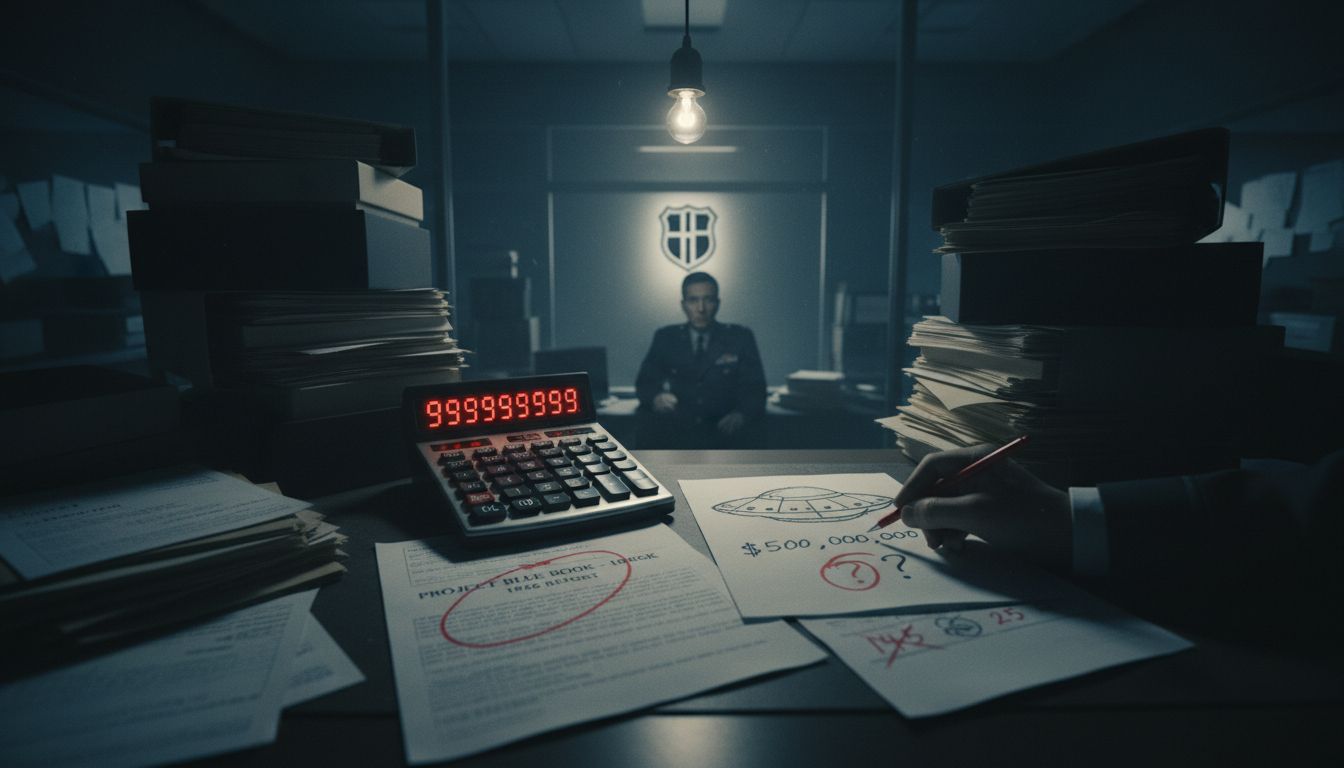
Keel himself acknowledged in the post’s introduction that the data were “not encircled in red” as originally marked, suggesting that the figures may have been altered or annotated for private circulation. Nonetheless, the lack of a transparent methodology—no source citations, no explanation of inclusion criteria—makes the numbers unreliable for academic use.
The $500 Million Claim
Perhaps the most striking assertion in Keel’s analysis is the headline figure of $500 million allegedly allocated to UFO research in 1966. This amount would represent an unprecedented share of the defense budget at the time. However, a review of the 1966 Department of Defense appropriations shows no line item approaching that sum. “The Pentagon’s budget documents list a few hundred thousand dollars for the Blue Book office, not half a billion,” notes former Air Force officer Lt. Col. James Ortega, who served on the project’s final year. Ortega adds that the claim likely stems from Keel’s conflation of unrelated research contracts and speculative “black‑budget” projects, a practice that has long muddied serious UFO scholarship.
Broader UFO Lore Context
Keel’s post does more than critique statistics; it weaves the 1966 data into a larger tapestry of UFO folklore. He references the “space‑brother” contactees of the 1950s, the early 20th‑century airship hoaxes, and personal anecdotes from contemporary researchers. While these historical footnotes enrich the narrative, they also blur the line between documented evidence and myth. “Linking a 1966 statistical table to the sensational claims of 1930s airship sightings risks creating a false sense of continuity,” warns Dr. Matthews. The inclusion of such lore reflects Keel’s broader approach—one that treats UFO phenomena as a cultural and psychological phenomenon as much as a physical mystery.
Conclusion
The 1966 “Project Blue Book” statistics posted by John Keel illustrate the challenges of separating fact from conjecture in UFO research. The identified counting errors, the unsupported $500 million spending figure, and the mingling of historical UFO mythology undermine the credibility of the analysis. Nonetheless, the piece serves as a reminder of the enduring public fascination with the Air Force’s once‑secretive investigations and the need for rigorous, source‑based reporting. As the Department of Defense continues to release previously classified UFO material, scholars emphasize that transparent data and methodological clarity remain essential for moving the conversation beyond speculation.