Overview
The fatal hit‑and‑run that claimed the life of Tanja Safforld, a mother of seven, on the night of November 20, 2024, has remained unsolved for more than a year. The incident occurred in a snow‑laden gas‑station lot on Chicago’s South Side, where Safforld was struck at 5:56 p.m. while crossing toward a nearby store. Immediate 911 calls described a dark sedan that fled east on Marquette Avenue, but early police efforts failed to secure decisive visual evidence. The case, handled by the Chicago Police Department’s Major Accident Investigation Unit (MAIU), stalled after investigators exhausted local business footage and ruled out a vehicle identified in a community alert.
Investigation Challenges
Police body‑camera footage obtained through a public‑records request shows officers arriving minutes after the 911 calls, while Chicago Fire crews were already on scene. An ambulance transported Safforld to a hospital, where she was pronounced dead shortly after midnight. The initial police report noted that a nearby surveillance camera was angled away from the crash zone, and no eyewitness statements were recorded at the time. Over the first two months, the MAIU officer logged 39 hours in November and 49 hours in December reviewing 27 photographs and searching for video from surrounding businesses. By February 2025, the total investigative effort had reached 130 hours, yet no actionable leads emerged, and the case was placed on suspension.
Psychic Tip Leads to Overlooked Footage
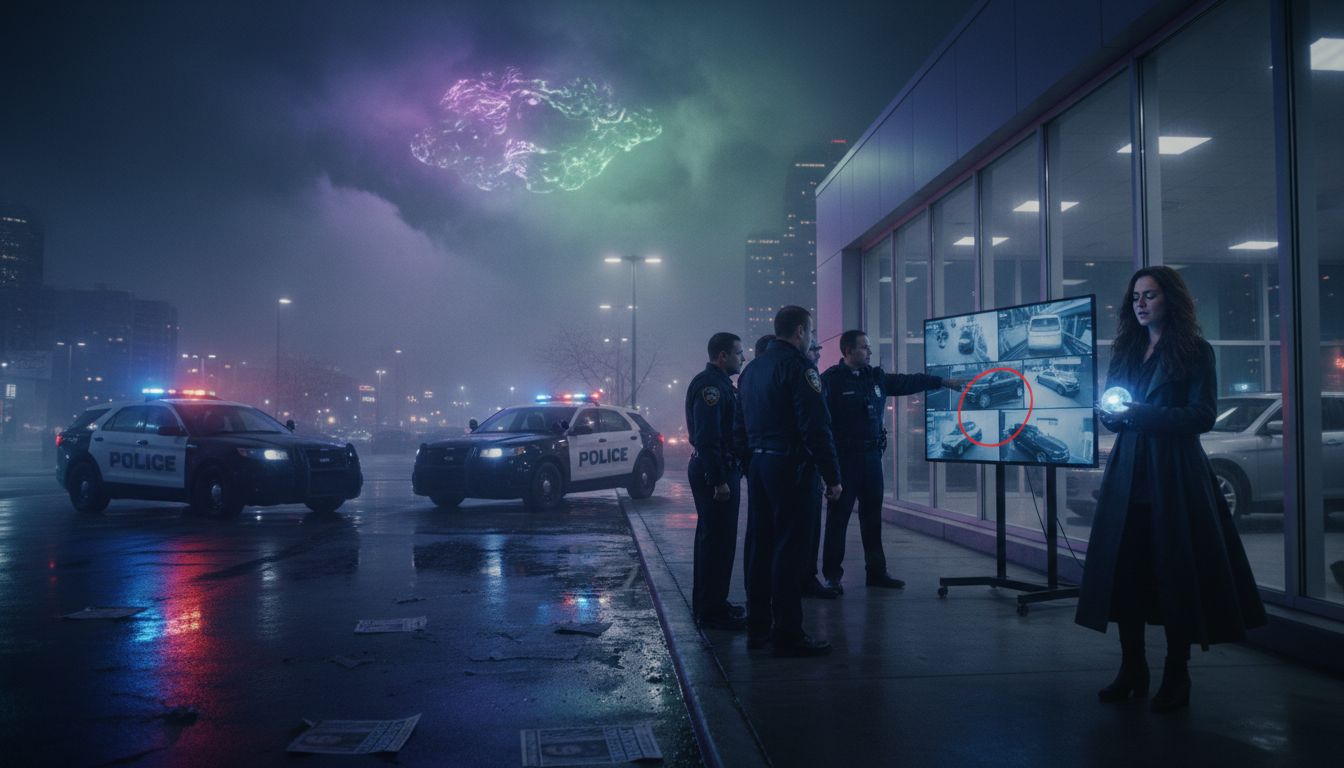
In December 2025, Safforld’s son, Damion Martin, consulted a local psychic after months of frustration with the stalled investigation. The psychic suggested checking security cameras at a nearby auto‑dealership that had not been part of the original sweep. Acting on the tip, detectives obtained the dealership’s video archives for the night of the crash. Review of the footage revealed a gray Hyundai sedan making a sudden left turn onto Marquette just seconds after the impact—matching the description given by the original 911 callers. The vehicle’s license‑plate region was partially visible, providing a new lead that had been missed when investigators first focused on the dark‑colored sedan featured in the community alert.
Police Response and Next Steps
Chicago Police announced that the newly uncovered dealership video will be re‑examined by the MAIU, with a dedicated team assigned to enhance the plate image and cross‑reference it against state registration databases. A spokesperson emphasized that “the tip does not replace standard investigative protocols, but it does give us a concrete visual element that was previously unavailable.” The department has also reopened the case file for additional witness outreach, urging anyone who may have seen the gray Hyundai on November 20 to contact investigators. Martin expressed cautious optimism, noting that “any piece of the puzzle, even if it comes from an unexpected source, is a step toward answering what happened to my mother.”
Broader Context
The Safforld case underscores the difficulties that urban hit‑and‑run investigations face, especially when weather conditions, limited camera angles, and delayed police presence impede evidence collection. It also highlights the growing, though controversial, role of non‑traditional information sources—such as psychic consultations—in prompting fresh investigative angles. While officials caution against relying on unverified claims, the outcome here demonstrates that unconventional leads can sometimes uncover overlooked evidence, prompting a re‑evaluation of investigative strategies in similar cases. As the MAIU proceeds with the new footage, the community watches closely, hoping the renewed effort will finally bring closure to a grieving family and reinforce confidence in Chicago’s ability to solve complex traffic‑related crimes.


