Overview
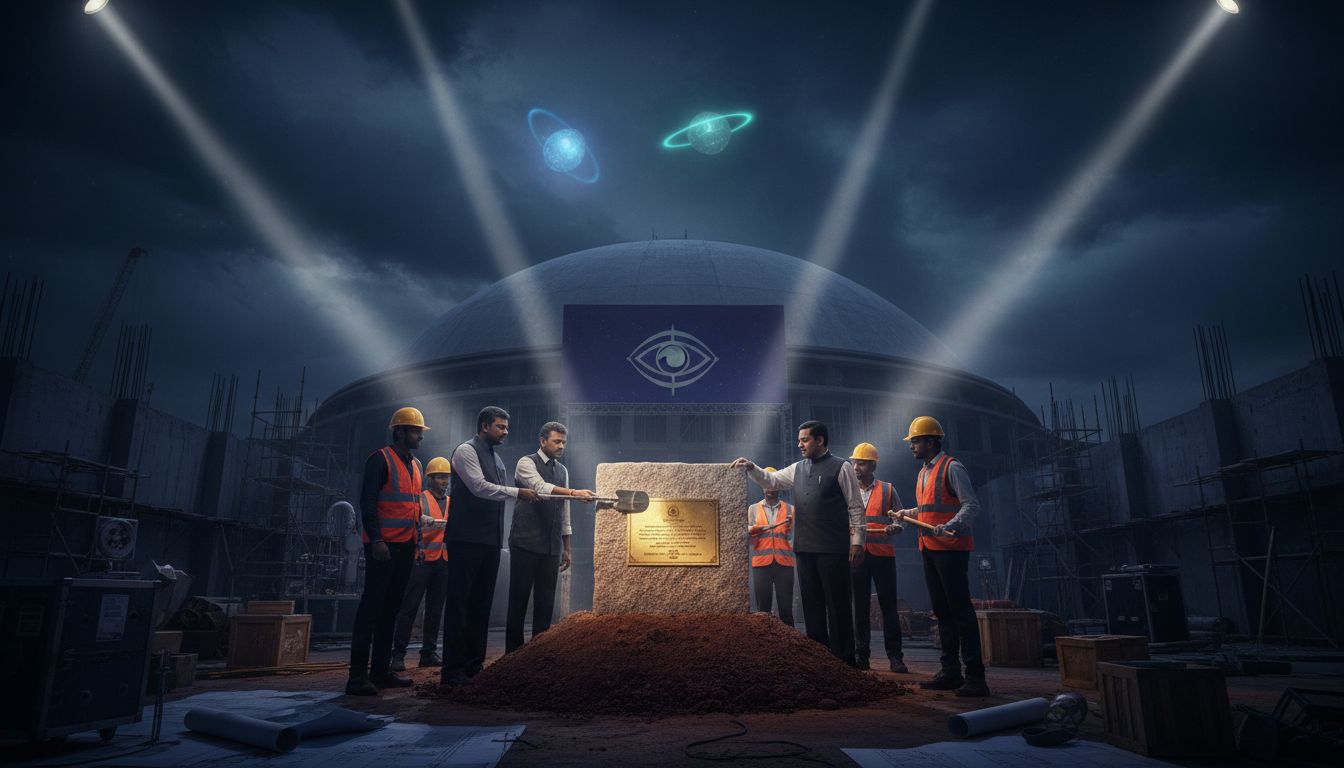
On December 21, 2025, Tamil Nadu’s Minister for Industries, P Rajeeve, laid the foundation stone for the Centre for Research, Manufacturing and Advancement of Space (CRMAS) at the Bio 360 Life Sciences Park in Thiruvananthapuram. The ceremony, attended by senior scientists from the Vikram Sarabhai Space Centre (VSSC) and representatives of several Indian Institutes of Technology (IITs) and National Institutes of Technology (NITs), marks the inauguration of a 15,800‑square‑foot facility that will blend cutting‑edge biomedical research with advanced manufacturing capabilities. While CRMAS’s core mandate centers on molecular and applied sciences, the involvement of VSSC signals a strategic intent to explore unidentified aerial phenomena (UAP) and related aerospace technologies under one roof.
Key Details
The new centre will allocate 8,600 sq ft to translational research laboratories, equipped for disease‑modelling, neuronal stimulation, and cardiac remodelling studies. The remaining 6,000 sq ft will host a dedicated manufacturing unit for AYUSH‑based products, leveraging CRMAS’s expertise in integrating traditional Ayurveda with modern biomaterials. Director Rajesh Ramachandran emphasized that “the facility is designed to accelerate high‑skill employment, with an expectation of creating over 100 specialized jobs in the next two years.” He added that the centre aims to become a “global hub for collaborative science, bridging life‑sciences and space research.”
Space and UAP Focus
The collaboration with VSSC is noteworthy because India has recently intensified its interest in UAP investigations, following the establishment of an inter‑agency task force by the Ministry of Defence earlier this year. CRMAS will host a dedicated aerospace research wing tasked with collecting, analysing, and modelling anomalous aerial observations reported across the subcontinent. According to Minister Rajeeve, “Integrating space‑science expertise with our biomedical platforms will give India a multidisciplinary edge in understanding both terrestrial and aerial mysteries.” While detailed project plans remain confidential, officials indicated that the wing will employ radar data, optical imaging, and AI‑driven pattern analysis to assess sightings.
Broader Context
CRMAS joins a growing network of Indian institutions—such as ISRO’s UAP monitoring unit and the Defence Research and Development Organisation’s (DRDO) Advanced Aerial Phenomena Laboratory—aimed at systematically studying unexplained aerial events. Analysts note that these efforts reflect a global trend, where governments are moving from speculative discussion to structured scientific inquiry. The centre’s dual focus on health technologies and aerospace research positions it uniquely to attract cross‑sector funding and foster partnerships with private firms interested in both biotech and defense‑grade sensing equipment.
Outlook
Construction of the CRMAS facility is slated for completion by mid‑2026, after which the first batch of research projects—ranging from novel drug‑delivery systems to AI‑assisted UAP detection algorithms—will commence. Stakeholders anticipate that the centre will not only bolster Kerala’s life‑sciences ecosystem but also contribute valuable data to national and international UAP databases. As Minister Rajeeve concluded at the ceremony, “By uniting science, technology, and curiosity, CRMAS will help India answer some of the most profound questions about our health and the skies above us.”
The article is based on statements released by the Ministry of Industries, CRMAS officials, and publicly available reports on India’s recent UAP research initiatives.


