Overview
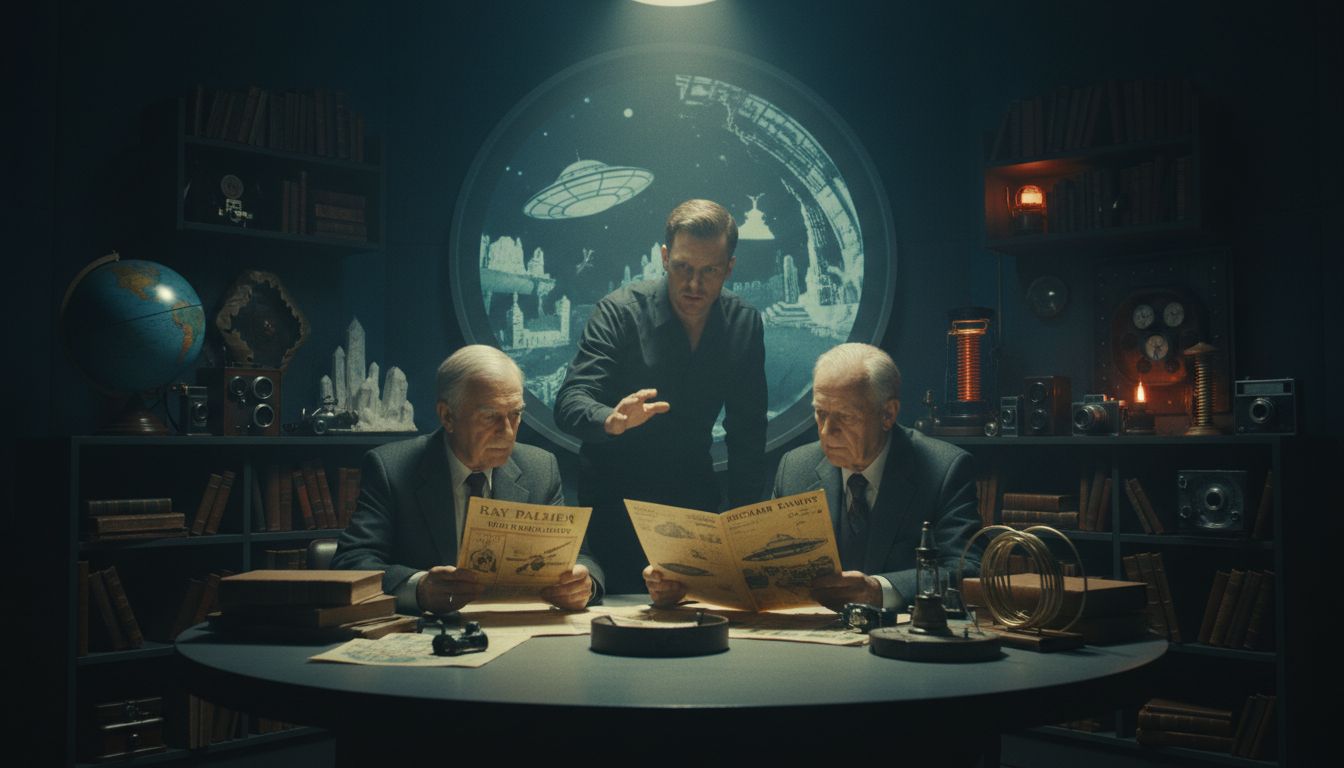
On the April 5, 2026 edition of The Paracast, hosts Gene and Geneva revisited the origins of modern UFO belief with returning guest Dean Bertram, a researcher and filmmaker who has spent years examining the influence of sci-fi and paranormal publishing pioneer Ray Palmer and his sometimes collaborator Richard Shaver. Bertram is currently shooting a feature documentary, The Man Who Invented Flying Saucers, which explores how the pair helped shape the cultural landscape that made the flying saucer era possible.
The episode framed Palmer and Shaver not simply as colorful footnotes in paranormal history, but as central architects of the stories, symbols and anxieties that would later become staples of UFO lore. In that sense, the discussion went beyond sightings and claims, focusing instead on the people, publications and editorial choices that gave the modern mystery its staying power.
Palmer, Shaver and the Birth of a Mythos
At the center of Bertram’s work is the long-running fascination with Richard Shaver’s subterranean-world mythology, a strange and deeply influential body of stories about hidden beings beneath the Earth. Shaver’s tales, promoted by Palmer in early pulp and sci-fi circles, blended adventure, paranoia and speculative fiction in a way that resonated with readers already primed for postwar uncertainty. Their partnership became one of the most controversial and memorable episodes in early UFO-related publishing.
Palmer, who operated at the intersection of science fiction, sensational journalism and paranormal curiosity, understood how to package mystery for mass audiences. Bertram’s project reportedly examines how Palmer’s editorial instincts helped elevate Shaver’s bizarre narratives from pulp oddity to cultural phenomenon. That process, the episode suggests, was crucial in setting the stage for the flying saucer boom that followed in the late 1940s.
Why Their Story Still Matters
The conversation underscored a point that often gets lost in UFO history: the personalities behind the stories matter as much as the sightings themselves. Palmer and Shaver were not government insiders, military witnesses or radar operators. They were editors, writers and promoters operating in the world of mass-market storytelling, where the boundaries between fiction, belief and spectacle could blur quickly. Yet their influence helped define the tone of the early UFO age, when readers and listeners were eager for explanations that reached beyond conventional science.
Bertram’s documentary aims to place that influence in context, showing how modern UFO culture emerged from a mix of pulp imagination, public fascination and entrepreneurial media savvy. Rather than treating flying saucers as a phenomenon that arrived fully formed, the project looks at the cultural machinery that made them believable.
A Broader Look at UFO Origins
In revisiting Palmer and Shaver, The Paracast episode offered a reminder that UFO history is not only a record of reported encounters, but also a story about how ideas spread. The early flying saucer era was built by writers, editors and enthusiasts who knew how to turn ambiguity into narrative and curiosity into conviction. Bertram’s documentary, and the discussion around it, points to a broader truth: the modern UFO field was shaped not just by what people claimed to see, but by the people who knew how to make those claims unforgettable.