Overview
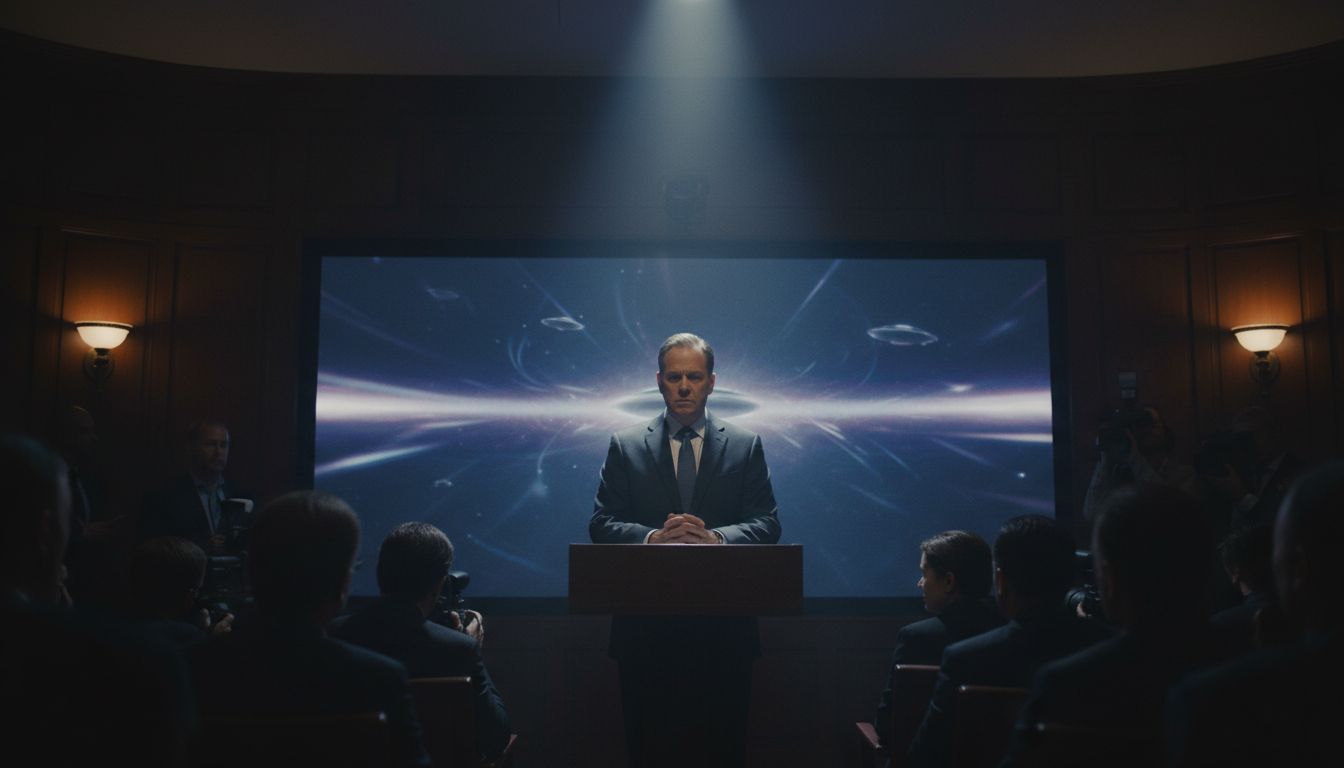
Representative Tim Titus (R‑NV) addressed the enduring fascination with Area 51 and the broader issue of unidentified aerial phenomena (UAP) during a recent press briefing hosted by KLAS 8 News. Titus highlighted the growing public demand for transparency, noting that “the American people deserve to know what is happening in our skies and over our military installations.” He framed responsible disclosure as a matter of both national security and scientific advancement, urging federal agencies to move beyond the traditional culture of secrecy.
Legislative Perspective
Titus, a member of the House Armed Services Committee, emphasized that Congress has a duty to oversee any activity that could affect defense readiness. Citing the Pentagon’s 2021 UAP report and the subsequent establishment of the All‑Domain Anomaly Resolution Office (AARO), he argued that “a systematic, bipartisan approach is needed to evaluate these sightings and determine any potential threat.” The representative called for a formal declassification schedule that would allow vetted information to be released without compromising classified sources, a stance that aligns with recent bipartisan bills seeking greater UAP transparency.
Security and Scientific Implications
The congressman underscored two primary benefits of openness. First, he noted that timely disclosure could help the Department of Defense identify foreign adversary capabilities, reducing the risk of misinterpretation or accidental escalation. Second, Titus pointed out that scientific communities stand to gain valuable data on high‑altitude atmospheric phenomena, propulsion technologies, and sensor performance. “When we share what we know, we empower researchers to verify, replicate, and possibly innovate,” he said, referencing collaborations between the Air Force and civilian aerospace labs that have already yielded insights into sensor anomalies.
Public Reaction and Historical Context
Public interest in Area 51 surged after the 2019 “Storm Area 51” meme and has been sustained by recent government acknowledgments of UAP encounters. Titus acknowledged this cultural backdrop, stating that “the mythos surrounding Area 51 has both entertained and frustrated the public, but the real issue is credible data that can be examined by experts.” He cautioned against sensationalism, urging media outlets to focus on verified evidence rather than speculative narratives. This measured tone reflects a broader shift among lawmakers who seek to balance curiosity with responsibility.
Next Steps
Looking ahead, Titus announced plans to introduce a resolution that would require the Office of the Director of National Intelligence to produce an annual, unclassified summary of UAP investigations. He also pledged to convene a bipartisan hearing later this year, inviting officials from the AARO, the National Aeronautics and Space Administration, and leading academic researchers. “Transparency is not a concession; it is a strategic advantage,” Titus concluded, emphasizing that a clear, accountable process will strengthen both national defense and public trust.


