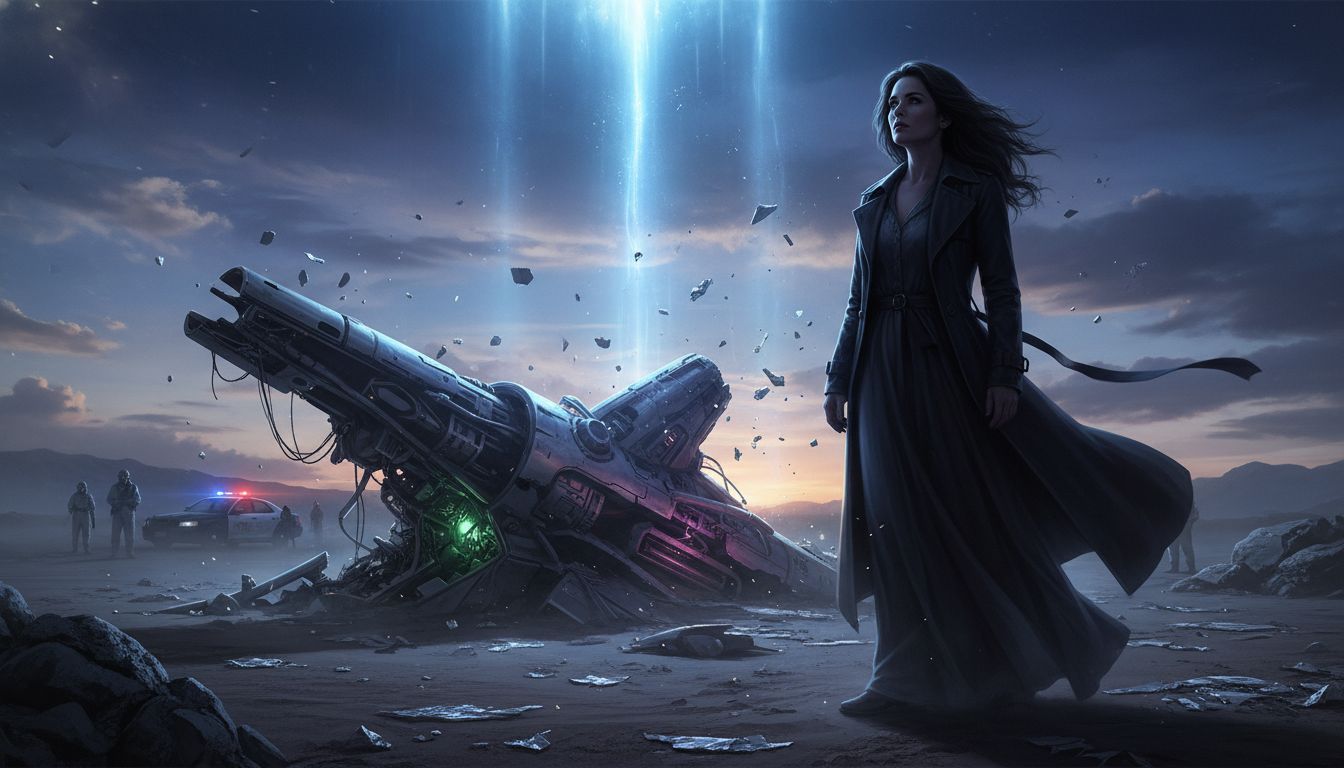
Roswell‑born actress Demi Moore told Entertainment Weekly that she believes “something definitely happened” at the site of the town’s famed 1947 UFO crash, adding that the event “remains a mystery” even after decades of speculation. The comment, made during a recent interview about her upcoming projects, is notable not only because Moore is one of the most recognizable Hollywood figures to hail from the small New Mexico city, but also because it underscores the lingering public fascination with an incident that has become a cultural touchstone for UFO enthusiasts worldwide.
The Roswell incident began on July 8, 1947, when a local rancher reported finding strange debris on his property. The Roswell Army Air Field issued a press release claiming to have recovered a “flying disc,” a statement quickly retracted the next day in favor of a more mundane explanation: the wreckage of a weather balloon. Over the ensuing decades, former military personnel, whistle‑blowers and civilian investigators have advanced a competing narrative that the debris was extraterrestrial, allegedly accompanied by recovered alien bodies. In the 1990s, the U.S. Air Force published two reports—The Roswell Report: Fact vs. Fiction in the New Mexico Desert (1994) and The Roswell Report: Case Closed (1997)—that attributed the material to a classified project known as “Mogul,” a high‑altitude balloon designed to detect Soviet nuclear tests. Despite the official conclusions, the episode has inspired countless books, documentaries and a thriving tourism industry centered on the Roswell UFO Museum and Research Center.
Moore, who spent her early childhood in Roswell before moving to California, said the town’s legacy has always been a part of her personal narrative. “Growing up, you hear the stories, you see the signs, the alien‑themed souvenirs, the people who still talk about it,” she explained. “When you hear that there’s still no definitive answer, it sticks with you. I’m not saying I’ve seen anything, but I do think something definitely happened there.” While she stopped short of endorsing any particular theory, Moore’s remarks reflect a broader sentiment among residents who feel the incident has been both a source of local pride and a lingering mystery.
The actress’s comments arrive amid renewed governmental attention to unidentified aerial phenomena (UAP). In June 2022, the Office of the Director of National Intelligence released a preliminary assessment acknowledging that most UAP sightings remain unexplained, and in 2023 Congress mandated the establishment of a permanent UAP task force. Although the Roswell case predates these modern investigations, its symbolic weight continues to shape public perception of how the government handles anomalous aerial encounters. Researchers note that the lack of conclusive evidence from the original investigation has fueled a “culture of doubt” that persists in contemporary UAP discourse.
For Roswell, the interplay between celebrity endorsement and long‑standing folklore can translate into tangible economic impact. The town draws roughly 200,000 visitors each year, many of whom are drawn by the allure of the 1947 crash site and the surrounding “alien” attractions. Local officials have welcomed the attention, emphasizing that the narrative—whether rooted in fact or myth—has become an integral part of Roswell’s identity. At the same time, historians caution against conflating personal belief with empirical proof, reminding audiences that the scientific method still demands verifiable data before any definitive conclusions can be drawn.
Moore’s observation, while measured, adds another voice to a chorus that has kept the Roswell incident alive for more than seven decades. Whether future declassified documents, advanced sensor data or new eyewitness testimony will finally resolve the question remains uncertain. What is clear, however, is that the story continues to capture imaginations—celebrity and citizen alike—and that the mystery, as Moore put it, “still feels very much unresolved.”


