Overview
Recent coverage of the PURSUE data release has renewed attention on the 1947 Roswell incident, while also highlighting the difficulty of separating newly released records from testimony and documents that have circulated for years. The material includes references to a previously published affidavit by Walter Haut, a July 8, 1947, meeting involving senior Roswell military personnel, and more recent analysis of files associated with the Bigelow Aerospace Advanced Space Studies (BAASS) program. Taken together, the records add context to longstanding claims about Roswell but do not, on their own, establish that the event involved extraterrestrial technology or non-human bodies.
Haut Affidavit and the 1947 Meeting
One prominent item discussed in connection with the release is Walter Haut’s 2002 affidavit. Haut served as the public information officer at Roswell Army Air Field in July 1947 and was involved in the base’s initial public statement about the recovery of what was described at the time as a “flying disc.” The affidavit, which has been publicly circulated for more than two decades, contains a later-in-life account of events at the base, including descriptions of debris and a reported briefing involving unusual wreckage and bodies. Because the document was prepared decades after the incident and reflects personal recollection, its evidentiary value remains a matter of debate among researchers.
The PURSUE-related discussion also points to a July 8, 1947, meeting attended by senior Roswell military personnel. The meeting is significant because it falls within the period when military officials were responding to reports of recovered debris and attempting to control public messaging. However, the existence of a meeting does not by itself confirm the most extraordinary interpretations attached to Roswell. Its importance depends on the provenance of the records, the accuracy of the testimony, and whether independent wartime or government documentation supports the accounts.
BAASS Files and Newer Reports
UFO historian and researcher Richard Dolan has separately examined material associated with BAASS, a contractor that studied unusual aerial phenomena for the U.S. government. His analysis has been cited in discussions of the PURSUE release and of how government-linked investigations handled reports of anomalous objects. The files may demonstrate that officials and contractors collected accounts involving unusual craft, sensor observations, and alleged physical effects. They do not necessarily validate every witness claim or confirm a non-human explanation.
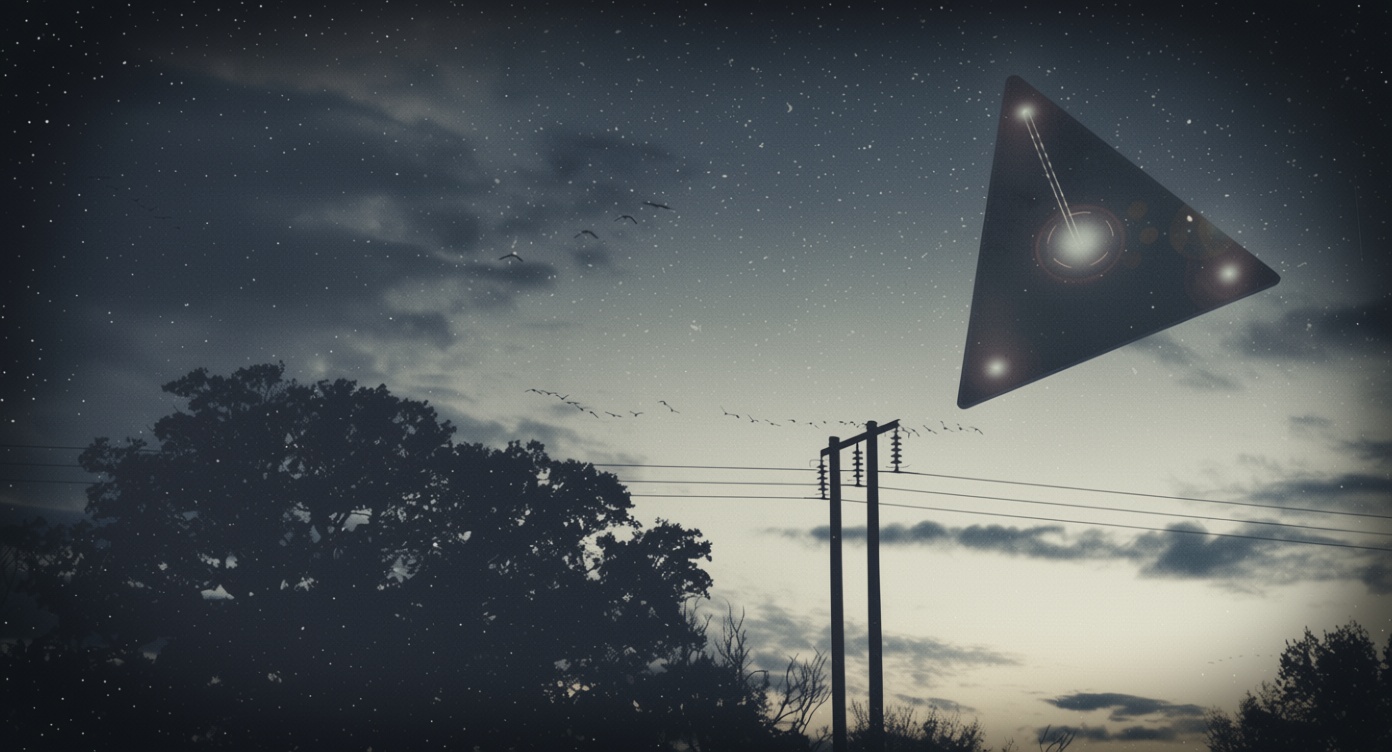
Coverage has also referenced a 2026 report involving a black-triangle object. Black-triangle sightings have appeared in UAP reporting for decades, often describing large, dark, angular objects moving silently or slowly across the sky. As with other UAP cases, the report’s significance depends on corroborating evidence such as radar data, infrared imagery, multiple independent witnesses, or recoverable physical material. A witness narrative alone can document an allegation without resolving what was observed.
Assessment of the Evidence
Researcher Kevin Randle has cautioned that much of the information attributed to Jay Stratton’s account appears to reflect conclusions or details already published by earlier Roswell investigators. That assessment is important because the appearance of familiar claims in a government-associated narrative can be mistaken for independent confirmation. Repetition may show that investigators encountered the same body of testimony, but it does not necessarily verify the underlying event.
The latest discussion therefore appears best understood as an expansion of the documentary record rather than a definitive resolution of Roswell. The release brings renewed visibility to old testimony and newer investigative files, but questions about chain of custody, contemporaneous documentation, and independent corroboration remain unresolved. Until those issues are addressed, the material will continue to support competing interpretations: for some, it reinforces a long-standing account of a concealed recovery; for others, it illustrates how decades of retelling can merge separate claims into a single narrative.