Overview
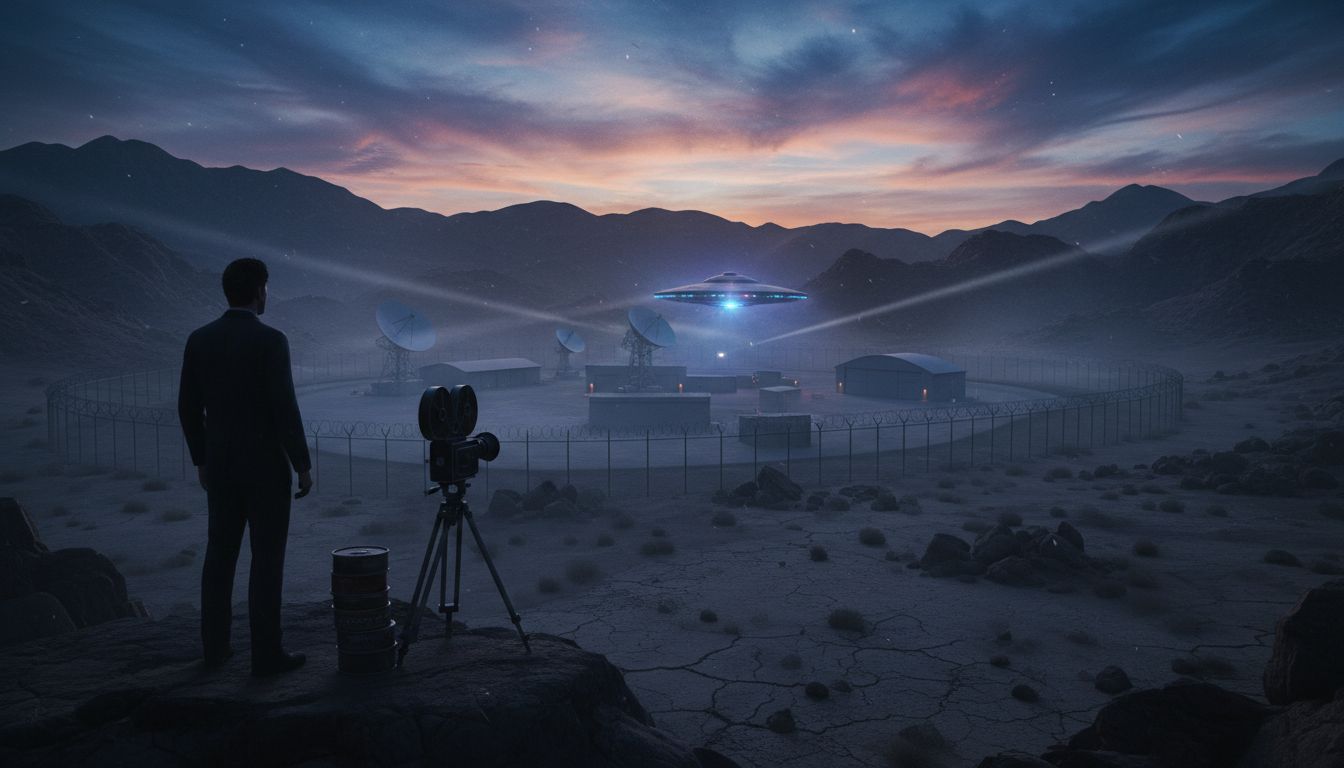
The newly released documentary “S4: The Bob Lazar Story” revisits the claims of physicist‑turned‑whistleblower Bob Lazar, who first entered public view in 1989 with allegations that he worked on reverse‑engineering extraterrestrial technology at a secret Nevada facility known as S‑4, adjacent to the well‑known Area 51. Produced by independent filmmaker Mark C. Smith and distributed through a limited theatrical run and streaming platforms, the film has been highlighted by NewsNation as part of a broader resurgence of interest in alleged government UFO cover‑ups. While the documentary offers fresh interviews and archival footage, it also reignites longstanding debate over Lazar’s credibility and the evidentiary standards for extraordinary claims.
Background on Lazar’s Allegations
Lazar’s original disclosures described a “gravity‑enhancement” propulsion system, a substance he called “Element 115,” and a network of underground hangars housing saucer‑shaped craft. He asserted that the U.S. government had kept the program classified for national‑security reasons, and that his own employment was terminated after he threatened to go public. Over the past three decades, his story has been both championed by UFO enthusiasts and dismissed by mainstream scientists, who point to inconsistencies in his educational background, lack of verifiable documentation, and the absence of corroborating witnesses. The documentary does not present new physical evidence, but it does feature Lazar’s own narration and interviews with former colleagues who claim limited exposure to the alleged project.
Documentary Content and Production
“S4: The Bob Lazar Story” runs 92 minutes and combines on‑camera interviews, reenactments, and declassified government documents that reference “unidentified aerial phenomena” (UAP) investigations. In a sit‑down interview, Lazar reiterated his belief that the technology he encountered “could change the world” if made public, emphasizing the moral dilemma of secrecy. The film also includes commentary from former Department of Defense officials who discuss the recent Pentagon UAP task force reports, drawing a parallel between Lazar’s 1980s claims and the government’s current, albeit limited, acknowledgment of unexplained aerial sightings. Producer Mark C. Smith told NewsNation, “Our goal was to let Lazar tell his story in his own words while presenting the broader context of official UAP research that’s now emerging.”
Reactions from Experts and the Public
The documentary’s release has prompted a mixed response. UFO researchers such as Dr. Jacques Vallée praised the film for “keeping the conversation alive about possible advanced propulsion,” while aerospace engineers like Dr. Emily Chen of the MIT Aeronautics Department cautioned that “extraordinary claims require extraordinary evidence, which remains absent in Lazar’s case.” Social‑media metrics indicate a surge in searches for “Bob Lazar” and “S‑4” within 48 hours of the film’s debut, reflecting continued public fascination. However, fact‑checking organizations have reiterated that no verifiable proof of extraterrestrial technology has been produced, and that prior investigations have found “no credible evidence supporting Lazar’s employment at any classified facility.”
Implications for the Ongoing UAP Dialogue
The documentary arrives at a moment when the U.S. government is grappling with transparency on UAP encounters, as evidenced by the 2023 Office of the Director of National Intelligence report and the establishment of the All‑Domain Anomaly Resolution Office (AARO). By juxtaposing Lazar’s narrative with contemporary official inquiries, “S4: The Bob Lazar Story” underscores the tension between anecdotal testimony and institutional research. While the film is unlikely to shift the scientific consensus, it may influence legislative attention; a bipartisan group of senators cited the documentary in a recent hearing, urging the Defense Department to “provide clearer documentation of any reverse‑engineering programs, if they exist.”
In sum, the documentary renews a polarizing chapter of UFO folklore, offering a polished platform for Lazar’s enduring claims while simultaneously highlighting the rigorous standards that mainstream science and government agencies continue to apply to the UFO phenomenon.