Overview
The CBS News Post Mortem episode “Sade Robinson and the Secret Beach” revisits the baffling 2025 disappearance of marine biologist Dr. Sade Robinson after she reported a series of unexplained lights hovering over a remote stretch of Florida’s Atlantic coastline. The hour‑long investigation, aired on February 28, 2026, brings together local law‑enforcement records, eyewitness testimony, and commentary from UFO researchers who argue the incident may qualify as an unidentified aerial phenomenon (UAP). While the case remains unsolved, the program reignites a longstanding public debate over the U.S. government’s willingness to disclose information on possible extraterrestrial encounters.
Background
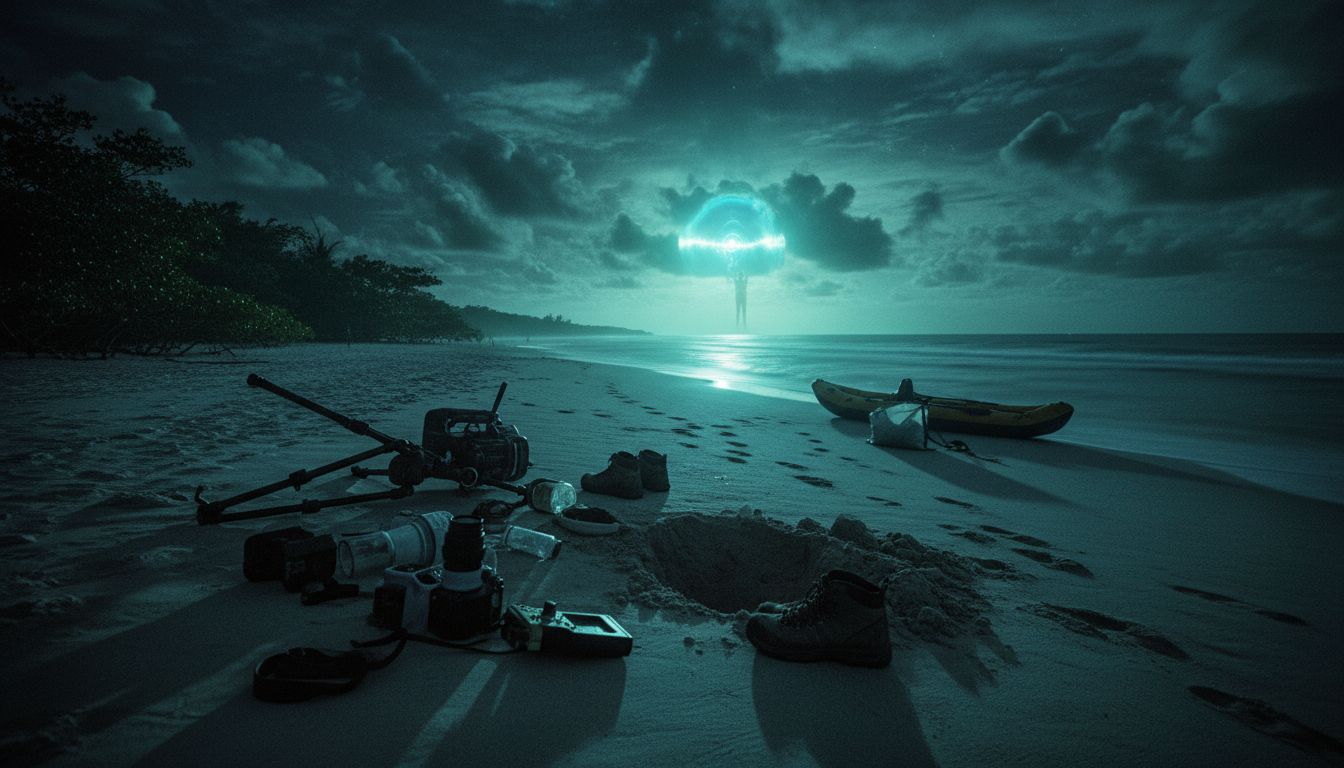
Dr. Robinson, a 38‑year‑old researcher with the Florida Institute of Marine Science, was conducting a routine night‑time survey of coral bleaching near the small community of St. George Island when she observed “bright, pulsating orbs” moving in a disciplined formation over what locals call “Secret Beach,” a seldom‑visited cove accessible only by a narrow dirt path. She radioed her team at 02:17 a.m., describing the lights as “larger than a car, silent, and moving with a precision that defied conventional aircraft.” Within minutes, Robinson’s boat was found adrift, but she was nowhere aboard. A subsequent search of the shoreline and surrounding wetlands turned up no trace of her belongings or personal effects.
Investigation Findings
The Post Mortem team obtained the official police report, which lists Robinson’s disappearance as a missing‑person case pending further evidence. Investigators noted the absence of typical maritime distress signals and highlighted the lack of any recorded radar contact with aircraft in the vicinity at the time. “We have no physical evidence linking a known vessel or aircraft to the event,” said Lt. Carlos Mendes of the St. George County Sheriff’s Office. The episode also reviewed de‑classified Pentagon UAP footage released earlier in 2024, noting visual similarities between those recordings and the eyewitness descriptions from Robinson’s colleagues. However, federal agencies have not publicly connected the two incidents.
Expert and Researcher Perspectives
UFO researcher Dr. Jacques Whitaker, director of the Center for Aerial Phenomena Studies, cautioned against jumping to conclusions but emphasized the case’s relevance. “When a qualified scientist reports an anomalous aerial event and then vanishes under unexplained circumstances, it warrants rigorous, transparent inquiry,” Whitaker said during the interview. Conversely, aerospace analyst Linda Park of the Aerospace Safety Institute argued that atmospheric plasma phenomena or classified military testing could account for the lights, noting that “the region is known for occasional experimental drone flights under the guise of marine research.” Both experts agreed that the lack of a coordinated federal response hampers the ability to determine the incident’s nature.
Government Disclosure Debate
The Robinson case arrives amid heightened scrutiny of the U.S. government’s UAP reporting protocols. In late 2023, the Office of the Director of National Intelligence issued a preliminary assessment acknowledging that many sightings remain unexplained. Lawmakers have since introduced the Transparency in Unidentified Aerial Phenomena Act, seeking mandatory reporting and public release of relevant data. Senator Ellen Ramirez (D‑FL) referenced Robinson’s disappearance during a Senate hearing, stating, “Families deserve answers, and the American people deserve to know whether these events pose a national security risk or something beyond our current scientific understanding.” The Post Mortem episode concludes by urging authorities to revisit the case with the newly established UAP investigative framework, while families and colleagues continue to seek closure for Dr. Robinson’s unresolved fate.