Overview
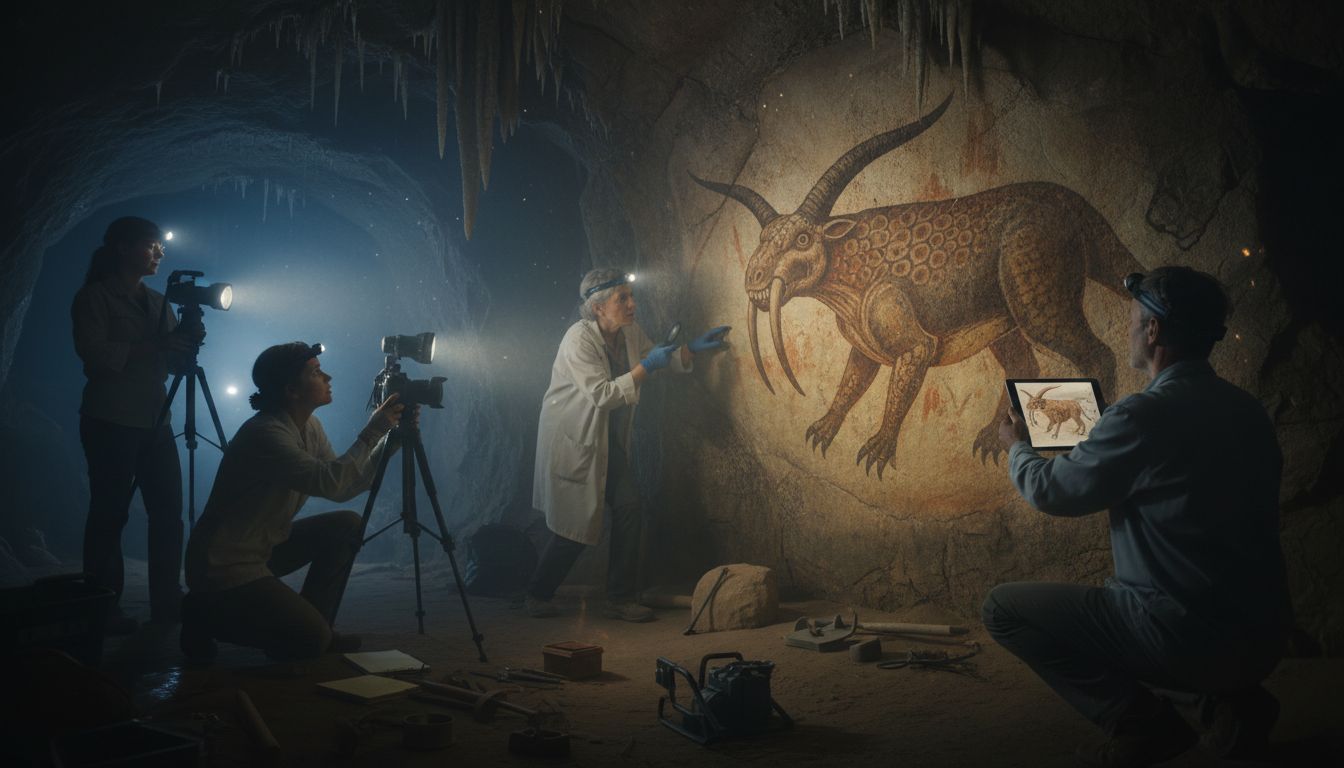
A rock painting discovered in a South‑African cave is being hailed as the first possible artistic depiction of an animal that vanished roughly 250 million years ago. The image, part of the San people’s “Horned Serpent Panel,” shows a horned, tusked creature with an elongated body—features that match the extinct dicynodont therapsids known from the Karoo Basin. While the panel also includes familiar local fauna, this singular figure has sparked a scholarly debate about whether prehistoric peoples could have recorded knowledge of organisms that pre‑date humanity.
The Painting and Its Cultural Context
The panel was created between 1821 and 1835, a period during which San rock‑art traditions flourished across southern Africa. Typical San motifs feature antelopes, rhinoceroses, and human silhouettes, often linked to hunting rituals or mythic narratives. The “Horned Serpent” figure, however, diverges sharply: it bears a pair of curved horns, prominent tusks, and a sinuous torso that bears little resemblance to any living species in the region. Researchers note that San art frequently incorporates mythical beings, yet the anatomical precision of this creature suggests a source beyond imagination.
Scientific Interpretation
Julien Benoît, a palaeontologist at the University of the Witwatersrand, argues that the San artists may have drawn inspiration from fossilized dicynodont remains that are abundant in the surrounding Karoo Basin. “When I saw the reproduction of that tusked animal in the Stow and Bleek book, I immediately thought it could be a dicynodont,” Benoît recalled in a recent interview. He adds that the fossils—large, herbivorous therapsids with beak‑like mouths and a single pair of tusks—share a striking visual similarity to the painted figure. The hypothesis is bolstered by a PLOS ONE study (2026) documenting the prevalence of dicynodont specimens near the cave site.
The Fossil Record in the Karoo
The Karoo Basin is internationally recognized for its exceptionally rich Permian–Triassic fossil assemblages, including dozens of dicynodont species that thrived long before the rise of mammals. Excavations over the past decades have uncovered well‑preserved skulls and skeletal fragments that display the very horns and tusks depicted on the panel. An illustration accompanying the PLOS ONE article juxtaposes a fossil specimen with the San drawing, highlighting the morphological overlap. This proximity of artistic and paleontological evidence raises the possibility that San hunters, familiar with exposed bone fragments, incorporated them into their symbolic repertoire.
Implications and Ongoing Debate
If the San indeed based the “Horned Serpent” on real fossil material, it would represent an earliest known example of prehistoric peoples engaging in a form of proto‑palaeontology, predating formal scientific discovery by millions of years. Critics caution against over‑interpretation, noting that mythic creatures often amalgamate traits from multiple sources and that stylistic conventions can produce coincidental resemblances. Nonetheless, the find invites interdisciplinary collaboration among archaeologists, palaeontologists, and anthropologists to reassess how ancient societies perceived and recorded the deep past. Future fieldwork aimed at locating additional rock‑art panels and associated fossil deposits may clarify whether this depiction is an isolated curiosity or part of a broader, yet undocumented, tradition of prehistoric visual documentation.


