Overview
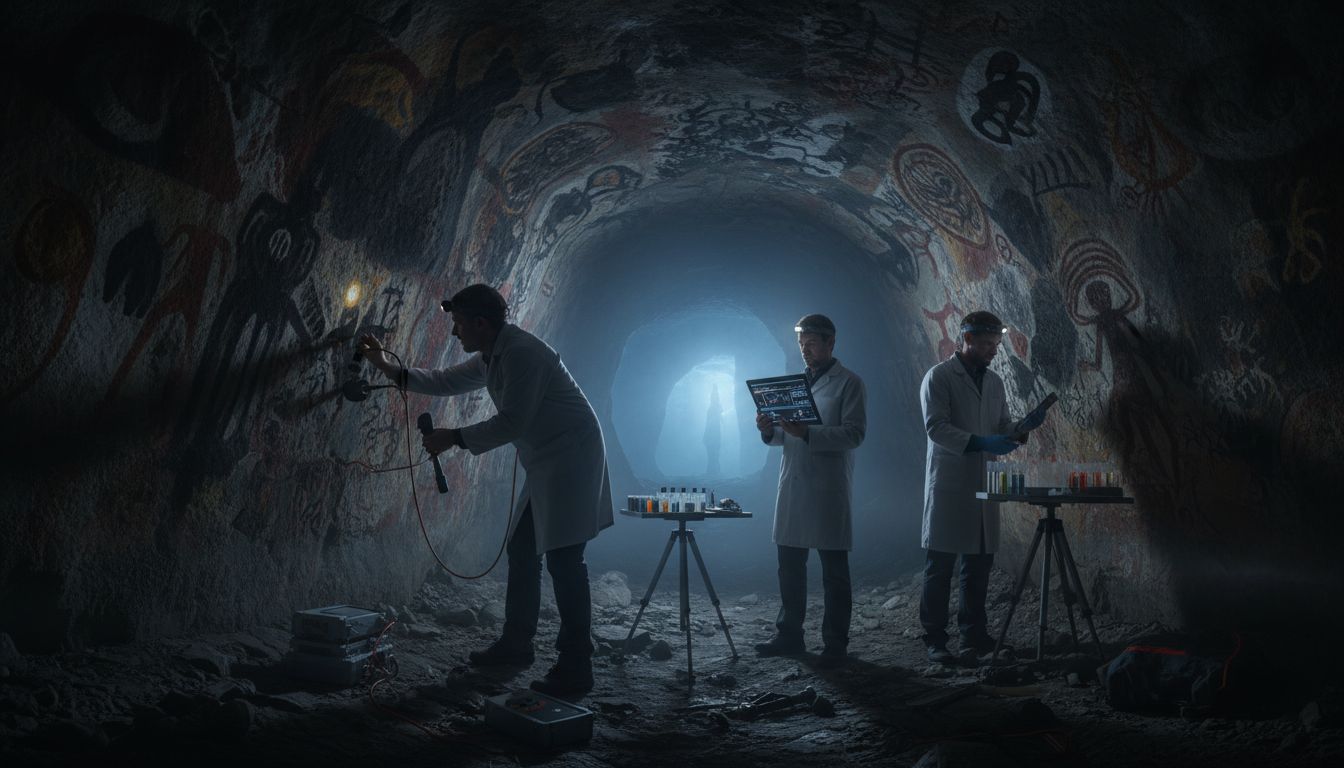
Scientists have finally placed a firm chronology on the enigmatic rock art of the Lower Pecos region in West Texas. The cave panels, long noted for their striking palette of black, red, yellow and white symbols, have been the subject of speculation for decades, with estimates ranging from a few hundred to several thousand years old. A multidisciplinary team led by archaeologists from the University of Texas at Austin employed accelerator‑mass‑spectrometry (AMS) radiocarbon dating to determine that the pigments contain intrinsic organic material, allowing the paintings to be dated with unprecedented confidence.
Methodology
The researchers sampled microscopic fragments of pigment from four separate panels, taking care to avoid visible damage. Laboratory analysis revealed that the black pigment is derived from charcoal, while the red, yellow and white hues contain plant‑based binders and mineral additives that preserve trace amounts of carbon. By isolating these carbon fractions, the team performed AMS radiocarbon dating, a technique capable of measuring ages up to 50,000 years with a margin of error of less than 5 %. “The presence of organic binders in the pigments is a game‑changer,” said Dr. Maria González, lead chemist on the project. “It means we can directly date the artwork itself rather than relying on associated archaeological layers.”
Findings
The results place the creation of the Lower Pecos paintings firmly in the Late Pleistocene, between 12,800 ± 150 years and 11,900 ± 130 years before present. This timeframe aligns with the final retreat of the last glacial maximum and coincides with the presence of Paleo‑indian groups in the region. The researchers also noted a consistent color symbolism across the panels: black is interpreted as “void,” red as “sun,” yellow as “dawn,” and white as “noon.” This internal logic, combined with the absolute dates, suggests a sophisticated visual language that predates previously known North American rock‑art traditions by several millennia.
Context and Significance
Prior to this study, the age of the Lower Pecos art was hotly debated. Some scholars argued for a historic‑era origin based on stylistic comparisons to later Native American motifs, while others pointed to the remote location and weathering of the panels as evidence of great antiquity. The new radiocarbon dates resolve that dispute, positioning the artwork among the world’s oldest known painted caves, comparable to European sites such as Chauvet and Lascaux. “These findings rewrite the timeline of symbolic expression in the Americas,” remarked Professor Alan Whitaker, a prehistory expert at the Smithsonian Institution. “They demonstrate that complex visual communication was already underway among the continent’s earliest inhabitants.”
Implications and Future Work
The confirmation of a Late‑Pleistocene age opens fresh avenues for research into early human cognition, migration, and environmental adaptation in the Southwest. Ongoing excavations at nearby sites aim to uncover associated tool assemblages that could further illuminate the creators’ lifeways. Additionally, the team plans to apply the same AMS approach to other contested rock‑art sites across the United States, hoping to build a more comprehensive picture of prehistoric artistic activity. As Dr. González notes, “Each pigment we date is a direct voice from the past, and now we finally have the technology to hear it clearly.”


