Overview
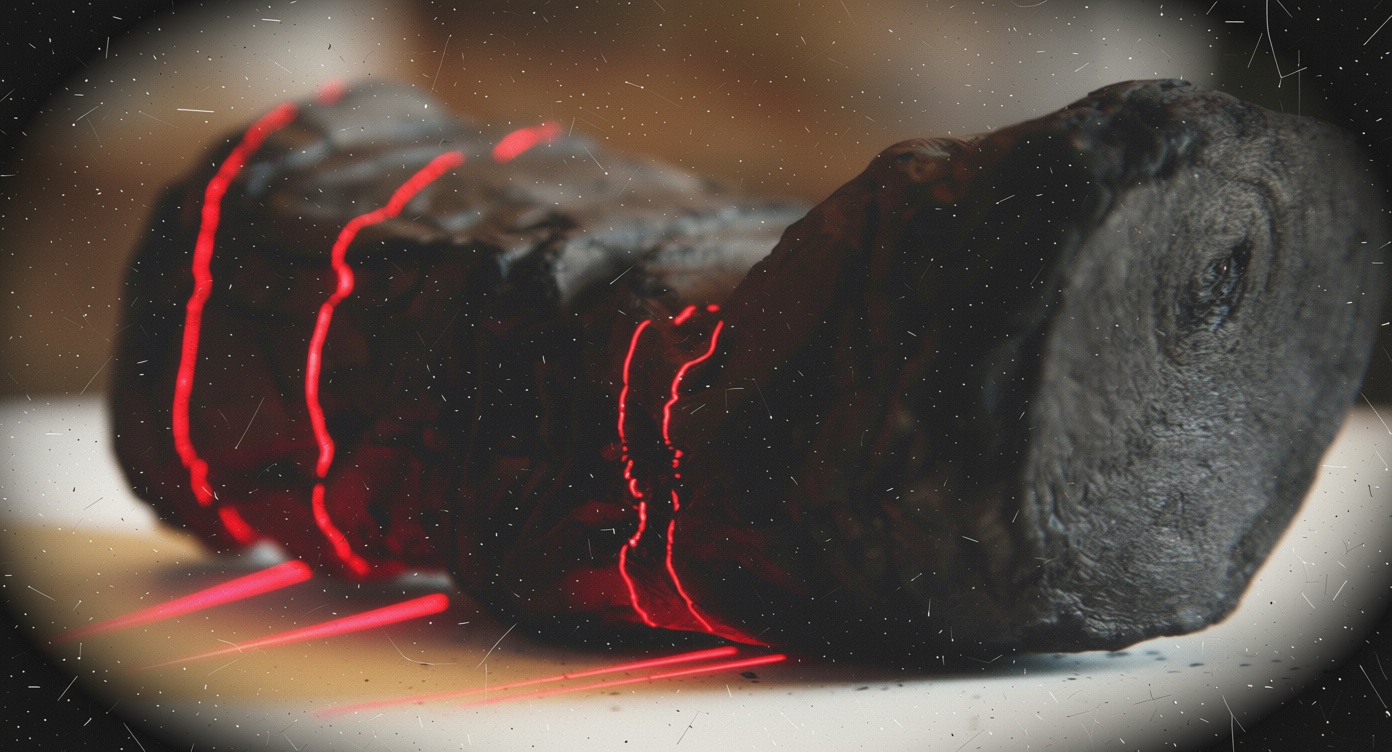
For nearly 2,000 years, the carbonized papyrus scrolls buried by the eruption of Mount Vesuvius have stood as one of archaeology’s most tantalizing puzzles. Now, researchers say new advances in 3D X-ray imaging and machine-learning tools are bringing them closer than ever to reading texts once thought permanently lost. The scrolls, preserved in the volcanic ruins of Herculaneum after Vesuvius erupted in A.D. 79, were effectively turned to brittle, blackened blocks by extreme heat and pressure. Yet scientists believe the contents are no longer beyond reach.
A breakthrough in reading the unreadable
The challenge has long been that the scrolls cannot simply be unrolled without destroying them. Many have been too fragile to handle, and their carbonized layers are nearly impossible to distinguish by eye. Researchers have turned instead to virtual unwrapping, using high-resolution 3D scans to digitally separate the layers and detect ink hidden inside the compressed papyrus. According to the report, only about 10% of the texts have been read so far, underscoring how much remains unknown. Even so, the progress marks a major shift from the longstanding view that these ancient documents could never be deciphered.
What makes the effort especially promising is the combination of imaging with artificial intelligence, which can help identify subtle patterns in the scans that the human eye might miss. In practice, that means software is being trained to recognize traces of ancient writing on the scroll surfaces, potentially revealing entire lines of text without physical damage to the artifact. The work is part of a broader international effort to recover the intellectual world of the ancient Roman elite, whose private library may still contain lost philosophical, literary, or historical works.
The new prize designed to accelerate discovery
To speed the effort, the University of Kentucky has announced a new $1 million prize for anyone who can fully decode a scroll by June next year. The challenge builds on a major 2023 breakthrough, when researchers demonstrated that the “impossible” problem of reading the charred scrolls may in fact be solvable with modern tools. By putting a substantial reward on the table, the university and its partners are hoping to attract outside expertise from computer science, imaging, and classical studies.
The prize also reflects a growing recognition that solving the scrolls may require more than traditional archaeology. The task now sits at the intersection of data science, machine learning, conservation, and ancient history. Competitors will likely need to extract clear, continuous text from damaged scans, a process that is both technically demanding and historically significant. If successful, the winner would help open a new chapter in the study of the ancient Mediterranean.
Why the scrolls matter
The Herculaneum scrolls are more than archaeological curiosities. They are among the only surviving libraries from the ancient world, offering a rare window into Roman-era scholarship and thought. Each recovered passage can reshape what historians know about philosophy, politics, and daily intellectual life in the centuries before the modern era. For scholars, the possibility of reading even one intact scroll is not just a technical milestone — it could produce a genuinely new source of ancient knowledge.
At the same time, the project highlights how modern science is rewriting the limits of preservation. What fire and ash nearly erased, digital tools may now recover. After almost two millennia of silence, the scrolls buried by Vesuvius may finally begin to speak again.