Overview
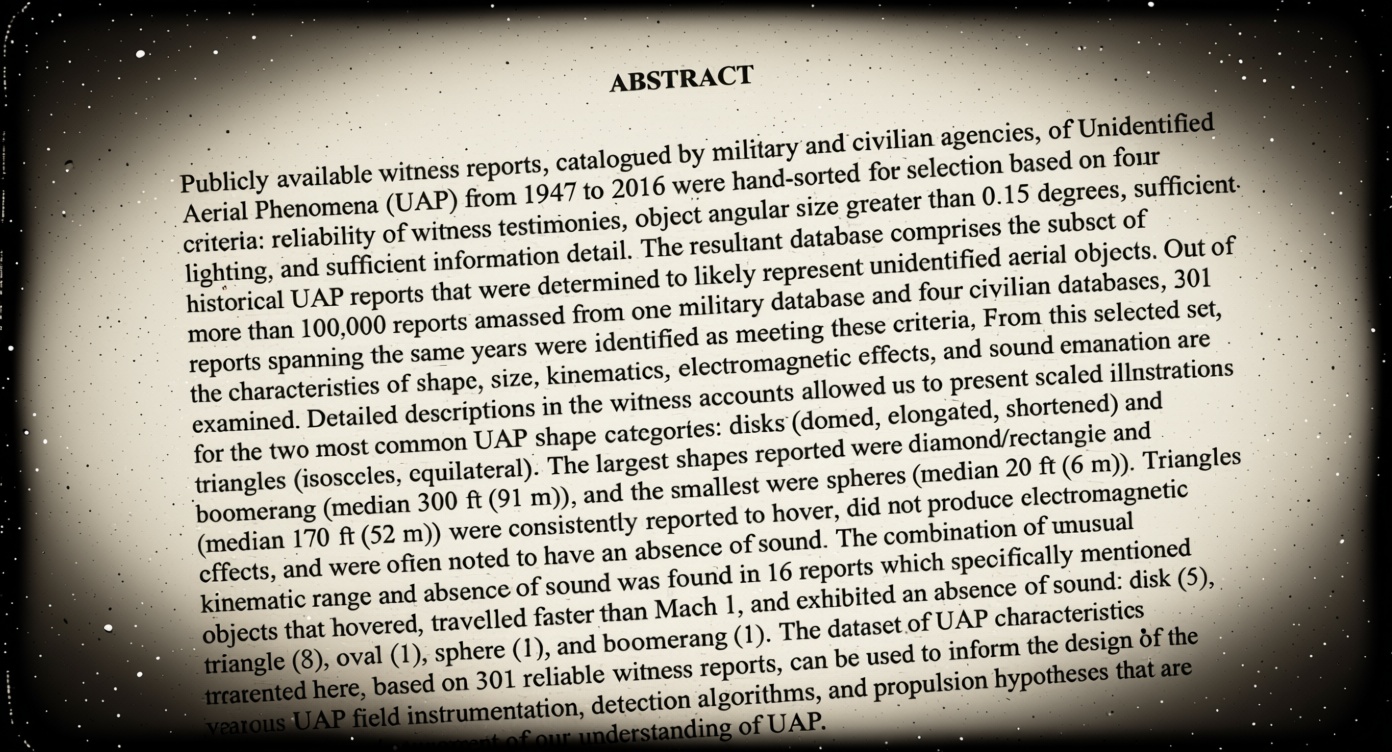
A new analysis from the Scientific Coalition for UAP Studies (SCU) has identified a small but notable subset of triangular sightings within a much larger body of reported unidentified anomalous phenomenon. In its paper, “The Reported Shape, Size, Kinematics, Electromagnetic Effects, and Presence of Sound of UAP,” published on December 12, 2023, SCU reviewed 301 UAP reports spanning 1947 to 2016 and found 12 cases described as equilateral triangles. The study is part of SCU’s broader effort to organize historical sightings by reported characteristics rather than relying solely on labels or anecdotal summaries.
Key Findings
According to the report, the triangle cases stood out for their consistency in form and reported size. The objects were described as equilateral, meaning their sides and angles were said to be uniformly proportioned, and several accounts placed them at more than 100 feet across. Witnesses also repeatedly reported lights at the vertices, a detail that appeared across multiple cases and time periods. In some reports, observers additionally described a central red light, suggesting a recurring visual pattern rather than isolated coincidence. SCU’s review presents these characteristics as part of a broader attempt to identify whether some UAP sightings show common structural traits that can be systematically compared.
Kinematics and Reported Effects
Beyond shape, the paper also examines how these objects were said to behave in flight. The SCU report includes kinematics—the movement and motion characteristics described by witnesses—along with electromagnetic effects and the presence of sound. Those categories matter because they move the discussion beyond appearance and into the conditions surrounding the sightings. Reports of electromagnetic interference, unusual movement, or acoustic effects can provide investigators with additional data points, even when the events themselves remain unexplained. At the same time, such findings should be treated cautiously: they reflect reported observations, not independently verified performance data.
Why the Study Matters
The SCU analysis is significant because it attempts to bring structure to a field often dominated by fragmented witness accounts and inconsistent terminology. By comparing decades of reports under a common framework, the organization aims to determine whether recurring shapes such as triangular craft represent a meaningful pattern in the UAP literature. The fact that only 12 of 301 reports fell into the equilateral triangle category also underscores how limited such cases are relative to the total sample. Still, the repeat appearance of similar descriptions—especially regarding size, lighting, and geometry—may help researchers refine future investigations and distinguish between isolated misidentifications and potentially more persistent report types.
Broader Context
The SCU paper fits into a growing trend among UAP researchers toward data-driven analysis of historical cases. Rather than focusing on singular dramatic encounters, studies like this look for patterns across archives, hoping to identify whether certain reported configurations recur often enough to justify closer scrutiny. For now, the findings do not resolve what the triangular cases represent. But they do add another layer to the evidence base by showing that, across nearly seven decades of reports, a small number of witnesses consistently described large equilateral triangular objects with distinctive lighting and unusual effects.