Overview
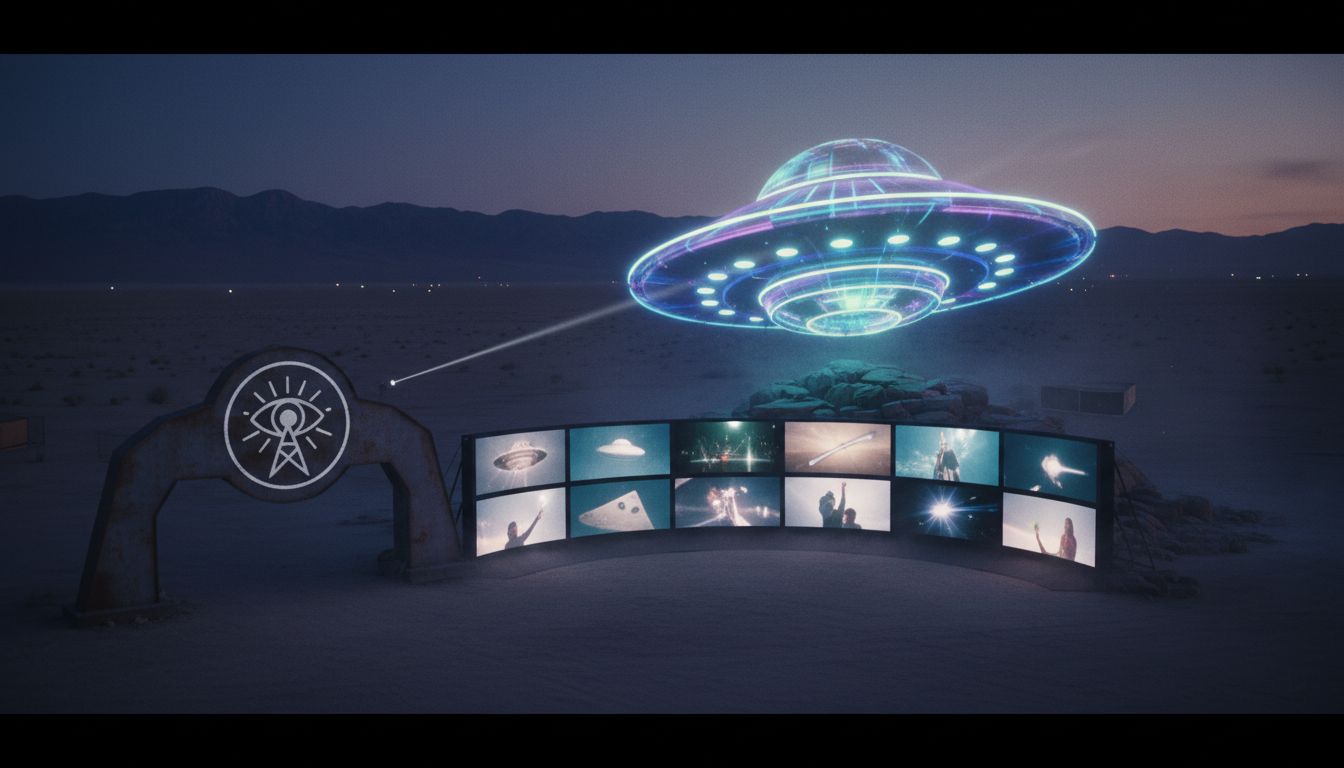
KLAS‑8 News Now is issuing a public call for anyone who has captured photographs of unidentified flying objects (UFOs) or unidentified aerial phenomena (UAPs) to submit their images to the station’s Mystery Wire platform. The invitation, aired during the station’s evening broadcast and posted on its website, asks viewers to help “document unexplained aerial phenomena” by sharing any visual evidence they may have gathered. Submissions will be reviewed by KLAS‑8’s investigative team and, if deemed credible, may be featured in future news segments or online stories.
How to Submit
The submission process is straightforward. Interested individuals can upload their photos through the Mystery Wire portal linked in the KLAS‑8 broadcast. The portal requires basic contact information—name, email, and a brief description of the sighting—and accepts image files up to 10 MB. KLAS‑8 emphasizes that contributors should provide date, time, and location details to aid verification. The station also encourages the inclusion of any supporting video footage, radar data, or eyewitness accounts that can corroborate the visual material.
“We want to give the public a safe, organized way to share what they see in the sky,” said Karen Martinez, KLAS‑8’s senior producer for the Mystery Wire series. “Our goal is to collect a robust archive that researchers, journalists, and the broader community can examine responsibly.”
Why Public Contributions Matter
Since the U.S. government de‑classified several Pentagon UAP videos in 2020, public interest in aerial anomalies has surged. Academic institutions, such as the National Aeronautics and Space Administration (NASA), have announced formal studies of UAPs, and congressional hearings have highlighted the need for systematic data collection. Community‑sourced photographs can fill gaps in official records, offering independent, civilian perspectives that may capture events outside military or commercial sensor coverage.
Experts caution, however, that many images turn out to be conventional aircraft, drones, or atmospheric phenomena. “Rigorous analysis is essential,” noted Dr. Elena Patel, an aerospace researcher at the University of Nevada, Las Vegas. “When the public contributes well‑documented, high‑resolution photos, it expands the data pool and helps distinguish genuine anomalies from misidentifications.”
Past Contributions and Impact
Mystery Wire, launched by KLAS‑8 in 2022, has already cataloged over 300 submissions. Several of these images have led to on‑air investigations that clarified the nature of the sightings—identifying hobbyist drones, weather balloons, and rare meteorological events. In one notable case, a 2023 submission of a luminous orb over the Mojave Desert prompted collaboration with the Federal Aviation Administration, which confirmed the object was a high‑altitude research balloon.
“Each piece of evidence, even if it ends up being a known object, adds to our understanding of what the public sees,” Martinez added. “It also builds trust that we’re taking these reports seriously and handling them transparently.”
Next Steps for Interested Viewers
KLAS‑8 advises contributors to verify the authenticity of their files before uploading—checking for digital alterations, ensuring timestamps are intact, and providing as much contextual information as possible. The station’s editorial team will conduct an initial review for image quality and plausibility, followed by a deeper analysis involving external experts when warranted.
Those who submit may be contacted for follow‑up questions, and selected contributors could be invited to appear in a future segment highlighting community‑driven UAP documentation. All submissions will be stored in a searchable database that KLAS‑8 plans to make available to researchers under appropriate privacy safeguards.
By mobilizing its audience, KLAS‑8 hopes to create a collaborative record of aerial phenomena that can inform both the public discourse and scientific inquiry. The station’s call for photos underscores a growing trend: citizen science is becoming an integral part of the broader effort to understand what, if anything, is flying above us that remains unidentified.