Overview
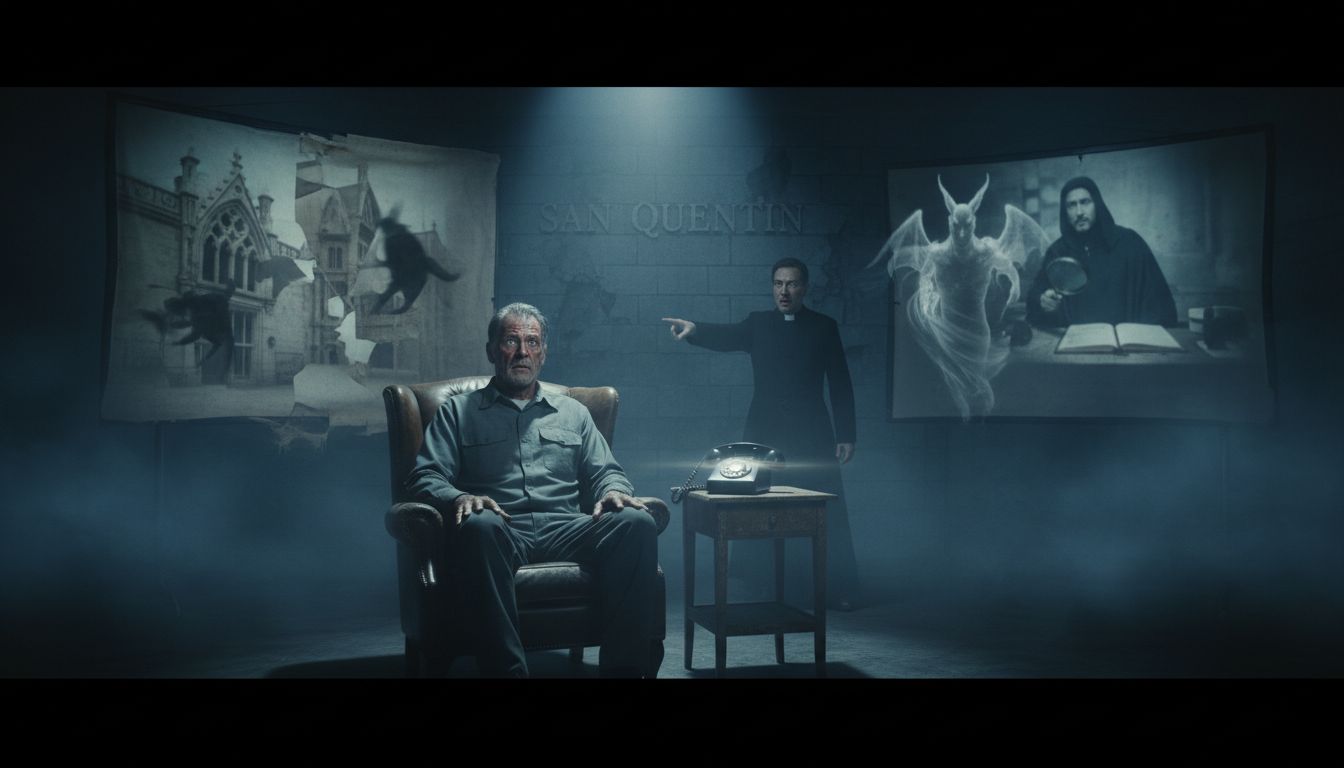
Former correctional officer Gregory Cain, who served 25 years at California prisons—including San Quentin—has detailed a series of unexplained events that he says occurred during his final assignment on death row. In a recent interview with Mindfield Bulletin, Cain describes moving shadows, phantom telephone calls, and a priest who repeatedly witnessed “dark figures” on the roof of the facility. The accounts have prompted prison officials to bring in a British hospice chaplain for an exorcism after staff reported a “child spirit in a red dress” while the institution prepares to relocate its death‑row unit.
Historical Context
San Quentin, California’s oldest state prison, traces its origins to the 1851 prison ship Waban and the inmate‑built “Stones” cell block completed in 1854. The site sits on land historically linked to the Coast Miwok warrior Point Quentin, a location that, according to historians Lichtenstein (1996) and Haney (2001), has witnessed “layers of conflict and death.” Cain argues that this deep‑seated trauma may act as a “repository of emotional residue,” a concept sometimes invoked in paranormal research to explain recurrent hauntings in institutions with prolonged histories of violence.
Reported Incidents
Cain recounts three primary phenomena:
- Moving shadows that appeared along the walls of the fifth‑tier death‑row block, described by him and his partner as “just beyond clear vision.”
- Phantom phone calls in Tower 8, where the caller ID displayed the abandoned fifth‑floor infirmary—a building stripped of power and phone lines decades earlier. Two officers who investigated the source reported no equipment was active.
- Visions by a Catholic priest, who told Cain he repeatedly saw “two dark figures perched on opposite corners of the roof,” referring to them as “black angels or demons.” The priest said he prayed before each shift, fearing the “energy inside might attach itself to him or follow him home.”
Cain’s narrative includes a later incident in which staff members claimed to see a “child spirit in a red dress” roaming the infirmary corridor, prompting the administration to seek external spiritual assistance.
Institutional Response
In response to the growing number of reports, San Quentin’s administration hired a British hospice chaplain experienced in conducting exorcisms in institutional settings. The chaplain performed a ritual aimed at “clearing the building” before the planned relocation of the death‑row unit to a newer facility. Prison officials have not released a formal statement confirming the efficacy of the rite, but they noted that the action was taken “out of an abundance of caution” and to address staff concerns about morale and safety. No official investigation by state law‑enforcement or the California Department of Corrections has been announced.
Analysis and Outlook
While Cain’s testimony provides vivid detail, experts caution against drawing definitive conclusions. Dr. Elena Ramirez, a psychologist specializing in occupational stress among correctional staff, notes that “high‑stress environments can heighten perception of ambiguous stimuli, especially in areas with a storied past.” Paranormal researcher Dr. Michael Hargrove adds that “historical trauma can influence collective narratives, but empirical verification remains essential.” As San Quentin prepares for the death‑row move, the prison’s leadership says it will continue monitoring staff reports and will consider additional mental‑health resources. The episode underscores the intersection of institutional history, employee well‑being, and the lingering allure of the unexplained.


