Overview
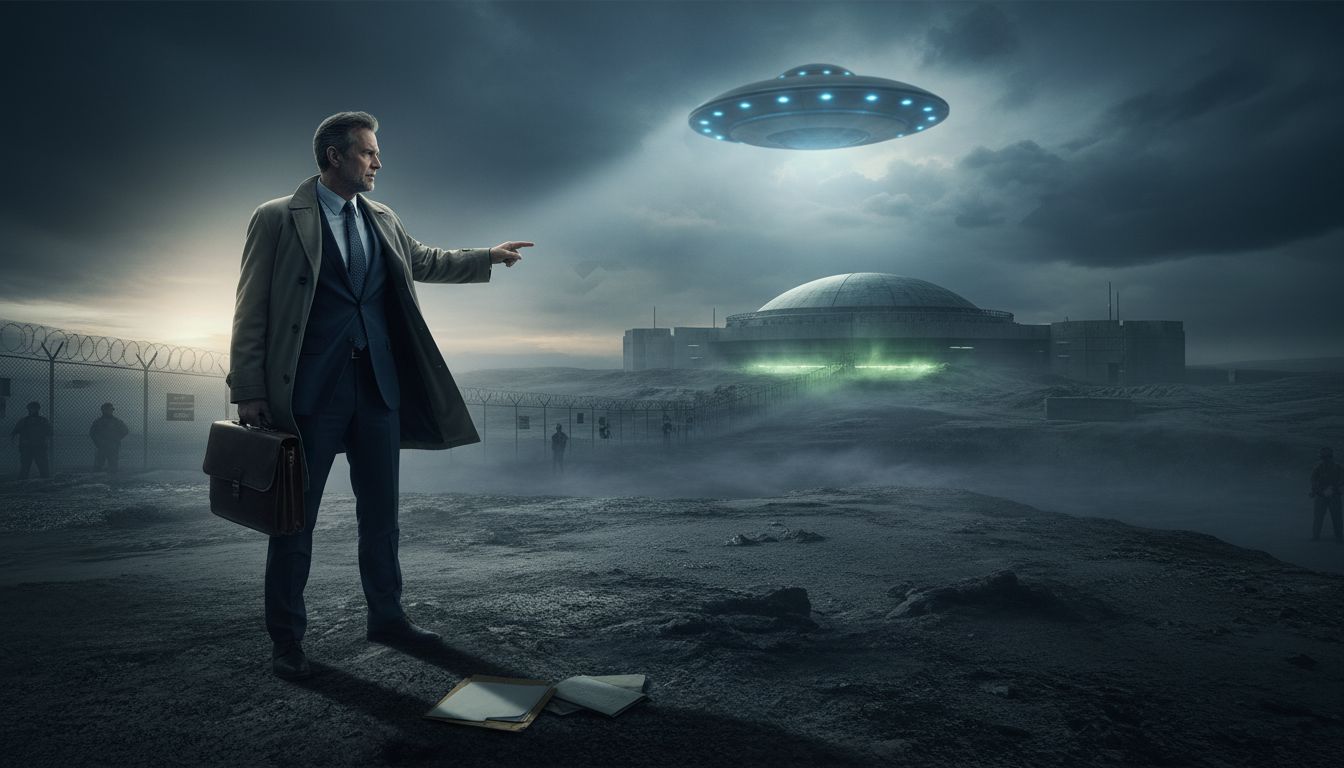
Missouri Representative Eric Burlison (R‑MO), a longtime skeptic of UFO claims, has launched a congressional effort to obtain declassified information about alleged secret U.S. military installations that allegedly study unidentified aerial phenomena (UAP). In a series of letters to the Department of Defense (DoD) and the Office of the Director of National Intelligence (ODNI), Burlison is demanding access to any classified reports, contracts, and facility logs that pertain to “UFO‑related” research. He says the goal is to bring greater transparency to a topic that has generated both public curiosity and legislative scrutiny since the Pentagon’s 2023 unclassified UAP assessment.
Legislative Background
The push comes amid a broader shift in Washington toward formalizing UAP oversight. In late 2023, the Senate Intelligence Committee released a bipartisan report acknowledging that “the government lacks a comprehensive understanding of many UAP incidents.” The report spurred the creation of the All‑Domain Anomaly Resolution Office (AARO) in early 2024, tasked with consolidating data across the Air Force, Navy, and intelligence agencies. While AARO has released a handful of redacted briefings, many lawmakers argue that the agency’s scope remains limited and that key documents remain sealed under national‑security exemptions.
Burlison’s request builds on a series of prior inquiries, including the 2022 “UFO hearings” held by the House Intelligence Committee, where former Pentagon officials testified about “potentially anomalous” aircraft recovered at undisclosed sites. However, no official inventory of such sites has ever been published, fueling speculation about “secret bases” both within the United States and abroad.
Burlinson’s Request
In his formal correspondence, the Missouri congressman asked the DoD to provide:
- A list of all military installations that have hosted UAP‑related research or testing since 2000.
- Copies of contracts awarded to private firms for analysis of recovered materials or sensor data.
- Declassified excerpts from any classified briefings that reference “non‑conventional aerospace technologies.”
“My constituents deserve to know whether taxpayer dollars are being spent on projects that remain hidden from public oversight,” Burlison wrote in a statement released March 27. “I am not a believer in conspiracy theories; I am a believer in accountability.”
The congressman also announced plans to visit known aerospace facilities—including the Nevada Test and Training Range and the Army’s Redstone Arsenal—to assess, first‑hand, the level of security and the plausibility of ongoing UAP research.
Reactions from the Defense Establishment
The Pentagon’s public affairs office responded that it “takes all legitimate congressional requests seriously” and that any release of information will be evaluated under existing classification guidelines. A senior DoD official, speaking on condition of anonymity, said, “We have no evidence of a covert, dedicated UFO base. However, we do have numerous projects that involve advanced sensor platforms, some of which generate data that is still being analyzed.”
AARO director Sean Kirkpatrick reiterated the office’s mission to “centralize and evaluate anomalous observations” but cautioned that “many of the phenomena we study are still poorly understood, and premature disclosure could compromise ongoing investigations.”
Broader Context and Public Interest
Public fascination with UFOs has surged since the 2023 Pentagon report, prompting a wave of legislative proposals ranging from the UAP Transparency Act to calls for a permanent congressional committee. Polls from Pew Research in early 2024 indicated that 61 % of Americans believe the government is withholding information about extraterrestrial life.
Burlison’s initiative reflects a growing bipartisan consensus that government secrecy—whether motivated by national security or bureaucratic inertia—needs clearer limits. Yet critics warn that an aggressive push for declassification could jeopardize legitimate intelligence operations. Former CIA analyst Michele Flournoy cautioned, “There is a fine line between transparency and compromising sources and methods that keep our nation safe.”
Next Steps
The House Oversight Committee is slated to hold a closed‑session briefing on April 15, where members will discuss the scope of classified UAP data and the feasibility of releasing portions to the public. Burlison has pledged to introduce a resolution that would require the DoD to produce a quarterly report on any UAP‑related expenditures exceeding $10 million.
Whether the investigation will uncover the rumored “secret UFO bases” remains uncertain, but the congressional effort signals a new era of scrutiny for a subject that has long hovered on the fringe of mainstream policy. As Burlison puts it, “If there’s nothing to hide, we have nothing to fear.”