Overview
A post‑election meeting of Doncaster City Council this week turned into an unlikely forum for UFO discussion. Reform Party councillor 18‑year‑old Kieran Lay moved to create a “Doncaster UAP Overview and Safety Committee” to monitor unidentified anomalous phenomena over the town and the nearby Doncaster Sheffield Airport. While the proposal was met with a surprisingly calm reception from his fellow councillors, it reflects a broader shift: governmental bodies in the UK, the US and elsewhere are beginning to treat reports of unidentified aerial phenomena (UAP) as matters of public safety and national security rather than fringe speculation.
Local Initiative
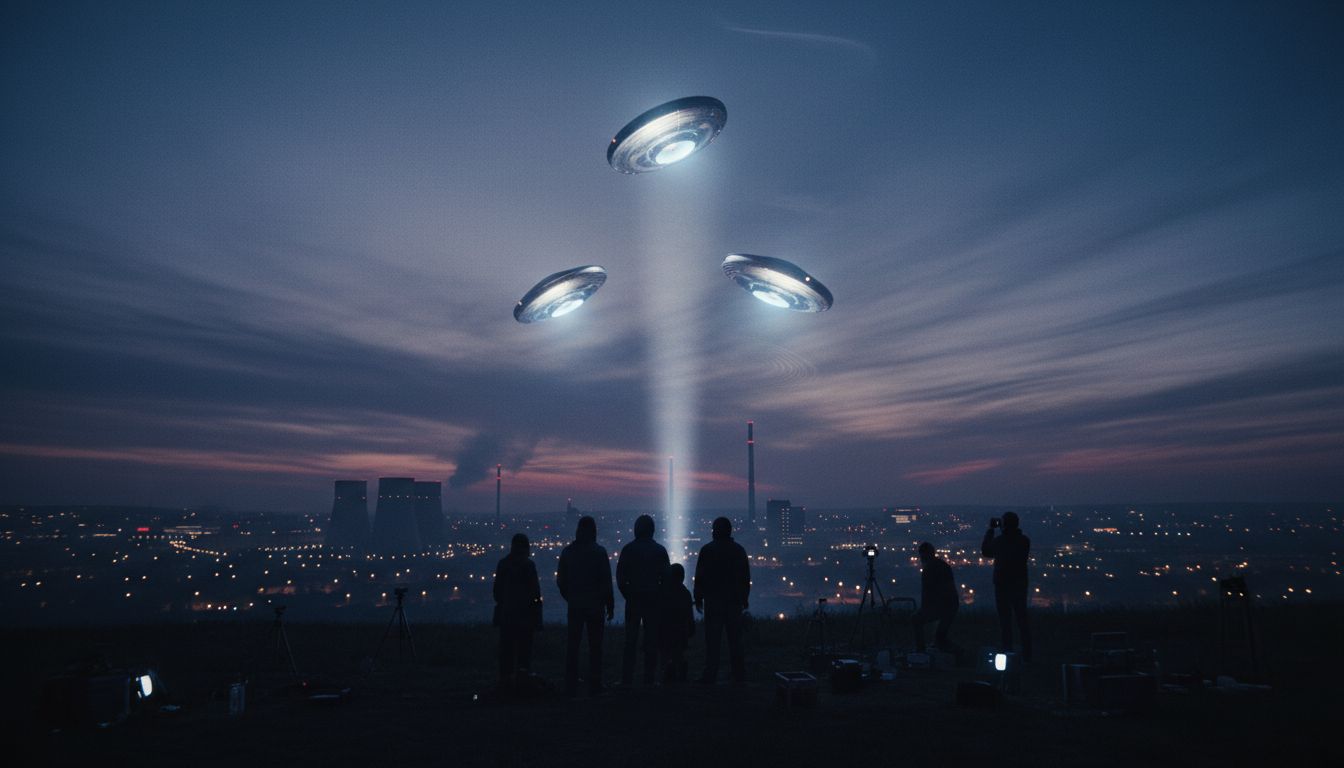
Lay’s motion cited recent sightings reported by residents near the airport, describing “bright, disc‑shaped lights executing rapid maneuvers” that defied conventional aircraft performance. He urged the council to liaise with the UK Ministry of Defence’s UAP desk, gather eyewitness accounts, and develop a protocol for any future incidents that could affect air traffic. “Our community deserves transparent information and a safety framework,” Lay told the chamber, echoing a growing demand for local oversight of what many consider a global mystery. The council agreed to table the proposal for further study, marking the first formal municipal attempt in the UK to institutionalise UFO monitoring.
International Context
The Doncaster move arrives amid a wave of high‑profile disclosures abroad. In the United States, former President Donald Trump announced the imminent release of all classified UFO files, a step that has already produced a modest batch of documents described by Tennessee Congressman Tim Burchett as “a drop in the bucket.” Burchett warned that forthcoming releases could be “holy crap,” suggesting that the current material barely scratches the surface of what the Pentagon’s UAP Task Force has collected. Japan has pledged to publish its own secret UFO data, Ukraine claims to be actively tracking anomalous objects, and former President Barack Obama recently affirmed that “UFOs are real,” later clarifying he meant the existence of intelligent life somewhere in the universe. These statements, coupled with a forthcoming book and documentary by retired Pentagon intelligence officer Jay Stratton, have propelled UAP topics into mainstream political discourse.
Scientific and Psychological Perspective
Beyond politics, researchers are examining why belief in extraterrestrial craft varies among individuals. Cognitive psychologists point to confirmation bias, where people give extra weight to ambiguous sightings that fit pre‑existing narratives, and pattern‑recognition heuristics, which predispose the brain to interpret random lights as structured craft. Studies also highlight the role of social identity: individuals aligned with groups that champion UFO transparency—such as certain reformist or libertarian circles—are more likely to accept anomalous reports as evidence of non‑human technology. The availability heuristic further amplifies belief; high‑visibility media coverage, like the Doncaster council debate or U.S. congressional hearings, makes UFO incidents feel more common than statistical analyses suggest. While these biases do not invalidate genuine sightings, they underscore the importance of rigorous data collection and peer‑reviewed analysis to separate perception from phenomenon.
Next Steps
Doncaster’s proposed committee will now draft a charter, seek collaboration with national defence agencies, and establish a public reporting portal. Simultaneously, the UK Ministry of Defence has indicated it will share relevant de‑classified material with local authorities, though it cautions that many reports lack sufficient sensor data for definitive classification. Internationally, the anticipated U.S. document dump and Japan’s upcoming release are expected to provide a larger evidentiary base, potentially prompting coordinated multinational research efforts. As governments move from denial to disclosure, the challenge will be to balance transparent communication with scientific rigor, ensuring that public curiosity is met with credible information rather than speculation.


