Overview
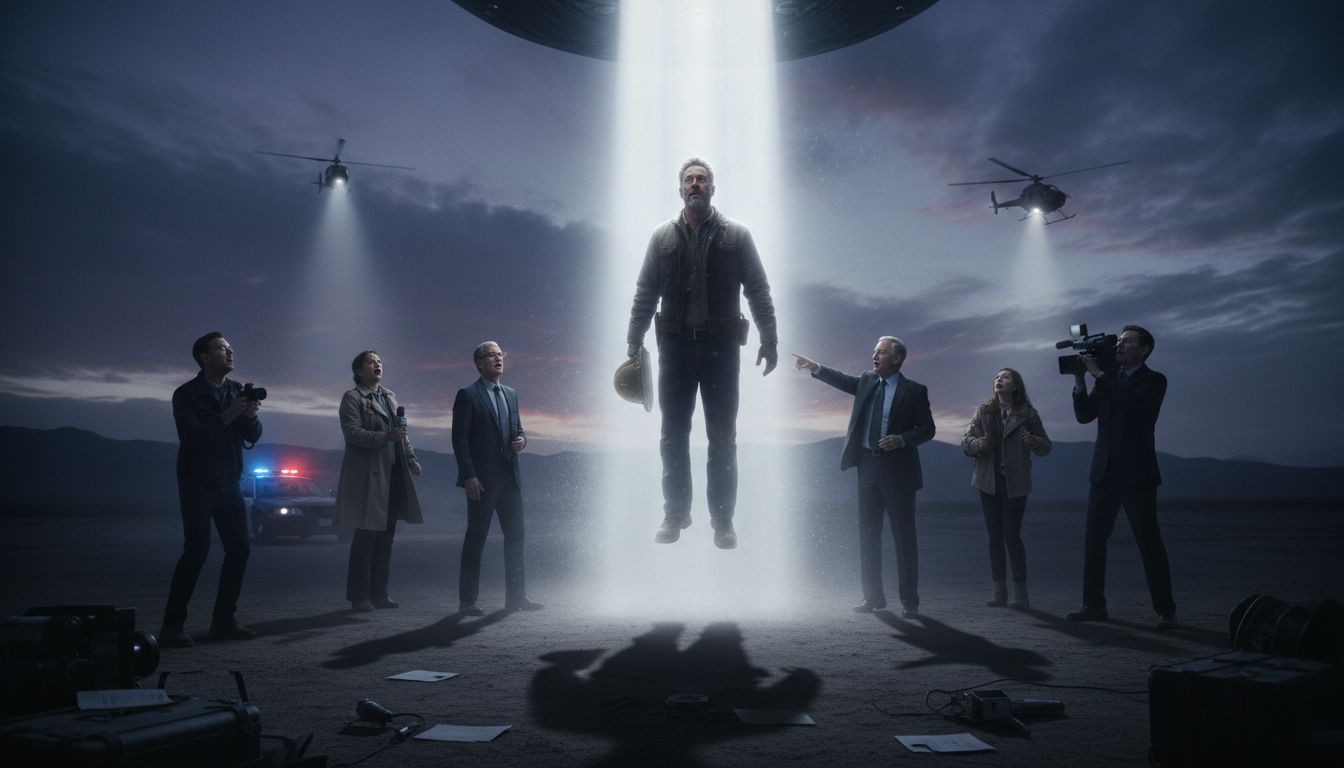
A 48‑year‑old defense contractor, Steven Garcia, vanished from his home in San Diego on March 28, 2026, under circumstances that a NewsNation reporter says echo a series of unexplained disappearances and deaths among UAP (unidentified aerial phenomenon) researchers. Garcia, who held a top‑secret clearance and worked on classified projects linked to the Department of Defense’s UAP investigation, was last seen leaving his house to take a routine jog. No phone calls, vehicle activity, or surveillance footage have been released, and his family has not been contacted by authorities since.
Background
Garcia’s employment record shows he was a senior systems integrator for a contractor that supplies data‑analysis tools to the Pentagon’s Unidentified Aerial Phenomena Task Force (UAPTF). According to a statement from his employer, he “had no known personal or professional conflicts” and was scheduled to brief senior officials on a new sensor‑fusion algorithm later in the week. The disappearance was reported to the San Diego Police Department on April 1, and a missing‑person’s bulletin was issued three days later. The case has now been handed to the FBI, which is treating it as a “potential national‑security matter,” a spokesperson confirmed on April 12.
Pattern of Insider Cases
Reporter Lauren Conlin notes that Garcia’s case is the latest in a string of at least ten similar incidents involving individuals with privileged access to UAP data. The most cited example is former Air Force senior scientist Neil McCasland, who disappeared from his home in 2024 after warning that “the truth about UAPs is being systematically suppressed.” Other cases include the 2023 death of Dr. Elena Ruiz, a physicist who was found dead in her Washington, D.C., apartment, and the 2022 unexplained disappearance of former Navy pilot James “Jim” Ortega. Conlin’s investigation points to commonalities: high‑level clearances, involvement in classified UAP programs, and a lack of transparent follow‑up from federal agencies.
Official Reactions
Former Pentagon official John “Jack” Ramirez, who served on the UAPTF advisory board, told NewsNation that “the pattern is concerning, but we must avoid jumping to conclusions about foul play.” Ramirez emphasized that the Department of Defense has “strict protocols for the protection of personnel and their families,” and that any breach would trigger an inter‑agency response. Defense analyst Dr. Emily Hart of the Center for Strategic Threat Assessment added that “if individuals with access to sensitive UAP data are being targeted, it would represent a serious intelligence‑security breach, potentially compromising both classified technology and national‑defense strategies.” Hart called for a congressional hearing to examine the handling of these cases.
Implications for National Security
The convergence of multiple insider disappearances has reignited debate over the transparency of the U.S. government’s UAP program. Advocates for greater disclosure argue that secrecy may be shielding not only the existence of advanced aerial phenomena but also potential vulnerabilities in U.S. aerospace defenses. Critics warn that speculation can fuel conspiracy theories and distract from legitimate security concerns. As the FBI’s investigation proceeds, families of the missing, including Garcia’s wife Maria Garcia, are urging “a thorough, timely accounting of what happened” while respecting any classified constraints. The outcome could shape future policy on how the United States balances openness with the protection of sensitive defense information.


