Overview
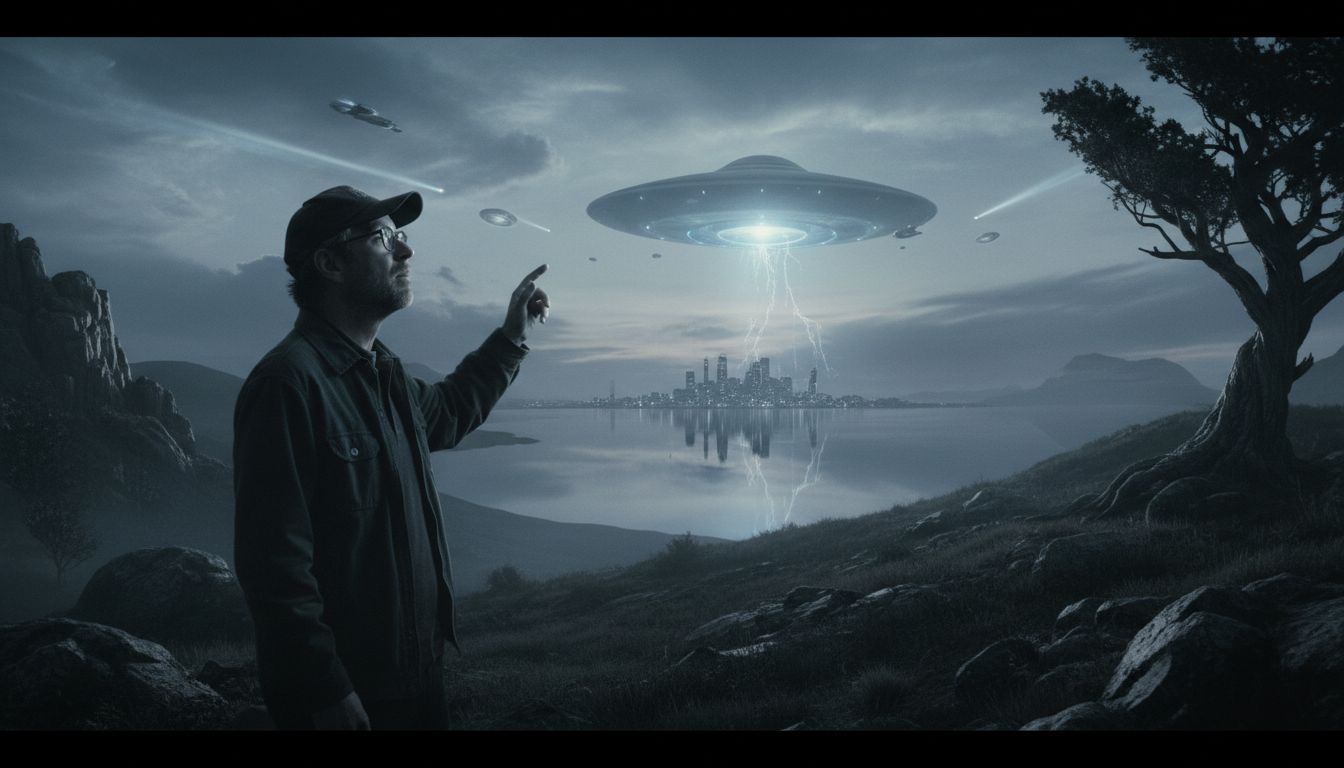
At the opening keynote of the South by Southwest (SXSW) Film & TV Festival on March 13, acclaimed director Steven Spielberg told The Hollywood Reporter that he “has a strong suspicion we’re not alone on Earth right now.” The comment, delivered during a panel on storytelling and the unknown, was quoted by writer‑at‑large James Hibberd and quickly circulated on social media. Spielberg’s remarks arrive amid a wave of recent government disclosures and scientific studies that have thrust unidentified aerial phenomena (UAP) into mainstream discourse.
Spielberg’s Remarks
When asked about the influence of extraterrestrial themes on his work, Spielberg responded, “I’ve always been fascinated by the idea that there might be something out there, and after the recent UFO revelations, I have a strong suspicion we’re not alone.” He referenced the 2023 Pentagon report that catalogued 144 UAP sightings and the 2024 congressional hearing where senior defense officials acknowledged “anomalous aerial objects” that defy conventional explanation. Spielberg added that these developments have “made the conversation feel less like science‑fiction and more like a real, open‑ended mystery.”
Mainstream Momentum
The filmmaker’s statement reflects a broader shift in public perception. In the past year, the U.S. Office of the Director of National Intelligence released a supplemental assessment noting that UAPs remain an unresolved national‑security concern. NASA announced a dedicated UAP research team in early 2024, and several declassified Navy videos have been widely analyzed by both scientists and independent investigators. High‑profile figures—including former Secretary of Defense Lloyd Austin and astronaut Chris Cassidy—have spoken publicly about the need for transparent investigation, lending credibility to a topic once relegated to fringe speculation.
Expert Reactions
Aubrey Miller, a senior analyst at the Center for UAP Studies, welcomed Spielberg’s acknowledgment, saying, “When someone of Spielberg’s cultural stature expresses genuine curiosity, it helps normalize serious inquiry into these phenomena.” Conversely, astrophysicist Dr. Elena Vargas cautioned against conflating “suspicion” with evidence, noting that “the current data set is still limited, and rigorous peer‑reviewed research is essential before drawing conclusions.” The mixed response underscores the tension between public fascination and the scientific community’s demand for empirical proof.
Looking Ahead
Spielberg’s comment may influence upcoming film projects, as he hinted that his next science‑fiction venture could explore “the human side of contact” rather than the typical alien invasion trope. Industry insiders predict that Hollywood’s renewed interest could spur collaborations with scientific consultants and even government agencies seeking to portray UAPs responsibly. As the debate over extraterrestrial life moves from classified briefings to red‑carpet interviews, the cultural narrative is poised to evolve—potentially reshaping both entertainment and public policy.
In sum, Spielberg’s “strong suspicion” encapsulates a moment where entertainment, government transparency, and scientific curiosity intersect. Whether the speculation leads to concrete discovery remains uncertain, but the conversation is undeniably more mainstream than ever before.