Overview
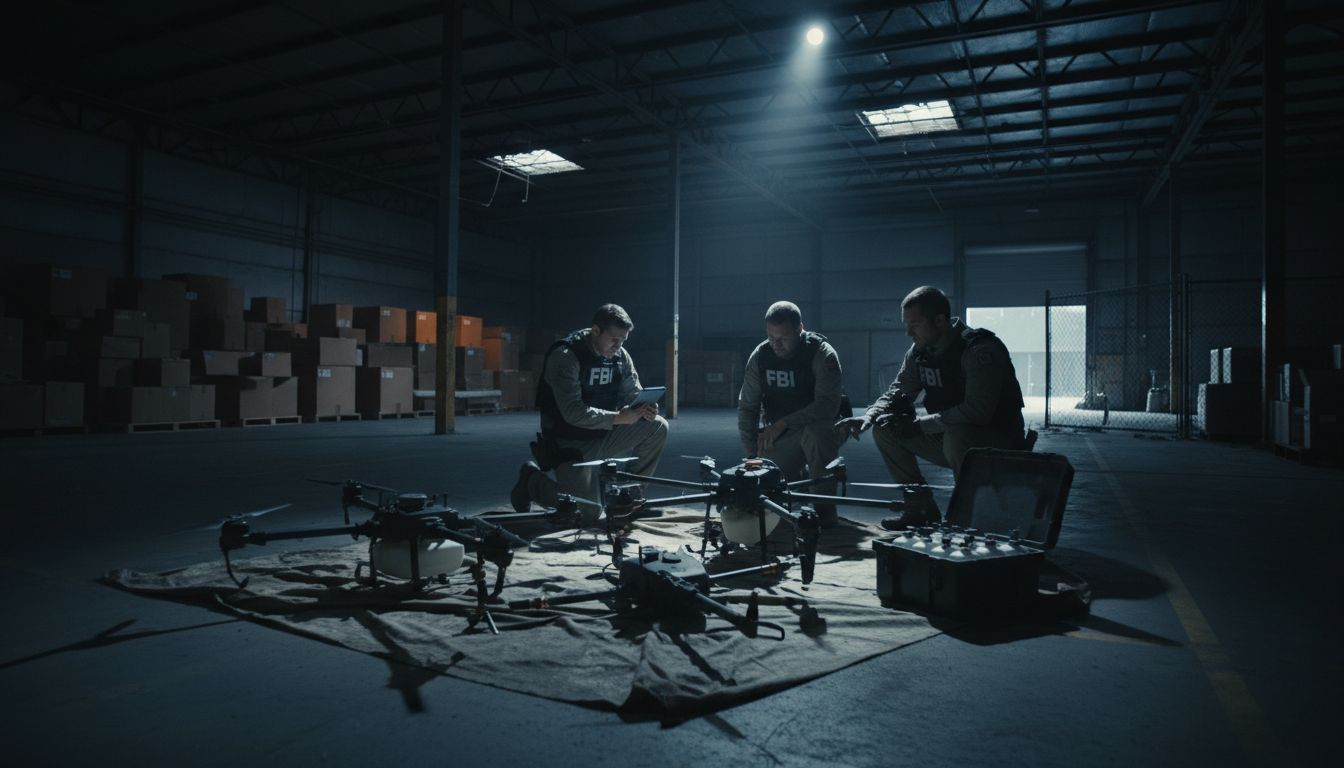
The Federal Bureau of Investigation’s Counterterrorism Division has opened a formal investigation into the theft of 15 industrial‑grade agricultural spray drones from a warehouse in northern New Jersey. According to a statement released to the press on April 29, the drones were removed from the facility using forged shipping documents and are now unaccounted for. FBI officials say the case underscores how readily such high‑capacity unmanned aircraft can be acquired, repurposed, and potentially weaponized in the absence of clear federal regulation.
Why the Drones Matter
The stolen units are not hobby‑grade quadcopters; they are large‑scale, GPS‑guided spray platforms capable of dispersing up to 200 gallons of liquid per flight and operating for more than an hour on a single battery charge. Industry experts note that the same technology is employed for pesticide application, fire‑suppression, and, in some experimental programs, rapid delivery of payloads in remote or contested environments. “When you combine that payload capacity with autonomous navigation, the threat profile changes dramatically,” said Special Agent Maya Patel, the FBI’s lead counterterrorism liaison on the case. Patel added that the drones could be modified to carry hazardous chemicals, improvised explosives, or even biological agents, raising concerns for both domestic security and public safety.
Regulatory Gaps Highlighted
U.S. law currently classifies most commercial drones under Part 107 of the Federal Aviation Administration (FAA) regulations, which focus on pilot certification and airspace restrictions but do not address payload size, chemical dispersal capabilities, or export controls for industrial models. Congressional staffers have previously flagged this loophole, noting that the FAA’s framework was designed for hobbyist and small‑scale commercial use, not for the “heavy‑lift, spray‑system” platforms now emerging in the agricultural sector. The FBI’s investigation is prompting an internal review of whether existing statutes are sufficient to prevent illicit acquisition of such equipment.
Parallel Controversies: Pentagon Leaks and Grusch’s Claims
The drone theft story has resurfaced amid a wave of unrelated disclosures. Leaked Pentagon emails obtained by investigative journalists earlier this month revealed internal debates about “non‑human intelligence” programs, with senior officials warning that public narratives were being tightly controlled. In a separate interview, former intelligence officer David Grusch reiterated his earlier allegation that the Department of Defense possesses evidence of sentient, non‑human entities. While Grusch’s statements pertain to a distinct subject, the timing has amplified speculation about a possible link between advanced unmanned systems and classified aerospace projects. FBI officials, however, emphasized that the drone case is being pursued independently of any extraterrestrial or “UAP” investigations and that no evidence currently suggests the stolen aircraft are tied to such programs.
Next Steps and Broader Implications
The FBI has issued an alert to local law enforcement agencies and to manufacturers of commercial spray drones, urging them to report any sightings of the missing units. A task force comprising the Department of Homeland Security, the FAA, and the Department of Agriculture is being assembled to trace the drones’ serial numbers and to assess potential supply‑chain vulnerabilities. “Our priority is to locate the equipment before it can be altered or deployed for malicious purposes,” Patel said.
Policy analysts argue that the incident could serve as a catalyst for legislative action. Proposed measures include mandatory end‑user verification for high‑capacity drones, tighter export licensing, and a requirement for manufacturers to embed tamper‑evident tracking chips. As the investigation proceeds, officials caution the public against speculation while acknowledging that the case highlights a growing intersection of commercial technology and national security that regulators must address promptly.
The FBI has not disclosed the identities of the warehouse owners or the specific make and model of the drones, citing ongoing investigative needs.