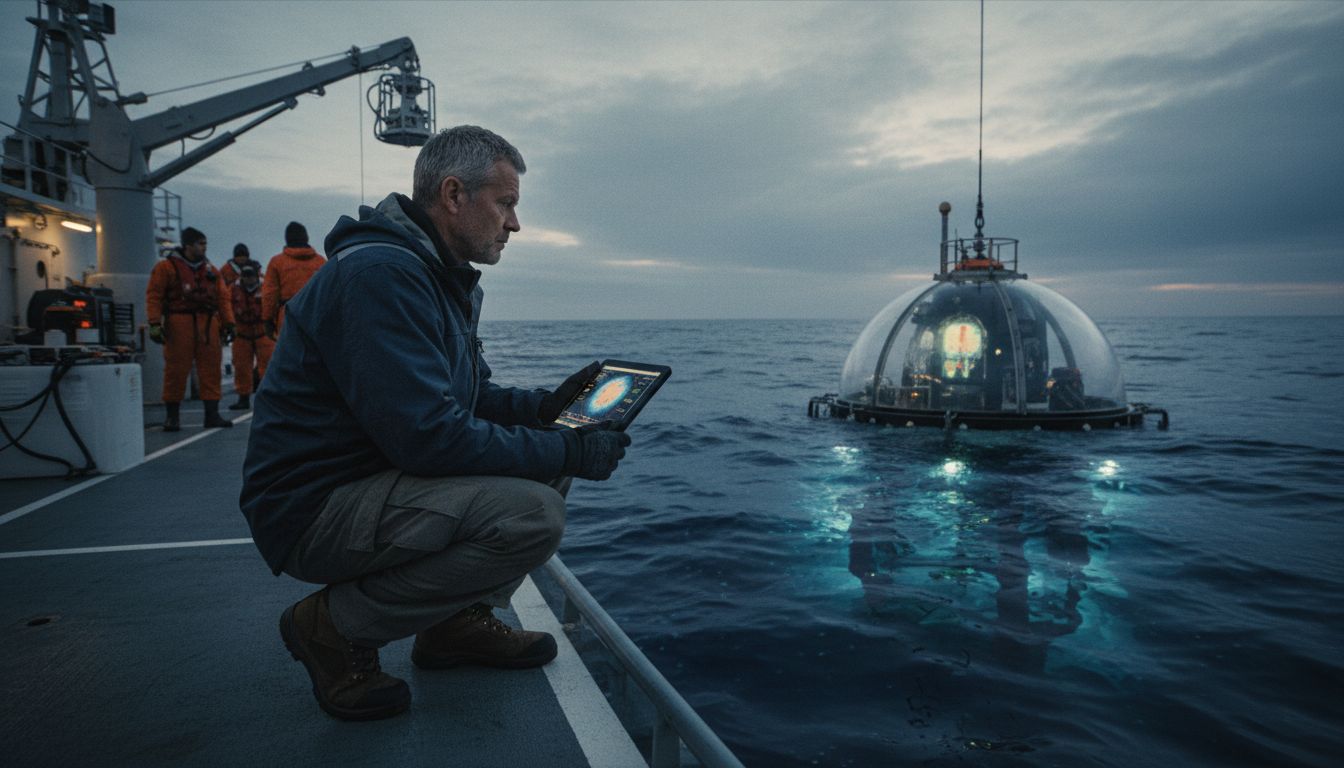
Scientists from the University of Colorado Boulder and the European Space Agency announced Thursday that new analyses of data collected by the Cassini spacecraft point to a combination of liquid water and a stable, thin atmosphere on Saturn’s moon Enceladus—conditions that, according to established astrobiological criteria, could support microbial life. The study, published in the journal Nature Astronomy, examined high‑resolution measurements of plume composition taken during Cassini’s final orbits in 2017, revealing trace amounts of nitrogen‑bearing gases that suggest a persistent, albeit tenuous, atmospheric layer above the moon’s icy crust. “We have long known Enceladus ejects water vapor, but the detection of a sustained nitrogen component indicates a more complex system than previously thought,” said Dr. Maya Patel, lead author of the paper.
The team’s findings build on earlier discoveries of a global subsurface ocean beneath Enceladus’s south‑polar ice shell, first inferred from geyser‑like plumes and confirmed by gravity‑field studies. By applying a new atmospheric modeling framework, the researchers determined that the observed nitrogen compounds could be maintained for decades without rapid loss to space, implying a source of replenishment—most plausibly hydrothermal activity at the ocean floor. “Hydrothermal vents on Earth are hotbeds of life, and the chemistry we see on Enceladus mirrors those environments,” Patel added. The study also identified modest concentrations of methane and carbon monoxide, further bolstering the case for an energy‑rich environment.
While the discovery excites planetary scientists, it also fuels public curiosity about extraterrestrial life and, inevitably, speculation about unidentified flying objects (UFOs). Some commentators have linked the new data to a surge in reported sightings of anomalous aerial phenomena near Saturn’s orbit, but experts caution against drawing premature conclusions. “The presence of liquid water and a stable atmosphere makes Enceladus a prime candidate for habitability, not a direct explanation for UFO reports,” said Dr. Luis Hernandez, an astrobiologist at the SETI Institute who was not involved in the study. “We must separate rigorous scientific evidence from the broader cultural narratives that often accompany it.”
The implications for future missions are significant. NASA’s upcoming Enceladus Orbilander concept, currently under study for a potential launch in the early 2030s, would aim to land on the moon’s surface and directly sample both the plume and the near‑surface atmosphere. Such a mission could test for biosignatures—chemical markers of life—by analyzing organic molecules in situ. Meanwhile, the European Space Agency is evaluating a follow‑on to its Titan‑focused Dragonfly mission that could include a fly‑by of Enceladus to corroborate the atmospheric findings. “If we can confirm a stable atmosphere, it changes the engineering requirements for a lander and opens new avenues for detecting life,” noted Dr. Patel.
In the meantime, the scientific community emphasizes the need for peer review and replication. The Gephardt Daily report, while timely, provides limited detail beyond the headline, and readers are encouraged to consult the original peer‑reviewed article for a full account of the methodology and uncertainties. As Dr. Hernandez summarized, “The excitement is warranted, but we must remain disciplined in interpreting data. The discovery of habitable conditions on Enceladus is a milestone for astrobiology, and it underscores the importance of continued exploration of the outer solar system.”