Overview
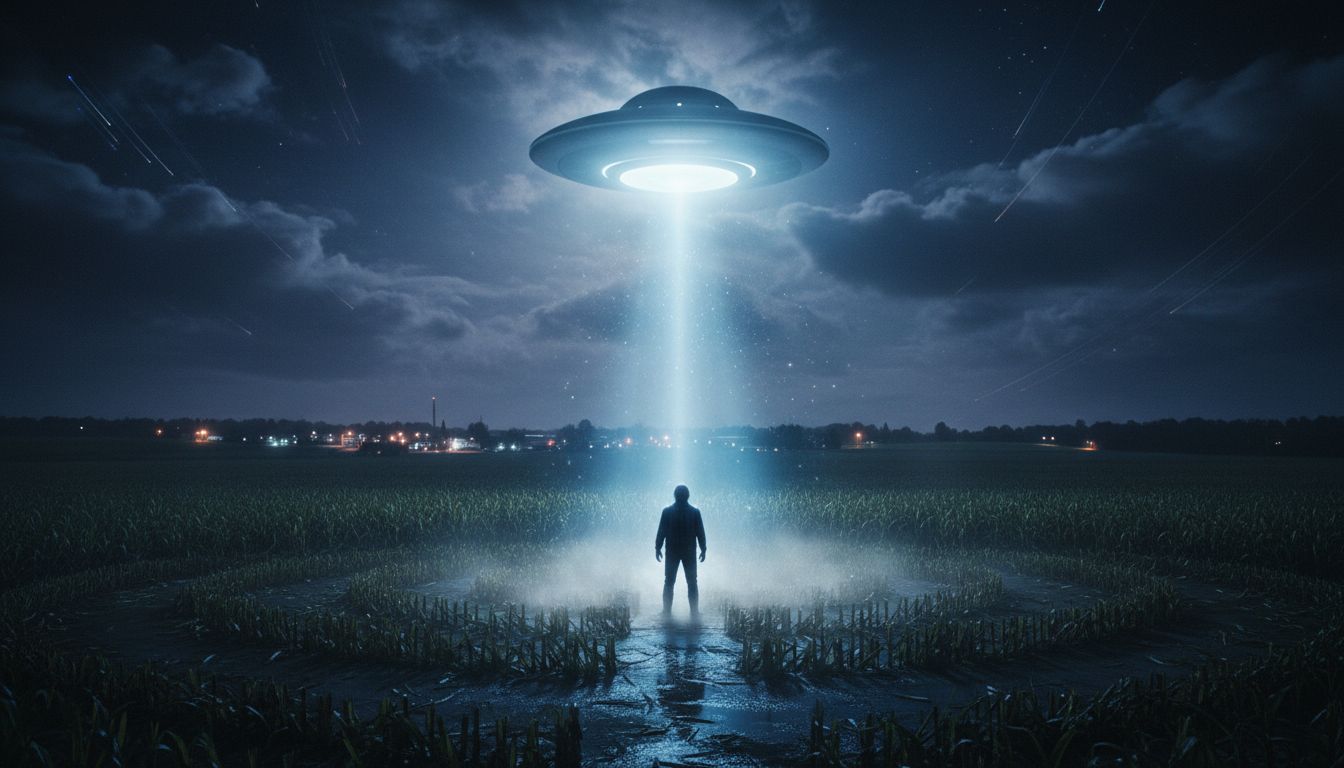
A recent study released by researchers at Ohio State University estimates that residents of Ohio face roughly a 0.01 % chance of experiencing an alien abduction. The findings, reported by Spectrum News on February 9, 2026, come amid a resurgence of public interest in unidentified aerial phenomena (UAP) following the U.S. government’s 2023 unclassified report and a series of high‑profile sightings. While the probability is vanishingly small, the study’s methodology and its broader implications for how the public engages with UFO research have sparked discussion among scientists, skeptics, and enthusiasts alike.
Methodology
The research team surveyed 2,500 Ohio adults between October and December 2025, asking participants to report any personal experiences that matched a standardized set of abduction‑related criteria (e.g., missing time, unexplained physical marks, and recollection of non‑human entities). Responses were then subjected to statistical modeling that accounted for demographic variables, recall bias, and the prevalence of sleep‑related phenomena such as hypnagogic hallucinations. By cross‑referencing the survey data with national UAP incident databases, the analysts derived a probability estimate of one in ten thousand for an Ohio resident to be abducted in a given lifetime.
Key Findings
- Overall likelihood: 0.01 % (approximately one in ten thousand) for an Ohio resident.
- Demographic patterns: Slightly higher reported incidences among respondents aged 45‑64, though the differences were not statistically significant after adjusting for sample size.
- Geographic clusters: Rural counties in the north‑western part of the state showed marginally higher self‑reported rates, a pattern that mirrors historical “UFO hotspots” identified in earlier UAP research.
- Comparison to national data: The Ohio estimate aligns closely with a 2024 national study that placed the U.S. average at 0.009 %, suggesting the state’s risk is not anomalously high.
Expert Commentary
Dr. Megan Patel, lead author of the study and professor of statistical sociology, cautioned against sensational interpretation: “Our model is designed to quantify a very rare phenomenon using the best‑available self‑report data. The 0.01 % figure should be understood as a statistical abstraction, not a prediction of imminent encounters.”
UFO researcher James Whitaker, director of the Center for Aerial Phenomena Studies, welcomed the rigor of the work: “It’s encouraging to see academic standards applied to a field often dismissed as fringe. Even a tiny probability invites us to keep an open, yet critical, eye on the evidence.”
Conversely, skeptic Dr. Laura Chen, a neurologist at Cleveland Clinic, emphasized alternative explanations: “Many of the reported experiences can be linked to sleep paralysis, temporal lobe seizures, or even cultural storytelling. Robust statistical analysis helps separate myth from measurable risk.”
Public Reaction and Broader Context
Since the study’s release, social media platforms have seen a modest uptick in discussions about “alien abduction odds,” with many Ohioans sharing personal anecdotes while others express amusement at the odds. Local officials, however, have remained measured; Columbus Mayor Andrew Torres issued a brief statement noting, “While the study is intriguing, city resources will continue to focus on public safety and scientific education.”
The research arrives at a moment when the Pentagon’s UAP Task Force continues to declassify reports, and congressional hearings on aerial anomalies are scheduled for later this year. By providing a data‑driven baseline, the Ohio study contributes to a growing body of work that seeks to move UFO discourse from speculation toward empirical inquiry.
Implications
Although a 0.01 % chance translates to a remote likelihood for any individual, the study underscores the importance of systematic data collection in a domain traditionally dominated by anecdote. It also highlights the need for interdisciplinary collaboration—combining sociology, psychology, and aerospace science—to parse genuine unexplained events from well‑understood neurological or environmental phenomena. As public fascination with UFOs persists, such rigorously grounded research may shape future policy decisions, funding for UAP investigations, and the way society frames the possibility of extraterrestrial contact.