Overview
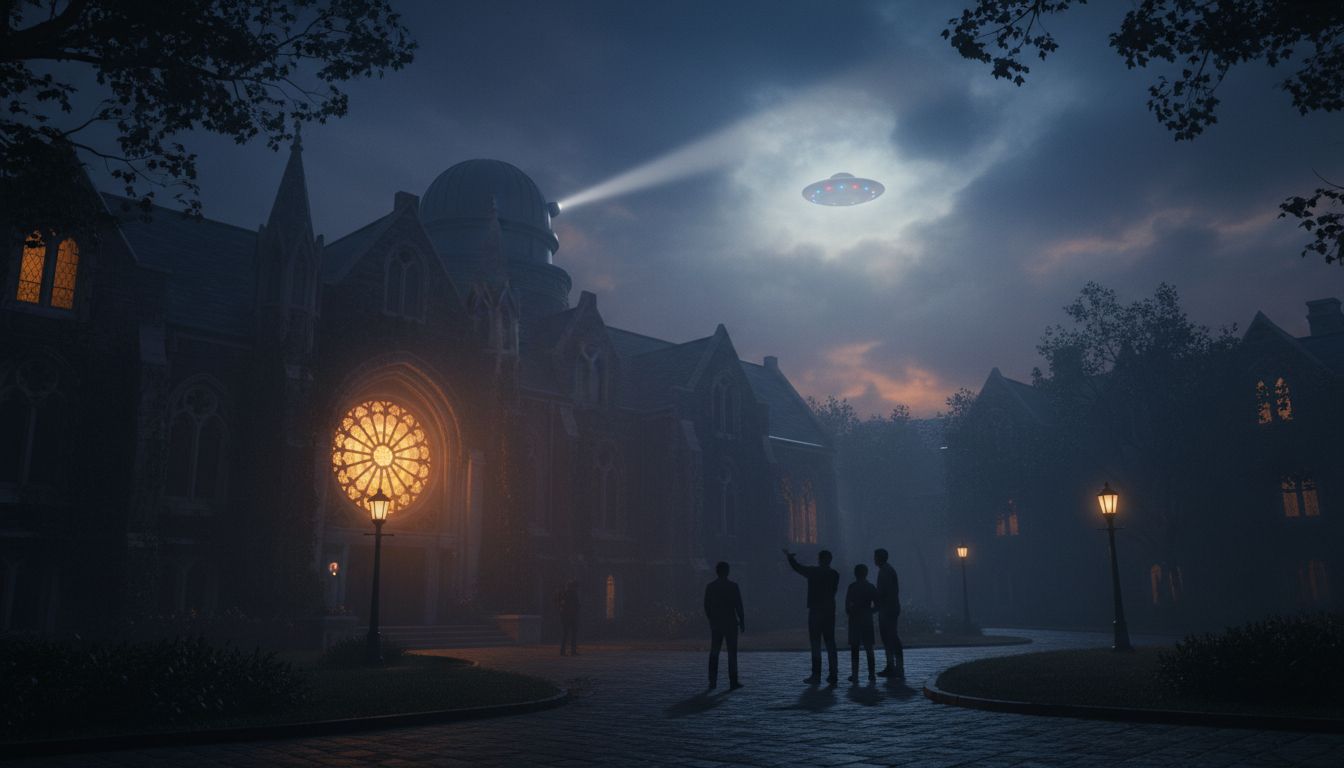
Elizabethtown College’s Department of Astronomy will host a public lecture this month that examines the historical evolution of UFO and UAP (Unidentified Aerial Phenomena) reports. The event, advertised on the college’s website and local news outlet LancasterOnline, is positioned as an interdisciplinary discussion that traces how sightings have been interpreted across cultural, scientific, and governmental arenas since the mid‑twentieth century. By opening the forum to the broader community, the college aims to foster informed dialogue about a topic that continues to capture public imagination while remaining a subject of serious scholarly inquiry.
Historical Context
UFO sightings entered mainstream awareness in the late 1940s, most notably with the 1947 “Roswell” incident and the subsequent surge of reports that prompted the U.S. Air Force to launch Project Blue Book. Over the ensuing decades, the phenomenon has oscillated between sensational media coverage and cautious scientific scrutiny. Scholars note that the Cold War era amplified both fear and curiosity, while more recent declassified documents—such as the 2020 Pentagon UAP report—have renewed interest from policymakers and researchers alike. The upcoming lecture will situate these milestones within a broader narrative, highlighting how cultural attitudes, technological advances, and governmental transparency have shaped public perception of aerial anomalies.
Event Details
The lecture is scheduled for [insert date] at the college’s Science Hall, Room 112, beginning at 7:00 p.m. Admission is free, and seating is limited, prompting organizers to encourage early registration through the college’s online portal. According to the department’s announcement, the program will feature a presentation by Dr. Michael J. O’Connor, professor of astronomy and director of the college’s research outreach program, followed by a moderated Q&A session. O’Connor, who has authored several papers on atmospheric optics and space debris, will draw on archival material, eyewitness testimonies, and recent government releases to illustrate how the UFO narrative has evolved.
Scholarly and Governmental Perspectives
In preparing the talk, the astronomy faculty consulted a range of sources, including the National Archives’ UFO files, peer‑reviewed studies on visual perception, and the 2021 Office of the Director of National Intelligence (ODNI) assessment on UAPs. The lecture will address scientific methodologies used to differentiate conventional phenomena—such as meteors, aircraft, and optical illusions—from genuinely unexplained observations. It will also explore the role of government agencies, from the early Project Sign to the contemporary establishment of the All‑Domain Anomaly Resolution Office (AARO), in collecting, analyzing, and occasionally classifying UFO data. By juxtaposing these angles, the event seeks to demonstrate that the subject is not merely a fringe curiosity but a legitimate area of inquiry with implications for aerospace safety and national security.
Community Impact and Outlook
Local residents and students have expressed enthusiasm for the opportunity to engage with a topic that often resides outside traditional academic curricula. “It’s rare to see a college tackle something as controversial yet historically rich as UFOs in a balanced way,” said Emily Rivera, a senior majoring in physics at Elizabethtown. The college hopes the lecture will inspire further research projects, interdisciplinary collaborations, and perhaps even student‑led investigations into atmospheric phenomena. As public interest in UAPs resurfaces—spurred by recent congressional hearings and media coverage—the Elizabethtown event underscores the value of critical, evidence‑based discussion in demystifying a subject that straddles the line between mystery and measurable science.