The night of December 9, 1965 remains one of the most debated episodes in American UFO lore. Residents of Kecksburg, Pennsylvania reported a fireball streaking across the sky, followed by a loud “boom” and the sudden appearance of a metallic, acorn‑shaped object in a wooded field near the town’s fire department. Local volunteer firefighters, including James Romansky, who later recounted the incident in a 2015 interview, described a “strange metallic smell” that lingered after the object was examined. Within hours, a contingent of military personnel arrived, cordoned off the site, and removed the object under a cover of darkness, leaving few physical clues and a community full of unanswered questions.
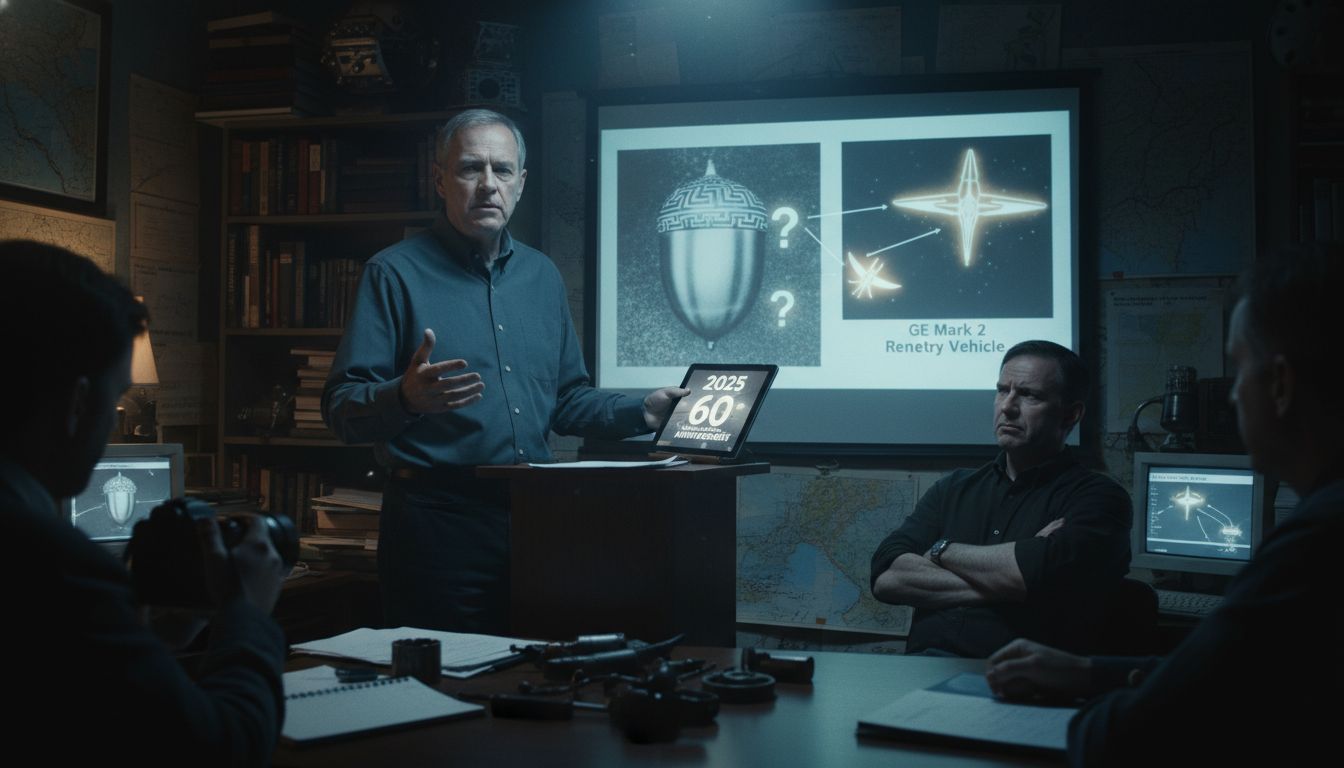
In 2015, UFO researchers John Ventre and Owen Eichler published a paper on The WOW! Signal website arguing that the Kecksburg debris was a General Electric Mark 2 (GE‑2) re‑entry vehicle, a classified satellite test platform used by the U.S. Air Force in the 1960s. Their hypothesis hinged on the object’s reported green glow—attributed to a copper‑alloy heat shield—and a purported link to “green fire balls” seen over New Mexico in the 1950s. The authors also suggested that the lingering sulfur‑like odor could be explained by the combustion products of the vehicle’s propulsion system, a claim they presented as consistent with known aerospace technology of the era.
UFO investigator Stan Gordon, who began documenting the Kecksburg case as it unfolded in 1965, has publicly disputed the GE‑2 explanation. In a detailed response posted on his website, Gordon points to inconsistencies in the re‑entry vehicle theory, noting that the eyewitnesses who saw symbols on the object’s surface—described as “hieroglyphic‑like markings”—were observing from varying distances and under poor lighting, making definitive identification difficult. Gordon emphasizes Romansky’s own testimony: “We were focusing on the odd construction of the object, not the symbols,” the former firefighter recalled, adding that he never saw any copper alloy or heat shield that would produce the alleged green glow. Gordon also highlights that the sulfur odor has appeared in multiple unrelated UFO reports, suggesting a broader, unexplained phenomenon rather than a single technological source.
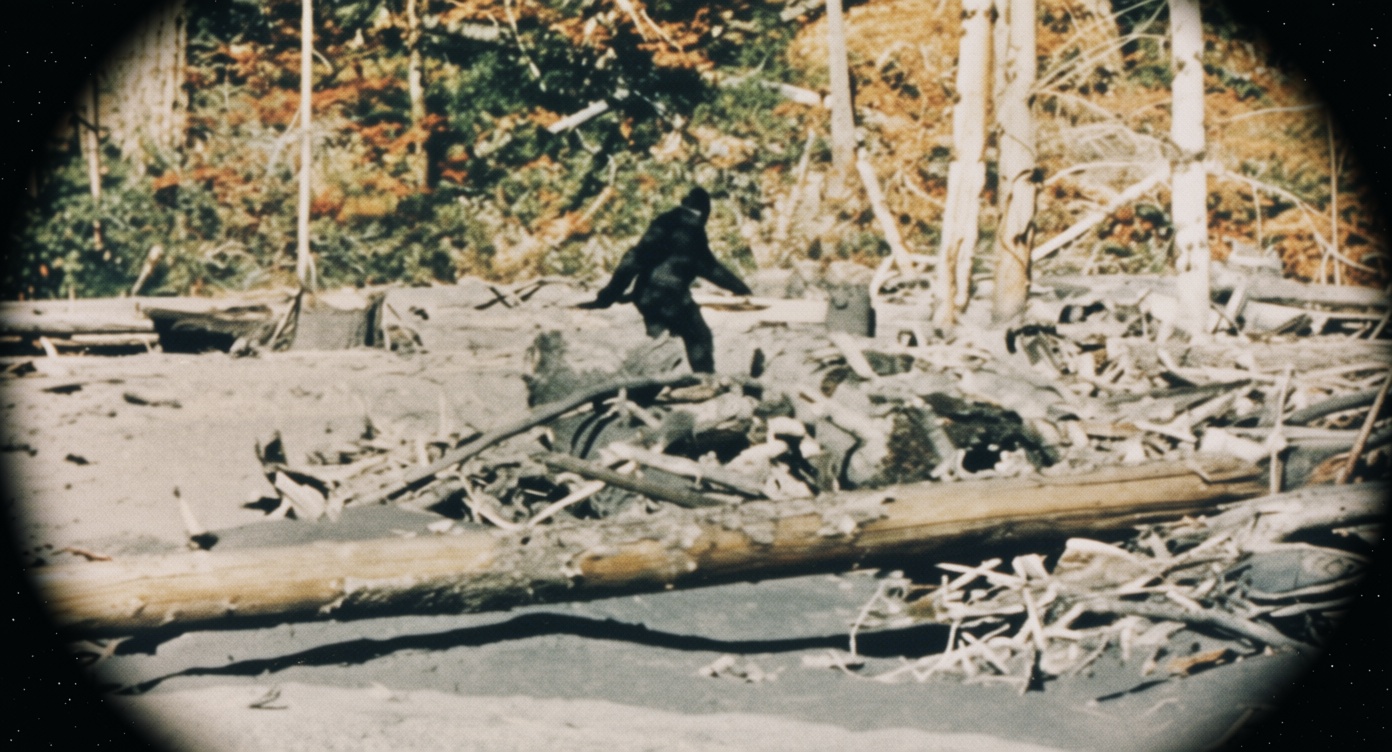
The debate has resurfaced as the 60th anniversary of the Kecksburg incident approaches. Gordon announced plans for an updated report that will incorporate newly declassified documents, recent eyewitness accounts, and a synthesis of related anomalous events reported in the region. Among these are sightings of luminous orbs reported in the weeks preceding the anniversary, as well as sporadic physiological effects—headaches, nausea, and temporary loss of balance—experienced by some residents who visited the original site. In a separate interview, Gordon linked these reports to a pattern observed in other UFO cases, where electromagnetic disturbances are noted alongside visual phenomena. He also referenced a series of alleged Bigfoot sightings in the surrounding forest, arguing that “the convergence of multiple unexplained reports in a confined geographic area deserves systematic study, not dismissal.”
Local authorities have embraced the anniversary as a cultural touchstone, organizing a modest commemorative ceremony at the Kecksburg firehouse and inviting historians, former emergency responders, and interested members of the public. While the event is framed as a tribute to community resilience, organizers acknowledge the lingering mystery, with one official noting, “We may never have a definitive answer, but the story remains a part of Kecksburg’s identity.” As the town prepares for the observances, the broader UFO research community watches closely, aware that the outcome of Gordon’s forthcoming analysis could either reinforce the re‑entry vehicle narrative or reopen the case for further scientific inquiry.