Overview
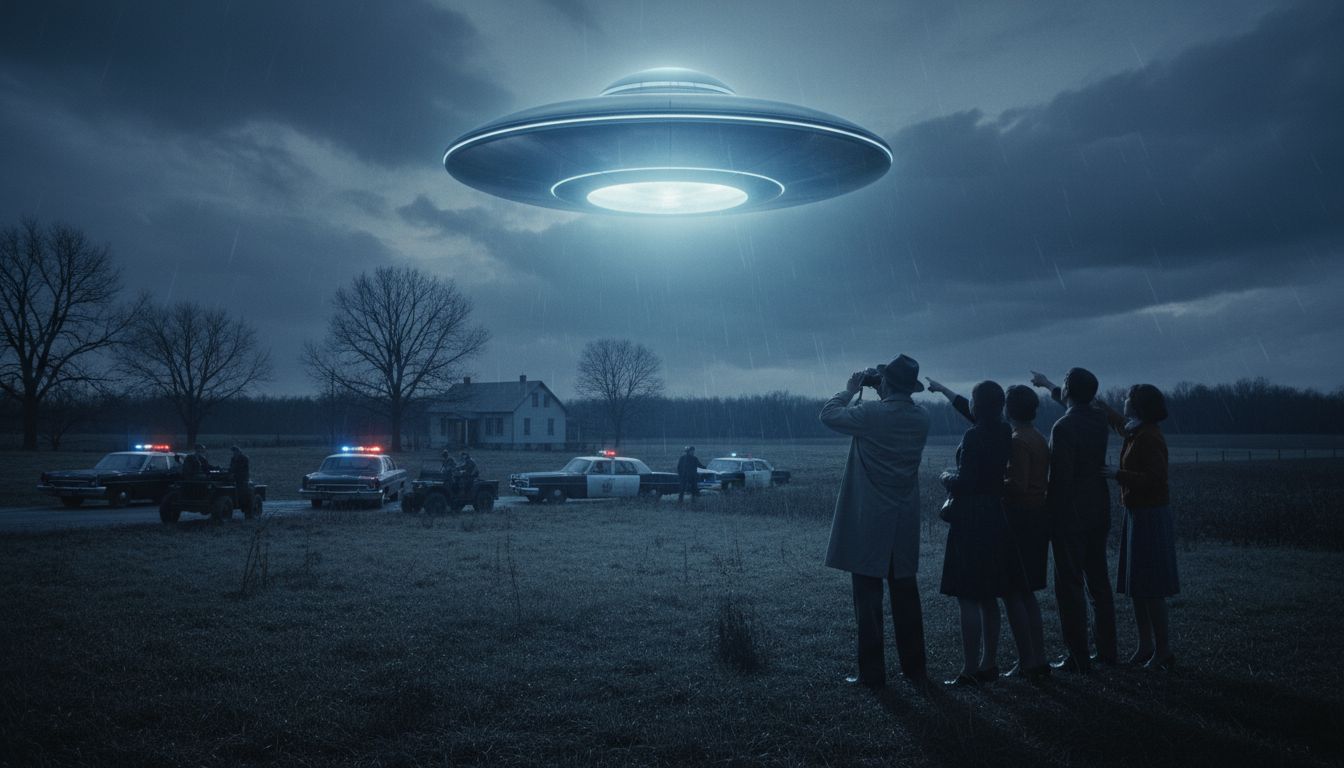
In the summer of 1966, a series of nighttime sightings over the Detroit metropolitan area sparked one of the most thoroughly documented UFO investigations in U.S. history. Between July 12 and July 15, dozens of motorists, pilots, and residents reported a bright, disc‑shaped object that hovered silently at an altitude of roughly 3,000 feet before accelerating eastward at high speed. The sightings were corroborated by radar operators at the Willow Run Air Force Station, prompting a formal inquiry that ultimately reached the floor of the United States Congress.
Witness Accounts
The first report came from a family driving along I‑94 near Dearborn who described “a glowing, metallic saucer that hovered for about thirty seconds before shooting off like a comet.” Within hours, similar observations poured in from a commercial airline pilot who noted the object’s steady, level flight and lack of conventional propulsion sounds. A group of high‑school students at a Detroit suburb’s football field recorded the phenomenon on a home‑made 8 mm camera, capturing a faint, luminous disc against a star‑filled sky. Police officers responding to a traffic slowdown near the Grand River also filed statements, adding official credibility to the civilian accounts.
Government and Military Response
The Michigan State Police forwarded the compiled testimonies to the Air Force’s Project Blue Book, which was then the primary agency tasked with investigating unidentified aerial phenomena. Blue Book investigators dispatched a team to the region, where they reviewed radar logs, interviewed witnesses, and examined the 8 mm footage. The radar data showed a single, unexplained return that matched the visual descriptions in timing and trajectory. While the official Blue Book report ultimately classified the case as “unexplained,” investigators noted the high density of credible witnesses and the lack of any known aircraft or weather balloon activity that could account for the observations.
Congressional Involvement
The case attracted the attention of Rep. John Dingell (D‑MI), who chaired the House Committee on Science and Astronautics. In a letter dated August 3, 1966, Dingell requested a briefing from the Air Force, emphasizing the need for transparency given the “significant public interest and potential national‑security implications.” The request led to a closed‑door hearing on September 14, where Air Force officials presented the Blue Book findings. Although no definitive explanation was offered, the hearing marked one of the few instances where a UFO incident was formally discussed on the congressional floor, underscoring the seriousness with which the government treated the Michigan sightings.
Legacy and Continuing Interest
Decades later, the 1966 Michigan case remains a benchmark for UFO research due to its robust documentation and the fact that it escalated to legislative scrutiny. Historians of the era cite it as a turning point that prompted the Air Force to tighten its reporting protocols, eventually leading to the 1969 termination of Project Blue Book. Recent declassified files released by the National Archives confirm that the incident was referenced in internal memos discussing “unidentified aerial phenomena that merit further scientific study.” The story continues to be featured on local media, including 97.9 WGRD’s recent retrospective, reminding the public that the skies over Michigan have long been a source of both curiosity and careful investigation.


