Overview
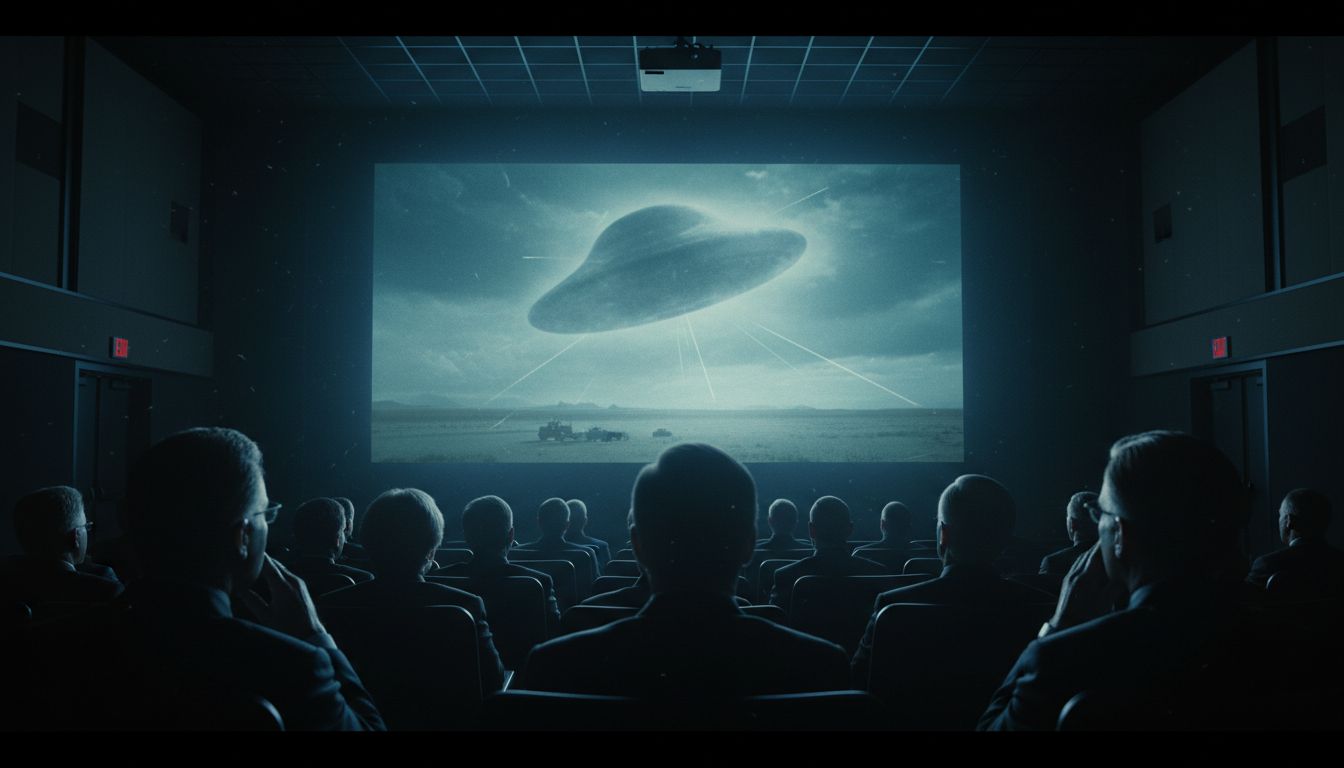
On November 20, the documentary “The Age of Disclosure” was shown to a small, bipartisan group of U.S. lawmakers in Washington, D.C. The film, produced by veteran investigative journalist Michael Miller, chronicles the last two years of official UAP (unidentified aerial phenomena) investigations, from the Pentagon’s 2022 “Unidentified Aerial Phenomena Task Force” report to the establishment of the All‑Domain Anomaly Resolution Office (ADARO) earlier this year. Organizers described the screening as an effort to give members of Congress a consolidated, publicly available record of the data and testimonies that have emerged since the intelligence community first acknowledged “UAPs” as a national‑security concern.
Congressional Screening
The viewing took place in a closed conference room at the Capitol Visitor Center and was attended by senators and representatives from the Armed Services, Intelligence, and Oversight committees. According to a statement from the House Committee on Oversight and Reform, the screening “provides members with a factual, non‑speculative account of the ongoing investigations and the challenges of obtaining timely, de‑classified information.”
Lawmakers who participated were not identified publicly, but a senior staffer for Rep. Tim Burchett (R‑TN) confirmed that the documentary “offers a clear timeline of the government’s own admissions and the gaps that still exist.” The event follows a series of briefings and hearings held since 2023, including the Senate’s FY 2024 defense authorization hearing in which the Pentagon’s deputy secretary of defense, Kathleen Hicks, testified that “UAPs remain a legitimate security issue that requires more data and inter‑agency coordination.”
Documentary Content
“The Age of Disclosure” weaves together archival footage, interviews with former military pilots, and excerpts from recently de‑classified Navy videos that captured “tic‑tac”‑shaped objects over the Atlantic in 2014 and 2015. The film also highlights the 2023 congressional report that recommended the creation of a permanent, inter‑agency UAP office—a recommendation that led to the formation of ADARO in March 2025.
Director Michael Miller said in a pre‑screening interview that the film “does not attempt to explain what these phenomena are; it simply presents the evidence the government has chosen to release and the bureaucratic hurdles that have slowed full transparency.” The documentary includes a segment on the 2024 release of the “UAP Data Set,” a compilation of radar and infrared sensor logs that, according to the Department of Defense, “contain over 1,200 incidents that remain unexplained after standard analysis.”
Reactions from Lawmakers
Reactions were cautiously optimistic. Sen. Marco Rubio (R‑FL), a vocal advocate for greater UAP disclosure, remarked that the documentary “reinforces the need for Congress to push for systematic reporting and to fund scientific analysis rather than leaving the issue to speculation.” In contrast, Rep. Elise Stefanik (R‑NY), who chairs the House Subcommittee on Intelligence, emphasized the importance of “protecting classified sources while still delivering the public the accountability it deserves.”
A bipartisan group of staffers circulated a brief after the screening urging the House Armed Services Committee to schedule a full hearing on ADARO’s progress and to request a quarterly status report from the Office of the Secretary of Defense. The brief cited the documentary’s “clear illustration of missed opportunities” in previous investigations, such as the delayed release of the 2022 Navy video, as a catalyst for legislative action.
Looking Ahead
The screening of “The Age of Disclosure” comes at a moment when public interest in UAPs is at its highest since the 2020 Pentagon report. Polls released by the Pew Research Center in October show that 71 % of Americans now believe the government should be more transparent about unidentified aerial phenomena.
Congressional leaders appear poised to translate that sentiment into policy. The Senate Intelligence Committee is slated to hold a closed‑door briefing on ADARO’s data‑collection methods in early December, while the House is expected to debate a resolution that would require the Department of Defense to publish an annual summary of all UAP incidents with unclassified findings.
If the momentum generated by “The Age of Disclosure” translates into legislative action, the next year could see the most systematic, government‑backed inquiry into UAPs since the Cold War’s “Project Blue Book.” Until then, the documentary stands as a concise, evidence‑based record of where the United States stands on one of the most persistent mysteries in modern aerospace security.


