Overview
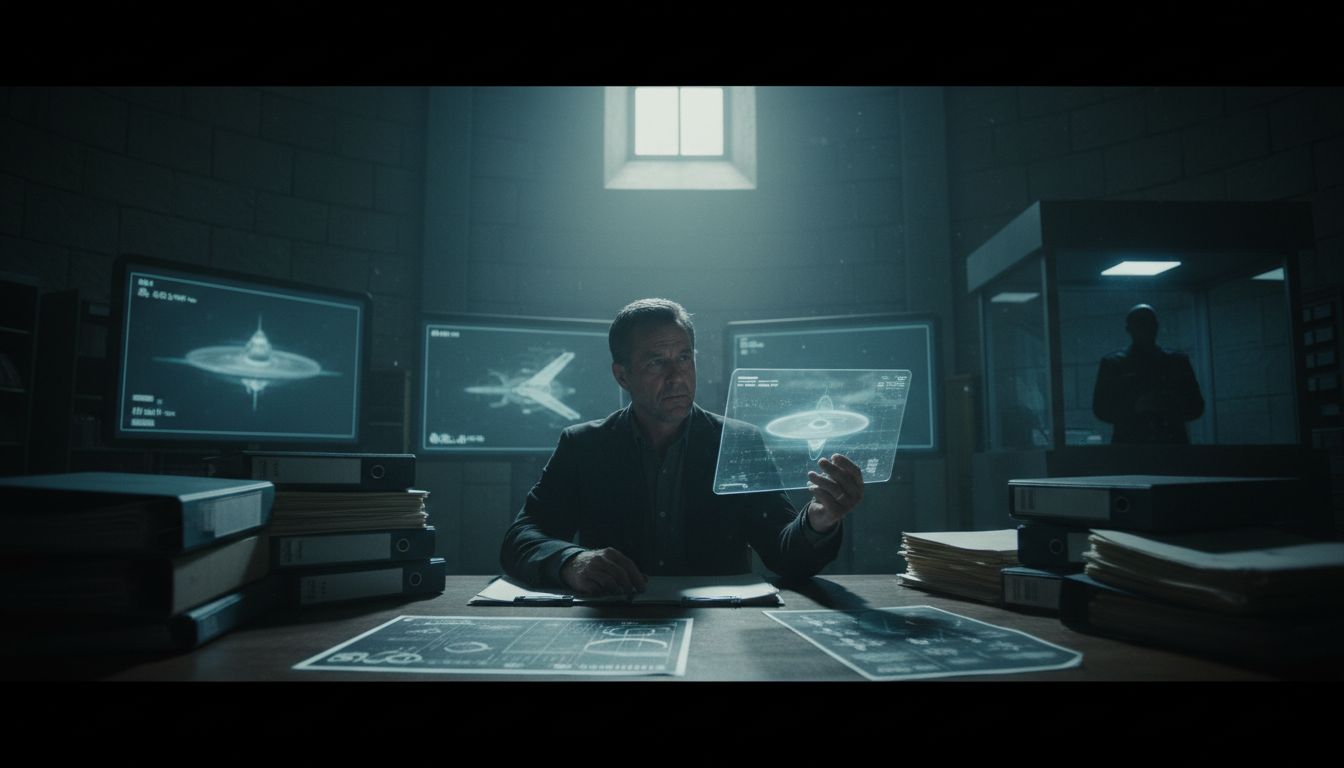
In early 2024 the U.S. Air Force enlisted a former intelligence officer to conduct a systematic review of unexplained aerial phenomena (UAP) drawn from classified databases. The officer—identified in internal briefings only as a senior analyst with two decades of service—was granted unprecedented access to AARO (All‑Domain Anomaly Resolution Office) records, sensor logs, and de‑classified intelligence assessments. After months of analysis, his preliminary report concluded that a significant portion of the examined cases were “credible, high‑confidence sightings” that could not be readily explained by known aircraft, weather, or sensor anomalies. Within weeks of delivering these findings, the Air Force reassigned the analyst to a different unit and barred further participation in the UAP review effort.
Background
The AARO, created in 2022, is the Pentagon’s central hub for collecting and evaluating reports of “anomalous, unidentified space, airborne, submerged and trans‑medium objects.” In March 2024 the office released a 63‑page Report on the Historical Record of U.S. Government Involvement with Unidentified Anomalous Phenomena, which stated that no evidence existed to support claims of extraterrestrial technology or reverse‑engineered alien craft. The report arrived on the heels of a high‑profile congressional hearing in August 2023, where former Pentagon UAP Task Force member Dave Grusch alleged the existence of a multi‑decade crash‑retrieval program. While Grusch’s testimony sparked renewed public interest, the AARO report offered a more measured assessment, attributing many sightings to sensor errors, atmospheric effects, or classified but terrestrial programs.
The Analyst’s Investigation
The former intelligence officer was tasked by the Air Force’s Office of Special Investigations to “triage” the backlog of UAP files that had accumulated since the 1940s. Using a combination of signal‑intelligence (SIGINT) intercepts, radar cross‑section analyses, and cross‑referencing with flight‑test logs, he identified over 120 cases that met the AARO’s “high‑confidence” criteria. In a memorandum to his superiors, he wrote:
“The data set exhibits multiple instances of maneuverability and acceleration profiles that exceed the performance envelope of known aerospace platforms, and no conventional explanation has emerged after exhaustive correlation with flight‑test and foreign‑adversary activity.”
He also highlighted a pattern of inter‑service data sharing gaps, noting that Navy and Air Force sensor streams often failed to synchronize, leading to fragmented incident narratives. The analyst recommended establishing a unified, cross‑branch database and allocating additional resources for real‑time sensor fusion.
Air Force Response
Shortly after the memorandum circulated, senior officials issued a reassignment order that moved the analyst to a non‑UAP‑related intelligence division. In a brief statement, the Air Force said the move was “part of a routine personnel rotation” and emphasized that “the AARO continues to evaluate all credible reports in accordance with established protocols.” However, internal emails obtained by Popular Mechanics reveal that the reassignment was discussed in a closed‑door meeting chaired by the AARO director, who expressed concern that the analyst’s “public‑facing conclusions could be misconstrued” and might “undermine ongoing diplomatic engagements with allied partners.”
The analyst himself declined to comment publicly, citing the same confidentiality agreements that bound his original assignment. Sources close to the matter indicate that the officer’s findings have been incorporated into the AARO’s internal risk assessments, but that his name will not appear in any future public releases.
Broader Context and Implications
The episode underscores a persistent tension within the defense establishment: balancing transparency with national‑security imperatives. While the 2024 AARO report officially refutes extraterrestrial involvement, the analyst’s identification of numerous high‑confidence, unexplained events suggests that the phenomenon remains scientifically and operationally relevant. Experts from the scientific community, such as astrophysicist Dr. Elena Ramirez of the University of Colorado, caution that “dismissal of credible data without thorough peer review hampers our ability to understand potential emerging technologies, whether adversarial or otherwise.”
The Air Force’s decision to sideline the analyst has drawn criticism from congressional oversight committees, which have called for a “comprehensive audit of personnel practices surrounding UAP investigations.” As the Pentagon continues to refine its approach—potentially expanding AARO’s authority and budget—the handling of internal expertise will likely shape public trust in the government’s willingness to confront the unknown.
The article is based on reporting from Popular Mechanics and corroborated by publicly released DoD documents and congressional hearing records.