Overview
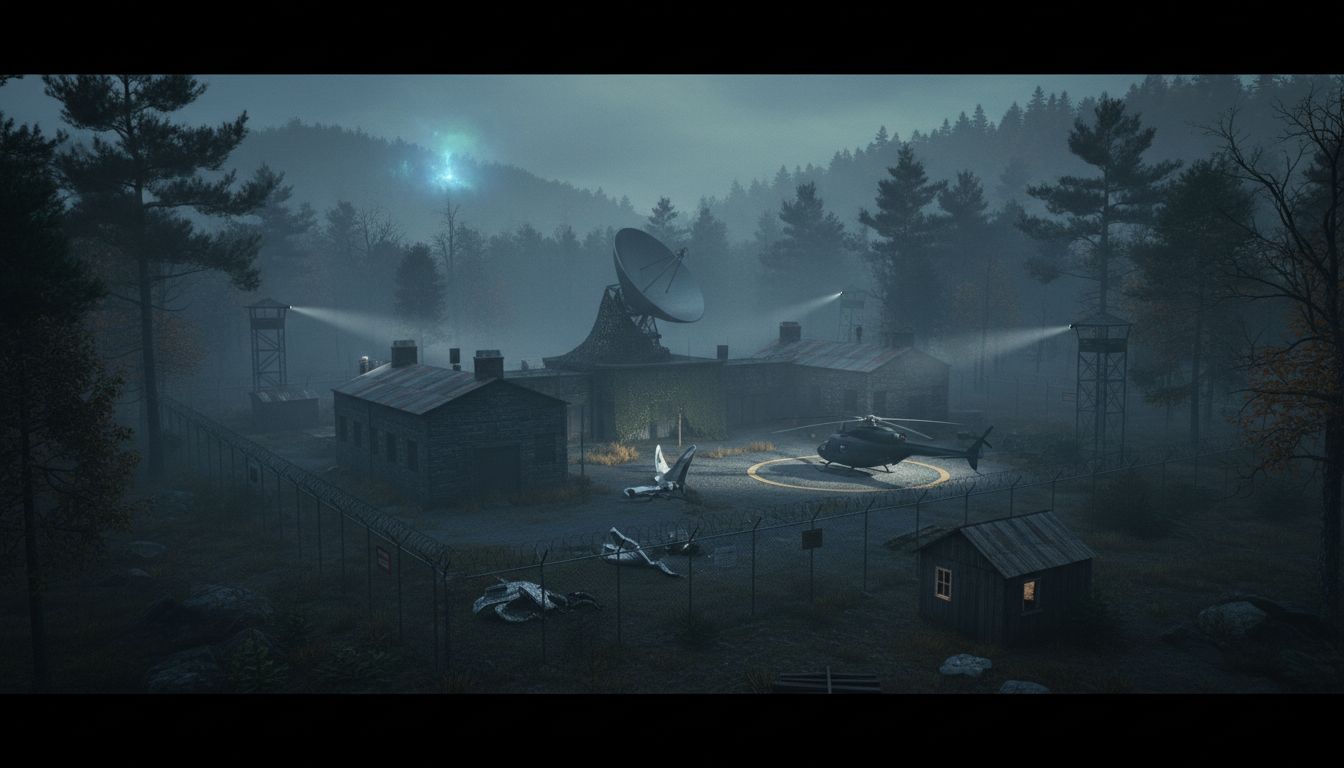
The New York Times has identified a little‑known site in New England that locals have begun calling the “Area 51 of New England.” The nickname reflects a growing perception that the property—located in a remote, heavily forested portion of western Maine—functions as a clandestine hub for unidentified aerial phenomena (UAP) activity. While the Times does not disclose the exact coordinates, it notes that the site has been the focus of a series of nighttime sightings, occasional radar blips, and heightened interest from both state officials and federal agencies tasked with investigating UAPs.
Local Sightings
Over the past two years, residents of the nearby towns of Rangeley and Carrabassett have reported a pattern of strange lights and objects moving at speeds that exceed conventional aircraft capabilities. “We’ve seen bright orbs darting low over the woods, disappearing in a split second,” said Emily Harlow, a longtime Rangeley farmer who has logged more than a dozen encounters. Similar reports have been filed with the local sheriff’s office, which forwarded the data to the Maine Department of Public Safety. Radar operators at the regional air traffic control center have also recorded unexplained returns that coincide with the visual accounts, prompting a limited internal review.
Government Interest
The Times article highlights that the mysterious activity has attracted attention from the Department of Defense’s UAP Task Force, which was established in 2022 to assess potential threats to national security. A spokesperson for the task force, Lt. Col. James Patel, confirmed that “preliminary analysis of sensor data from the region is ongoing, and we are coordinating with state authorities to better understand the phenomenon.” In addition, the Federal Aviation Administration (FAA) has issued a temporary flight restriction around the site, citing safety concerns while investigations continue. No official confirmation has been made regarding any classified installations on the property.
Public Fascination
The moniker “Area 51 of New England” has quickly become a meme on social media, drawing curious tourists and amateur investigators to the area. Local businesses have reported a modest uptick in visitors seeking “UAP tours,” while a community group in Carrabassett has organized a town hall to discuss the sightings. Dr. Maya Singh, a professor of astrophysics at the University of Maine, cautioned against speculation: “Extraordinary claims require extraordinary evidence. While the reports are intriguing, we must rely on rigorous data collection before drawing conclusions.” Nonetheless, the blend of mystery and the region’s scenic appeal has turned the site into a cultural touchstone for UFO enthusiasts nationwide.
Outlook
As the investigation proceeds, officials stress the importance of systematic documentation. The Times notes that the Department of Defense plans to release a de‑classified summary of its findings later this year, a move that could either demystify the events or deepen the intrigue. Meanwhile, local law enforcement continues to log reports, and scientists from nearby universities have offered to assist with optical and electromagnetic measurements. Whether the “Area 51 of New England” will prove to be a genuine research or testing facility, a natural atmospheric anomaly, or something else entirely, the episode underscores a renewed public and governmental focus on UAPs—an issue that has moved from fringe speculation to a topic of formal national security assessment.


