Overview
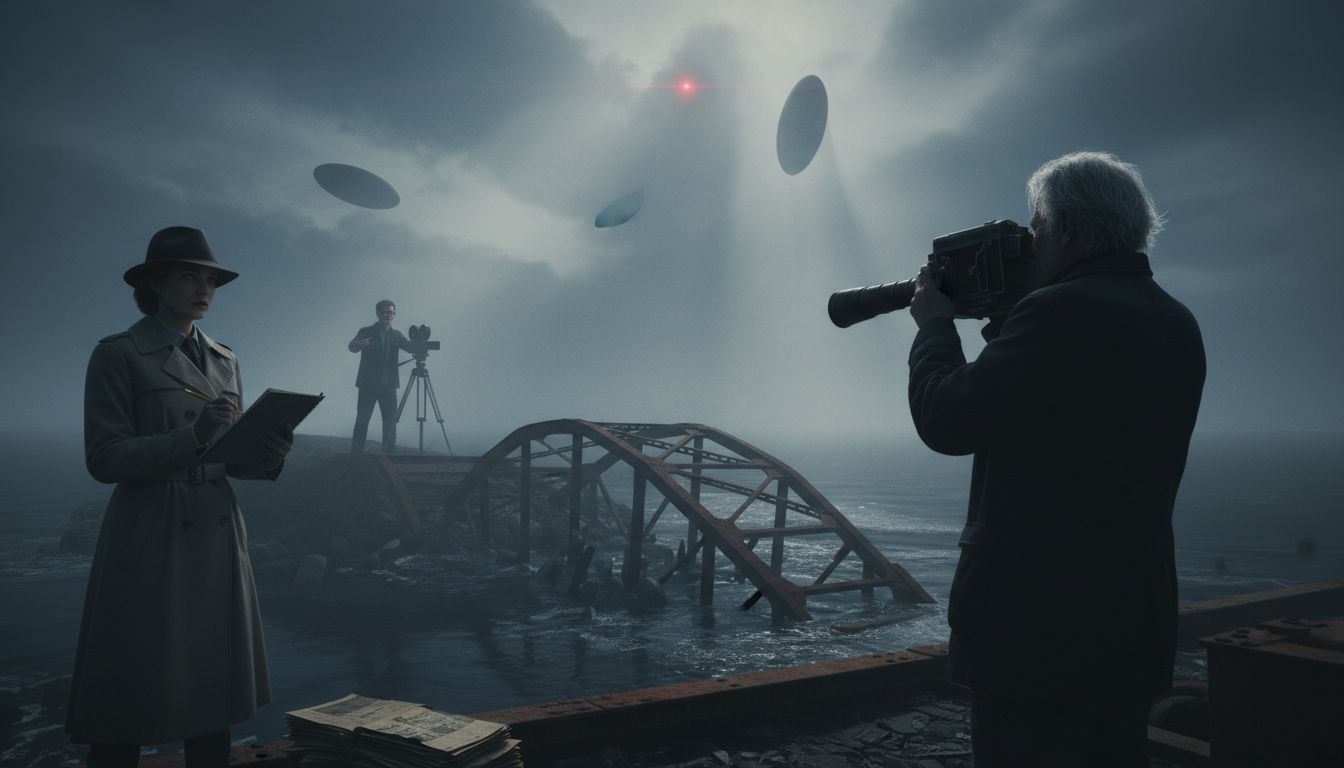
On December 15 , 1967 the Silver Bridge spanning the Ohio River at Point Pleasant, West Virginia, collapsed, killing 46 people and sending shockwaves through the region. The disaster quickly entered the folklore of the area, later becoming a central element of John Keel’s bestselling book The Mothman Prophecies. In a recent post on his website, Keel’s longtime chronicler Doug Skinner uploaded a series of scans from the Athens Messenger dated December 17, 1967—one of the earliest local accounts of the tragedy. The images, though partially obscured by the limits of the scanner, provide a rare glimpse of contemporary reporting that had been difficult for researchers to locate.
Historical Context and Local Reporting
Keel’s field notes reveal that he corresponded with Mary Hyre, a journalist for the Athens Messenger who covered the bridge collapse on the ground. Hyre’s dispatches, now reproduced in Skinner’s upload, describe the frantic rescue efforts, the community’s grief, and the early speculation about structural failures. “The bridge gave way without warning, and the river turned into a tomb for families and strangers alike,” one excerpt reads, underscoring the immediacy of the local press. Keel collected these reports as part of his broader investigation into the strange phenomena that surrounded Point Pleasant in the months before and after the disaster, a period that also saw numerous sightings of a winged creature later dubbed the “Mothman.”
New Contributions to the UFO/UAP Dialogue
The same post also announces the return of Doug Skinner to a weekly posting schedule after a brief hiatus, a development welcomed by the site’s community of UFO enthusiasts and skeptics alike. In addition, Skinner highlights a forthcoming three‑part debate hosted by Kevin Randle, a veteran author in the field. Randle’s series will examine three interlinked topics: the 1947 Roswell incident, the classified Project Mogul balloon program that many researchers now identify as the source of the original “flying disc” reports, and the contentious photographic evidence that has fueled both belief and criticism over the decades. The debate is positioned as a “balanced” discussion, inviting participants from both the believer camp and the skeptical community to present archival data, eyewitness testimony, and scientific analysis.
Ongoing Tension Between Believers and Skeptics
Since the early 1970s, the dialogue surrounding Roswell, Project Mogul, and related UFO claims has been marked by a “often unproductive back‑and‑forth,” as the post notes. Proponents argue that the declassified details of Project Mogul do not fully account for the eyewitness accounts and the physical debris recovered at Roswell, while skeptics contend that the lack of verifiable documentation beyond government releases undermines extraordinary claims. Randle’s debate aims to move the conversation beyond ad‑hoc arguments by grounding it in primary sources—many of which, like the Athens Messenger articles, are now more accessible thanks to digital archiving efforts.
Community Reaction
The upload has already sparked a lively comment thread, with readers expressing gratitude for the restored access to historical material and anticipation for the upcoming debate. “Thank you for these uploads—I have recently become interested in JK’s fascinating work,” one commenter wrote, while another welcomed Skinner’s return to a regular posting rhythm. The engagement reflects a broader pattern: the UFO/UAP community remains eager for credible, well‑sourced information that can bridge the gap between anecdotal lore and rigorous investigation.
In sum, the newly posted Athens Messenger scans not only preserve a vital piece of local history surrounding the Silver Bridge tragedy but also serve as a reminder of how that event intertwined with the larger tapestry of American UFO folklore. Coupled with Doug Skinner’s renewed activity and Kevin Randle’s planned debate, these developments promise to enrich the ongoing discourse—offering both believers and skeptics a clearer, more documented foundation for future inquiry.


