Overview
The Codex Seraphinianus, an 360‑page illustrated encyclopedia first published in 1981, continues to fascinate readers and collectors more than four decades after its debut. Created by Italian artist Luigi Serafini, the book depicts a fantastical world of impossible flora, bizarre machines and architecture that defies physics, all described in a script of Serafini’s own invention. Recent interviews have revived interest in the work by revealing Serafini’s tongue‑in‑cheek claim that a stray white cat that visited his Rome studio “telepathically guided” the entire project.
Creation and the Cat Tale
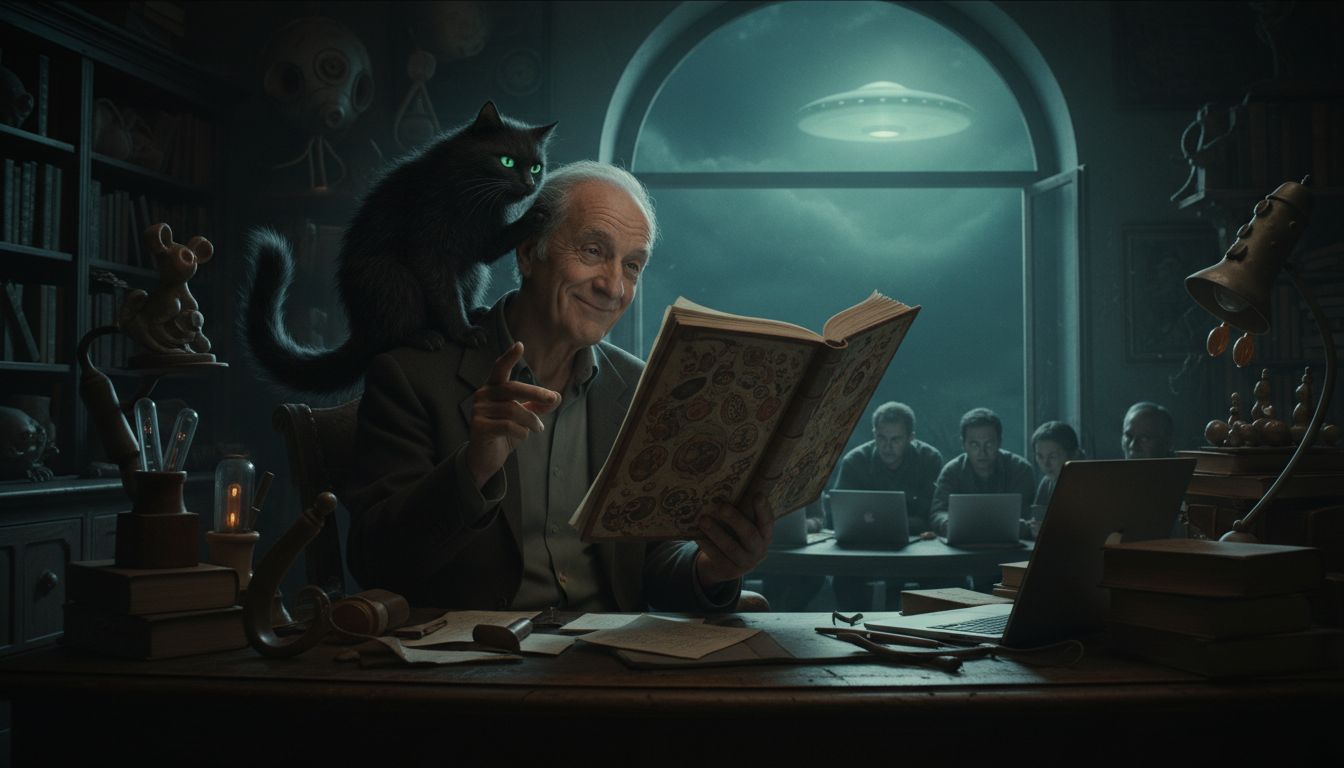
Serafini recounts that, during the late 1970s, a wandering cat slipped into his studio and seemed to linger over his sketches. In a light‑hearted interview with Wired, he joked that the feline was the “real author” of the codex, a statement he later reiterated in a Boing Boing feature. While the anecdote is clearly humorous, it underscores the whimsical atmosphere in which the book was conceived—a deliberate departure from conventional academic publishing. “I always said that there is no meaning behind the script; it’s just a game,” Serafini told Wired, emphasizing that the invented alphabet was intended as a visual puzzle rather than a cipher to be cracked.
Author’s Intent and Public Statements
Serafini’s comments to the press consistently stress that the Codex is an artistic experiment, not a cryptic message awaiting decoding. When asked about the countless fans who have spent years attempting to translate the text, he likened their efforts to looking at a Rorschach inkblot: “You see what you want to see,” he explained. The artist also positioned the work as a form of outreach, comparing it to modern blogging. “I made it trying to reach out to my fellow people, just like bloggers do,” he said, framing the book as a playful dialogue with its audience rather than a secret manifesto.
Collector Market and Online Community
Despite—or perhaps because of—its inscrutability, the Codex has become a valuable collector’s item. First‑edition copies now fetch over $6,000 at auction, while a more affordable Rizzoli reprint remains available for general readers. An enthusiastic online community has coalesced around the book, sharing high‑resolution scans, speculative translations and fan art. This “obsessive” subculture, as Serafini describes it, treats the Codex much like a cult classic film, generating discussion forums, podcasts and even academic symposia that examine its visual language and surrealist influences.
Comparison to the Voynich Manuscript and Cultural Impact
Unsurprisingly, the Codex is frequently juxtaposed with the Voynich Manuscript, a 15th‑century codex written in an undeciphered script that continues to baffle scholars. Serafini, however, dismisses the comparison, labeling the Voynich a “fake” created as a con on Holy Roman Emperor Rudolf II. He argues that invented languages have a long artistic lineage and that the Voynich’s mystique is distinct from the intentional playfulness of his own work. Nonetheless, both texts occupy a niche in popular culture where mystery, art and speculation intersect, prompting museums, literary festivals and online platforms to feature them as exemplars of the “beautifully baffling” in the literary world.
The renewed attention to Luigi Serafini’s whimsical claim about a cat co‑author highlights the enduring allure of the Codex Seraphinianus. Whether viewed as a surrealist masterpiece, a collector’s treasure, or a communal puzzle, the book remains a testament to the power of imagination to create worlds that exist solely on the page—guided, perhaps, by a stray feline muse.