A Ghost Story at Munich’s Nockherberg
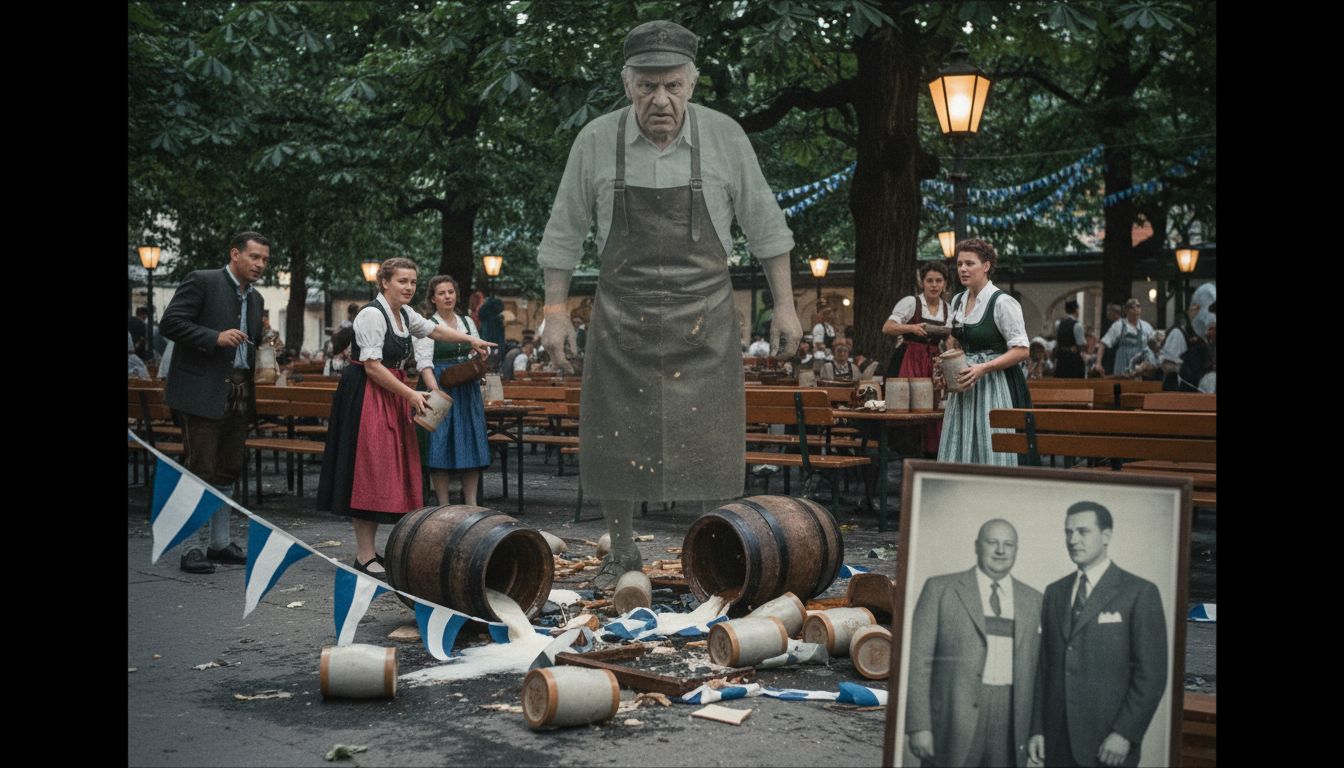
A long-standing local legend claims that the ghost of an old brewer still haunts Munich’s Nockherberg, the terrace on the eastern bank of the Isar in the city’s Au district. According to the story, the apparition appears around the area’s famous beer festival and beer garden, disrupting events in retaliation for decisions made by the brewer’s descendants involving his beer.
There is no documented evidence that paranormal activity has occurred at the site. Instead, the tale belongs to the broader tradition of European brewery folklore, in which historic brewing houses, family disputes and unexplained mishaps become linked over time. The story’s central claim—that the brewer’s spirit causes trouble because his brewing legacy was altered—has been repeated as local lore rather than presented as a verified historical account.
The Salvator Festival
The setting for the legend is the Salvator-Ausschank auf dem Nockherberg, an annual strong-beer festival held at the Paulaner brewery’s main hall at Hochstraße 77. The event takes place during Lent, beginning around Saint Joseph’s Day on March 19 and continuing for approximately 17 days. It is also associated with the traditional “Holy Father Feast” on April 2, a commemoration connected with Francis of Paola, founder of the religious order from which the Paulaner tradition emerged.
With large crowds, music and long communal benches, the festival can resemble the tented atmosphere of Munich’s Oktoberfest. One distinctive feature is the use of Keferloher, robust earthenware tankards that help keep beer cool and allow servers to refill them discreetly. The setting’s scale, noise and historic atmosphere may also help explain why stories of strange occurrences or unseen disturbances have endured.
From Monastic “Liquid Bread” to Salvator
The brewing tradition at the site dates back centuries. According to the source account, Paulaner monks brewed beer for their own consumption in the monastery by at least 1634. During Lent, when food was restricted, they were permitted to produce a stronger beer regarded as “liquid bread.” This seasonal brew was made annually in spring from 1651 and became known as Holy Father Beer, honoring the founder of the order.
The tradition later entered a new phase under Franz Xaver Zacherl, who was born in 1772 to a cook. Zacherl became tenant of the former Paulaner monastery brewery in 1806 and purchased it, together with associated properties, in 1813. He continued the strong-beer tradition under the name Salvator, a brand that remains closely identified with the Nockherberg festival.
Folklore and the Brewery’s Legacy
The legend of the undead brewer draws much of its power from this layered history: monastic brewing, family ownership and a recipe associated with religious observance. The available account does not specify precisely which actions by the brewer’s descendants supposedly provoked the haunting, nor does it identify particular incidents attributed to the spirit.
For visitors, the brewer’s ghost remains a cultural story rather than an established phenomenon. The Nockherberg’s historical brewery, distinctive drinking vessels and centuries-old strong-beer customs provide a vivid backdrop for the tale—whether understood as supernatural testimony, a warning about changing traditions or simply an entertaining part of Munich’s local folklore.