Overview
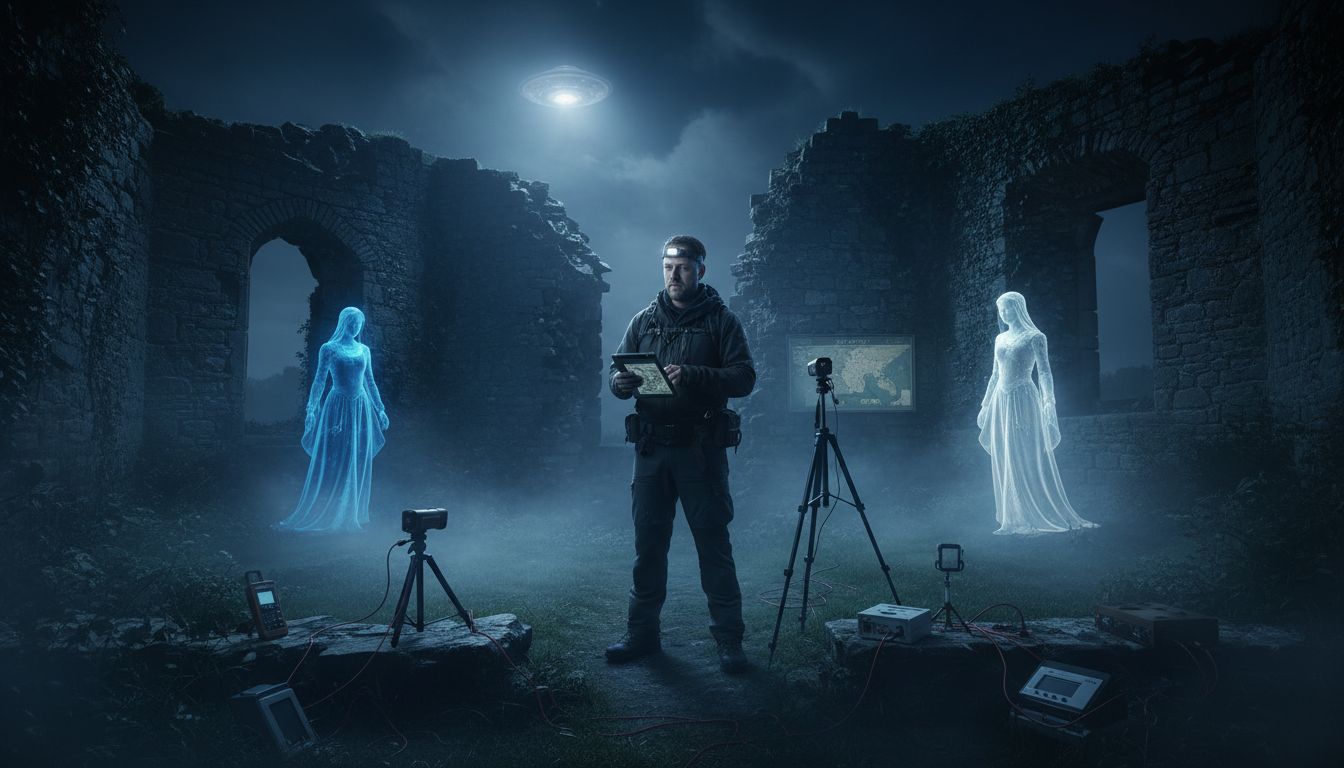
Berry Pomeroy Castle, a ruin nestled in a wooded valley near Totnes, Devon, has long attracted both tourists and investigators of the paranormal. Built in the late 15th century by the Pomeroy family and later expanded into an ambitious residence that was never completed, the site blends traditional defensive architecture with early country‑house design—large windows, grand internal spaces, and an unfinished silhouette that “still provides atmosphere to this day,” according to investigator Ashley Knibb. The castle’s most infamous occupants are the so‑called Blue Lady and White Lady, two specters that have become focal points for debates over residual versus intelligent hauntings.
Historical Context
The castle’s construction began under Sir John Pomeroy, whose descendants added Renaissance‑style wings in the 16th century before the project stalled, leaving a hybrid structure that scholars describe as “a castle in name only.” Local folklore records the first sightings of a mournful woman in blue robes in the 18th century, later joined by reports of a pale figure in white. Historical records link the Blue Lady to Lady Margaret Pomeroy, who allegedly died of a sudden illness in 1585, while the White Lady is often associated with a later tragic event—a servant girl who perished in a fire during the castle’s incomplete phase. These narratives provide a timeline that investigators use to differentiate residual (recorded “playback” of past events) from intelligent (interactive) phenomena.
The Two Ladies: Phenomenological Contrast
Knibb’s recent fieldwork, documented on his website, notes distinct patterns for each apparition. The Blue Lady appears as a fleeting silhouette near the castle’s south tower, moving silently along a wall that matches the location of a 1585 bedroom. Infrared cameras captured a brief, temperature‑depressed silhouette lasting under three seconds, consistent with residual energy—a “recording” of a historic trauma, according to Dr. Helen Murray, a parapsychologist at the University of Exeter. By contrast, the White Lady has been observed responding to investigators’ questions, sometimes turning her head toward a handheld recorder when prompted. “She seemed to acknowledge our presence,” Knibb wrote, “a hallmark of intelligent activity that challenges purely physical explanations.”
Scientific and Spiritual Perspectives
The case draws attention from multiple disciplines. Physicists point to electromagnetic fluctuations and infrasound as possible triggers for perceived apparitions, while psychologists cite suggestion and expectation effects. However, Knibb emphasizes a multidisciplinary approach, integrating archival research, environmental monitoring, and spiritual frameworks that view the castle’s lingering emotions as part of a broader “psychic field.” He cites the work of Dr. Michael Aldridge, who argues that sites with “unfinished architecture” may retain higher emotional resonance, potentially amplifying both residual and intelligent manifestations. Skeptics, such as the Royal Society’s Committee on Anomalous Phenomena, caution that anecdotal evidence must be corroborated with repeatable data before drawing firm conclusions.
Personal Insight and Upcoming Publication
In a candid sidebar, Knibb recounts a personal episode that shaped his investigative philosophy: while cleaning his grandfather’s attic, he found an old pocket watch that stopped precisely at 3:17 am—the same time the White Lady has been reported to manifest. “The watch’s hands froze as I felt a cold breath on my neck,” he writes, noting that the experience reinforced his belief in subjective synchronicities that merit systematic study. Building on these insights, Knibb announces a forthcoming book, Echoes of the Unfinished: Residual and Intelligent Hauntings at Berry Pomeroy, slated for release later this year. The manuscript promises a comprehensive synthesis of historical documentation, field data, and theoretical models, aiming to advance the conversation beyond sensationalism toward rigorous, evidence‑based paranormal research.