Overview
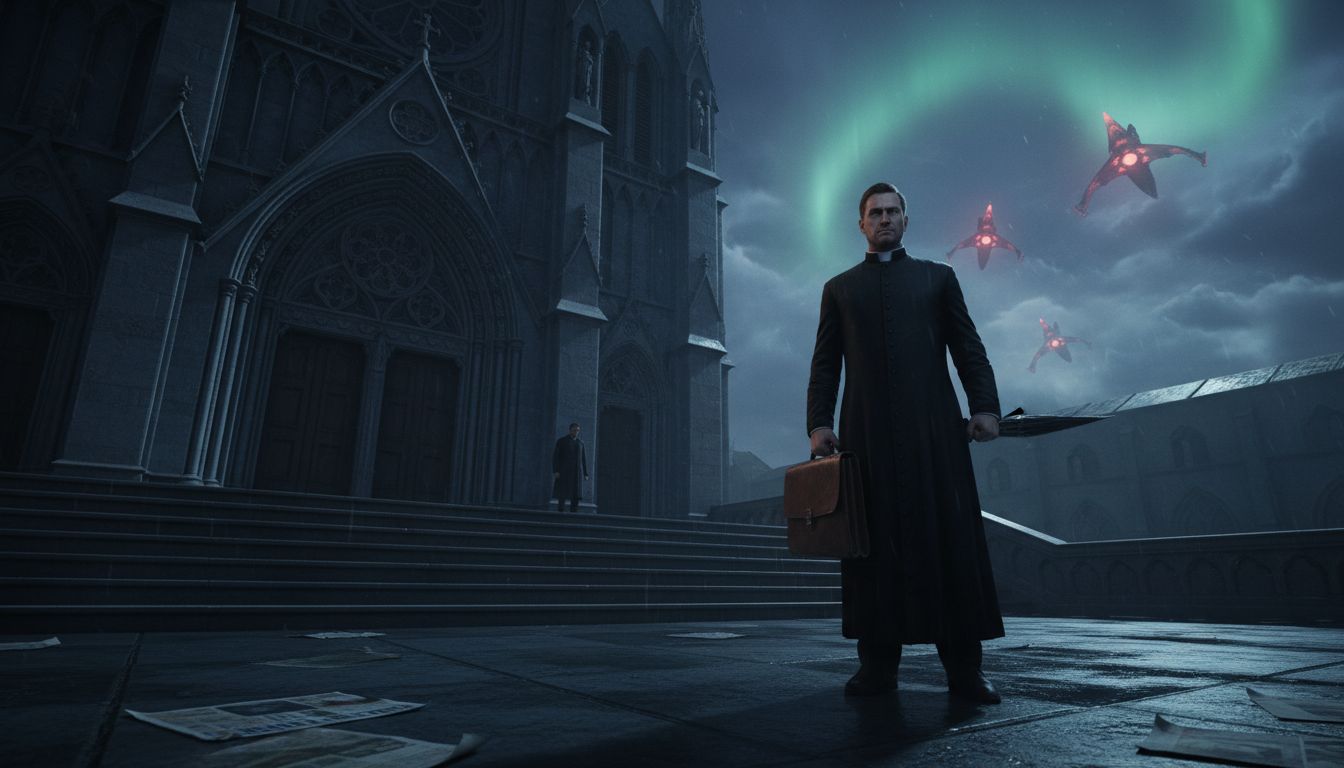
The Washington Archdiocese announced last week that Monsignor Stephen Rossetti, a veteran exorcist and licensed psychologist, has been removed from his position after publicly stating that most unidentified aerial phenomena (UAP) are “demons in disguise.” Rossetti’s remarks, posted in a May 29 video on Facebook, sparked a swift response from Archbishop Wilton Gregory, who said the priest’s comments “contradict the Church’s commitment to a measured, theological approach to unexplained phenomena.” The dismissal highlights an ongoing tension between fringe spiritual explanations and the Catholic hierarchy’s effort to stay aligned with scientific discourse.
The role of exorcists in the Catholic Church
Exorcism is a canonical ministry recognized by the Vatican; each diocese is required to appoint at least one priest with specialized training to conduct the Rite of Major Exorcism. The process begins with a thorough investigation that includes medical, psychological, and psychiatric evaluation before a priest is authorized to act. When a case is deemed genuine, the exorcist performs a ritual that involves holy water, the sign of the cross, and specific prayers aimed at expelling a demonic presence. Rossetti, who has led “hundreds of exorcism and deliverance sessions” through his nonprofit, CatholicExorcism.org, is considered one of the most prolific practitioners in the United States.
Rossetti’s UFO‑demon claim
In the video that precipitated his removal, Rossetti said, “As an exorcist I wanted to raise that danger. Demons like to hide, and it’s my personal belief that probably many, if not most, of these UFO sightings are in fact demons.” He linked the recent surge of government‑released UAP reports—issued in May after a series of high‑profile sightings—to a spiritual threat, arguing that “the devil can masquerade as advanced technology to deceive the faithful.” The comments echo similar statements from public figures such as Vice President J.D. Vance, who earlier this year described UFOs as “potentially demonic.”
Official response and dismissal
Archbishop Gregory issued a formal statement on June 6, emphasizing that “the Church does not endorse speculative theological conclusions about phenomena that are still under scientific investigation.” He added that clergy are expected to “exercise prudence and refrain from conflating personal speculation with official teaching.” The archdiocese confirmed that Rossetti’s contract was terminated “in accordance with canonical norms” and that he will no longer represent the diocese in any pastoral capacity. While Rossetti was not accused of doctrinal heresy, the hierarchy cited “a breach of pastoral discretion” as the primary reason for the action.
Broader context: UFO disclosures and religious interpretation
The dismissal occurs amid heightened public interest in UAPs following the U.S. Department of Defense’s May release of declassified footage and analysis. The Pentagon’s “UFO files” have prompted congressional hearings, academic studies, and a surge of media coverage, but the Vatican has remained cautious. In a March interview, Pope Francis remarked that “the existence of extraterrestrial life does not conflict with faith,” urging believers to await “rigorous scientific verification.” The episode underscores the delicate balance religious leaders must strike: addressing believers’ spiritual concerns without overstepping into conjecture that could undermine the Church’s credibility.
Implications for the Church and its faithful
Rossetti’s firing sends a clear signal that the Catholic hierarchy intends to keep theological commentary on contemporary mysteries within a controlled framework. For parishioners who look to exorcists for guidance on spiritual distress, the case may raise questions about the limits of pastoral authority. At the same time, the incident reinforces the Church’s broader strategy of engaging with modern scientific developments—such as the ongoing UAP investigations—while preserving doctrinal integrity. As the debate over UFOs, demons, and faith continues, the Washington Archdiocese’s decision illustrates how institutional religion navigates the intersection of ancient belief systems and emerging public discourse.