Overview
A recent Pentagon release of unclassified data on unidentified aerial phenomena (UAP) has sparked a paradoxical reaction: many members of the public find personal anecdotes—such as a family member’s sighting—more convincing than the government’s own evidence. The Department of Defense’s “Preliminary Assessment” and subsequent data sets, while technically detailed, are couched in classified terminology and lack the vivid, relatable narratives that anecdotal reports provide. This dynamic illustrates how media framing and perceived transparency can shape public trust in ways that official disclosures struggle to overcome.
Public Perception and the Power of Personal Narrative
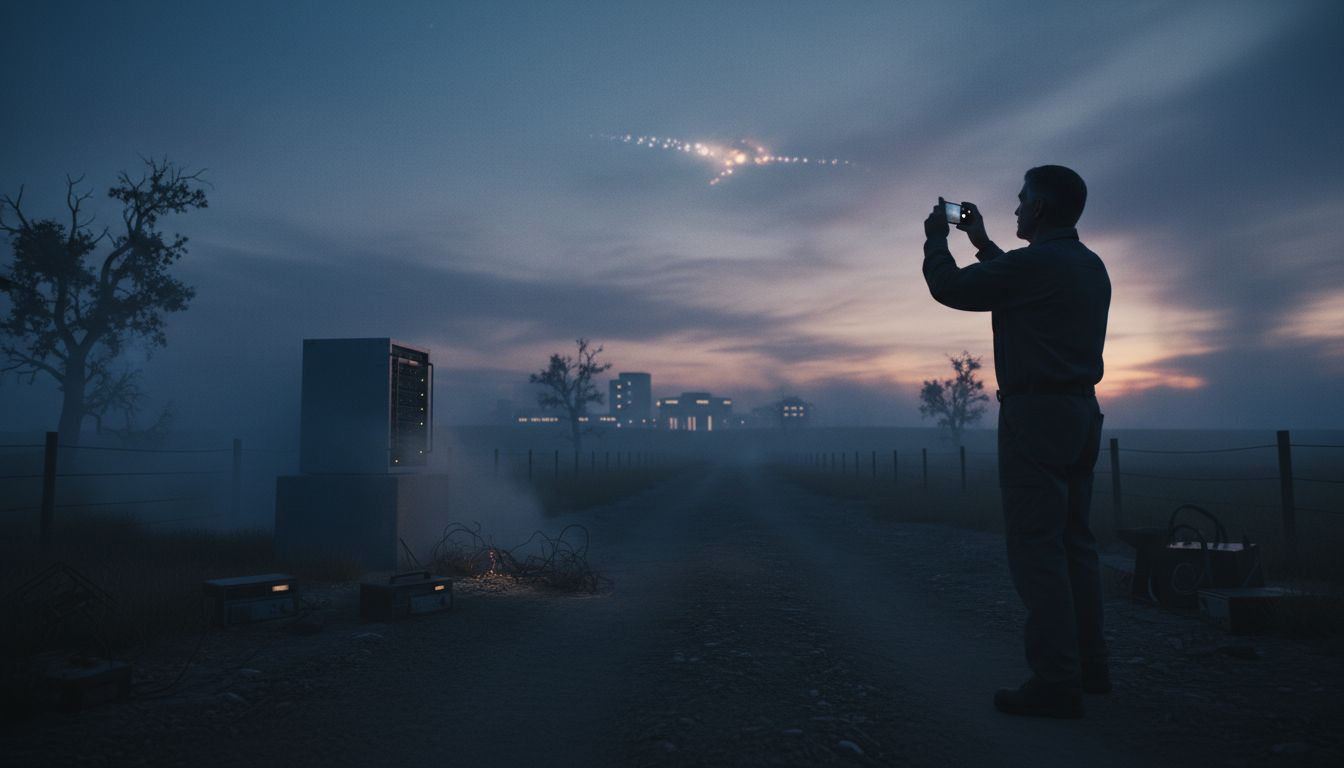
Surveys conducted by the Pew Research Center in early 2024 show that roughly 57 % of Americans say they would “definitely” or “probably” believe a UFO sighting reported by a close friend or relative, compared with only 32 % who say the same about a Pentagon report. Psychologists attribute this gap to the “proximity bias” – people tend to trust information that feels immediate and personal. “When your uncle describes a luminous, disc‑shaped object hovering over his farm, the story is anchored in a lived experience,” explains Dr. Maya Patel, a social cognition researcher at the University of Chicago. “Official documents, no matter how thorough, often feel abstract and removed from everyday reality.”
Official Disclosure Challenges
The Pentagon’s recent data dump, released through the Office of the Director of National Intelligence, comprises 144 de‑classified UAP incidents collected over the past two decades. While the report marks a historic step toward transparency, it is riddled with jargon such as “sensor‑fusion anomalies” and “unexplained aerial telemetry.” Former Defense Department analyst Lt. Col. (ret.) James Whitaker notes, “The language is intentionally cautious; we’re dealing with phenomena that defy easy classification, and the intelligence community must protect sources and methods.” Critics argue that this caution, combined with the absence of raw footage or sensor logs, fuels skepticism and leaves the public yearning for more concrete proof.
Media Framing and the Credibility Gap
News outlets play a pivotal role in translating dense government documents into digestible stories. However, headlines often emphasize the “mystery” aspect, inadvertently reinforcing the notion that the data is enigmatic. A content analysis by the Media Insight Lab found that 68 % of UAP coverage in 2023 highlighted “unexplained” or “enigmatic” descriptors, while only 22 % referenced the methodological rigor of the Pentagon’s analysis. This framing can amplify the perception that official disclosures are evasive. Conversely, human‑interest pieces that recount a farmer’s night‑time encounter or a pilot’s brief “blink‑and‑you‑miss‑it” observation tend to resonate more, creating a credibility conundrum where anecdotal evidence eclipses institutional reporting.
Looking Ahead: Bridging Trust Gaps
Policymakers and scientists acknowledge the need to close the trust gap. The Senate Armed Services Committee, in a March 2024 hearing, called for the establishment of a public‑access UAP repository that would provide sanitized sensor data alongside expert analysis. Dr. Elena García, a senior researcher at the SETI Institute, suggests a hybrid approach: “Combine the rigor of classified investigations with community‑sourced reports, vetted through a transparent verification protocol. When the public sees a clear pathway from raw data to conclusions, confidence can be rebuilt.” Until such mechanisms are in place, personal UFO stories will likely continue to hold sway, reminding officials that transparency is not just about releasing documents—it’s about making them understandable and relatable.


