Overview
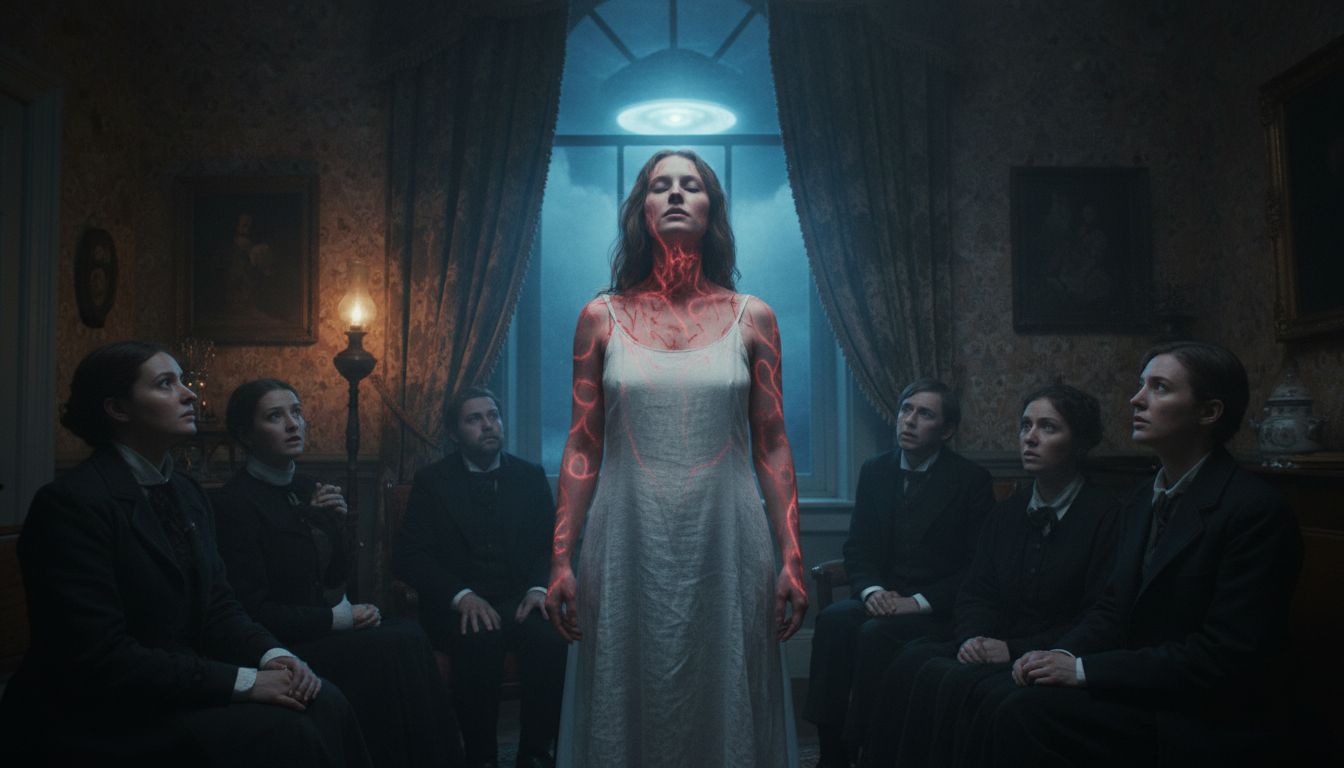
A cluster of 19th‑century séance reports describes a striking, though little‑known, manifestation known as “spirit blush‑writing.” Mediums claimed that letters and symbols would appear on their skin, ranging from faint pink smudges to vivid red script that seemed to materialise and fade in real time. The phenomenon was documented in an 1872 correspondence between Thomas Blyton, secretary of the Dalston Society of Enquirers into Spiritualism, and Dr W. B. Carpenter, a respected physician and president of the British Association. Modern psychologist Kenneth Batcheldor has cited the episodes when arguing that psychokinetic (PK) abilities can be taught and amplified in group settings, offering practical tips for experimental replication.
Historical Background
The Dalston Society, founded in 1865 at 74 Navarino Road, London, quickly became a hub for leading spiritualists and affluent businessmen. Its most celebrated member was teenage medium Florence Cook, whose public séances attracted both fervent believers and skeptical scientists. Blythe’s 1872 letter to Dr Carpenter referenced claims from the séance rooms of Herne and Williams, two prominent mediums who had previously demonstrated materialisations such as spirit hands and apports. Instead of these traditional effects, sitters reported “names appear and disappear upon their flesh like a blush,” a description that startled even seasoned investigators of the era.
The Blush‑Writing Reports
Blyton’s letter, reproduced in The Spiritualist periodical, detailed several instances: a medium’s forearm would develop a faint pink script spelling “E‑M‑I‑L‑Y,” while another’s full torso turned scarlet with the word “SALVATION.” Witnesses described the markings as “self‑generated, unassisted, and resistant to washing.” Dr Carpenter initially dismissed the accounts, accusing Blyton of “presumed falsehood” and suggesting that “the trick by which the red letters were produced was discovered by the enquiries of our medical friends.” However, the physician later conceded that the phenomenon merited observation, noting that an American medium named Mr Foster had exhibited a similar effect a few years earlier, prompting medical curiosity.
Medical and Scientific Response
Contemporary physicians approached the blush‑writing claims with a mixture of skepticism and intrigue. Dr Carpenter, a Fellow of the Royal Society, warned against premature conclusions, emphasizing the need for controlled observation. Nonetheless, several medical journals of the 1870s recorded the incidents, describing the markings as “erythematous imprints of unknown origin” and recommending dermatological examination. No conclusive physiological mechanism was identified; hypotheses ranged from allergic reactions to concealed pigments to psychosomatic somatic expression. The lack of reproducible evidence meant the phenomenon remained on the fringe of scientific discourse, cited more often in spiritualist literature than in peer‑reviewed research.
Contemporary Interpretation
In the 21st century, psychologist Kenneth Batcheldor has revisited historical accounts like blush‑writing to support his broader theory that psychokinetic abilities can be cultivated through group practice. Batcheldor argues that collective expectation and focused intention create a feedback loop that may manifest as subtle physiological changes, including skin discoloration. He offers three practical guidelines for experimental groups: (1) establish a consistent ritual to prime participants’ mental state, (2) employ blind observers to record any skin markings without prior knowledge of the intended symbols, and (3) use high‑resolution imaging to document transient changes. While Batcheldor acknowledges the speculative nature of his proposals, he stresses that rigorous methodology could differentiate genuine PK effects from psychosomatic or environmental artifacts.
Significance and Outlook
The spirit blush‑writing episodes illustrate the complex interplay between Victorian spiritualism, emerging medical science, and the enduring human fascination with unseen forces. Though historical documentation is limited and modern replication remains elusive, the reports provide a rare glimpse into how 19th‑century practitioners interpreted anomalous bodily phenomena. As contemporary researchers like Batcheldor seek to apply systematic experimental designs to such claims, the legacy of the Dalston Society’s “blush‑writing” may yet inform broader investigations into the boundaries of consciousness, suggestion, and the human body’s capacity for unexpected expression.