
Overview
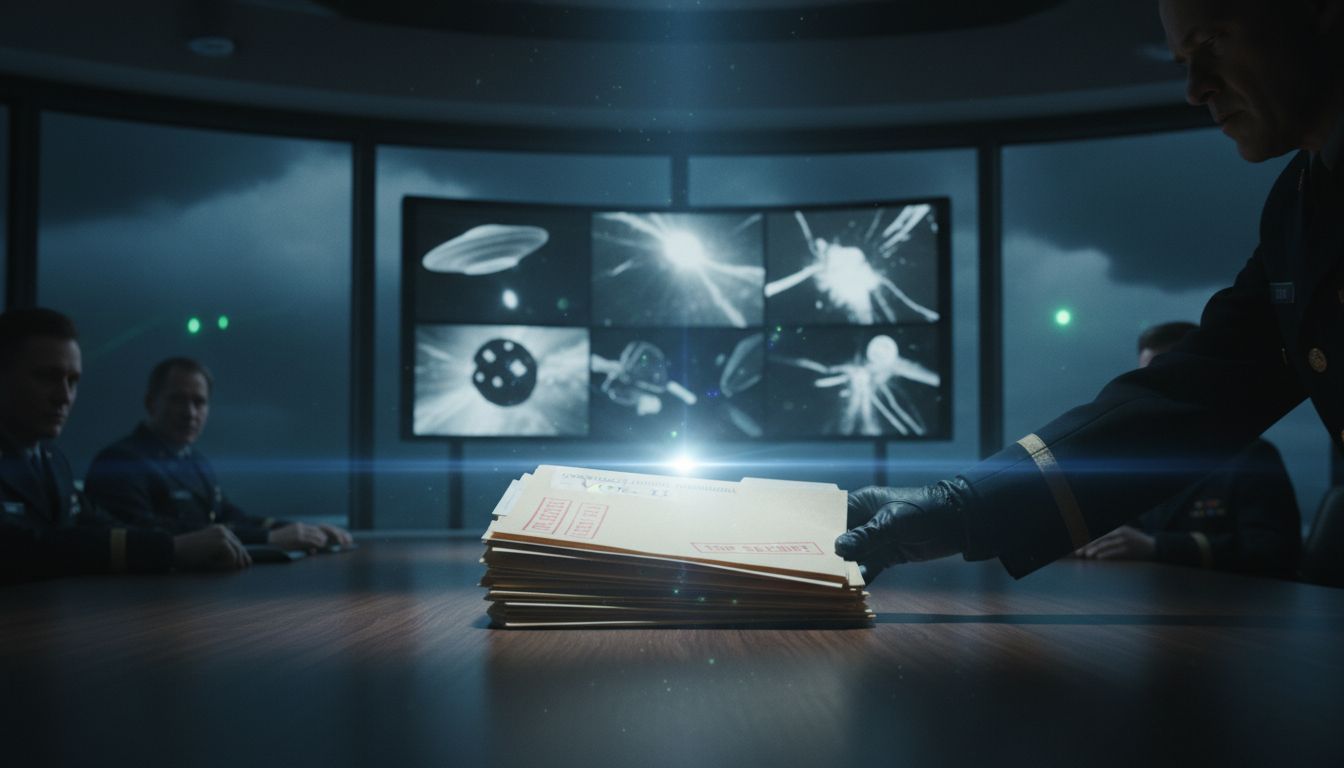
The U.S. Department of Defense has declassified a second collection of previously secret documents that detail civilian reports of unidentified aerial phenomena (UAP). The files, posted by the Detroit Free Press on Instagram, add to the growing public record of sightings that include “unexplained green orbs, disc‑shaped objects and fireballs.” While the documents do not confirm the nature of the objects, they provide a rare glimpse into the raw observations submitted by members of the public and, in some cases, military personnel.
What the New Files Reveal
The newly released batch consists of dozens of incident reports spanning the past two decades. Most entries are short statements from witnesses describing visual characteristics—such as a bright green sphere hovering silently for several minutes, a metallic disc that executed rapid, non‑linear maneuvers, or a fireball that streaked across the sky before vanishing without a trace. Several reports note that the objects emitted no conventional aircraft sounds and appeared to defy known aerodynamic limits. The documents also include limited radar data and, in a few instances, low‑resolution video frames, though the quality is insufficient for definitive analysis.
Historical Context
This release follows the Department’s initial 2020 declassification of 144 UAP sightings, a move that culminated in the Office of the Director of National Intelligence’s preliminary assessment on UAPs in June 2021. That assessment acknowledged that most cases remained “unexplained” and called for a standardized reporting process. In 2023, the All‑Domain Anomaly Resolution Office (AARO) was created to centralize data from the Air Force, Navy, and other agencies. The current batch represents the second major wave of public disclosures, signaling the Defense Department’s continued effort to increase transparency while still protecting sensitive sources and methods.
Reactions from Officials and Experts
Defense officials have framed the release as part of an “ongoing commitment to openness” about phenomena that could impact national security. A spokesperson for the Pentagon said, “These records are provided to the public to foster informed discussion while we continue rigorous scientific evaluation.” Congressional members, including Rep. Tim Burchett (R‑TN), who chairs the House Committee on Oversight’s subcommittee on national security, welcomed the step but urged faster action, stating, “Our constituents deserve timely answers about what may be flying over our skies.”
UFO researchers, such as Dr. Jacques Vallée of the Scientific Coalition for UAP Studies, cautioned against jumping to conclusions, emphasizing that anecdotal reports require corroboration through sensor data and expert analysis. Meanwhile, skeptics highlighted that many sightings could be attributed to known atmospheric or astronomical events, noting the prevalence of green aurorae and meteor activity that can be misidentified.
Implications and Next Steps
The declassification adds valuable data points for the AARO’s ongoing investigations, which aim to determine whether any of the observed phenomena pose a technological or security threat. Analysts will cross‑reference the civilian reports with military sensor logs, satellite observations, and intelligence intercepts. If patterns emerge—such as repeated sightings over specific geographic corridors—researchers may prioritize those areas for dedicated monitoring.
The public release also raises broader questions about information sharing between government agencies and civilian observers. Advocacy groups are calling for a formal, nationwide reporting platform that standardizes the collection of sighting details, echoing recommendations from the 2021 intelligence assessment. As the Defense Department continues to sift through the newly disclosed files, the balance between transparency and national‑security safeguards will remain a focal point of the ongoing UAP discourse.


