Overview
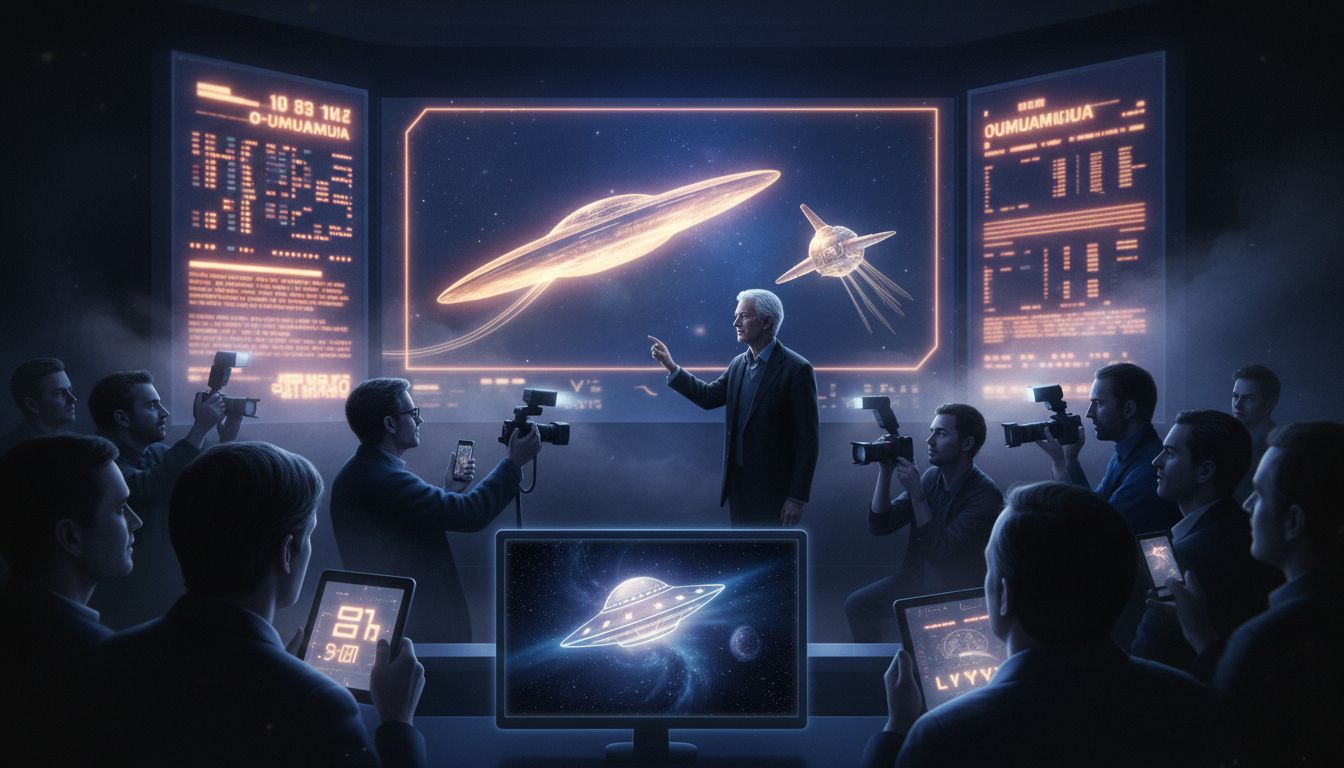
On 19 December 2025, the interstellar comet 3I/ATLAS made its closest approach to Earth, passing at a distance of roughly 270 million kilometres—about twice the Earth‑Sun separation. Discovered by the ATLAS (Asteroid Terrestrial-impact Last Alert System) survey on 1 July 2025, the object quickly entered both scientific and public discourse. Its unusual morphology—a tail that appeared to point toward the Sun rather than away—prompted a wave of speculation about its origin, age, and even the possibility of artificial design.
Scientific Findings
Observations from the Hubble Space Telescope placed the comet’s nucleus somewhere between 440 metres and 5.6 kilometres in diameter, a size range that would comfortably engulf downtown Toronto. NASA, the European Space Agency (ESA) and the China National Space Administration (CNSA) redirected spacecraft en route to Jupiter and orbiting Mars to capture low‑resolution images of the visitor. Spectroscopic data indicated a composition typical of icy bodies, while the anomalous tail orientation was later attributed to the interaction of solar radiation pressure with a highly porous, low‑density surface layer—a phenomenon that can occur in naturally occurring comets.
The encounter revived interest in the 2017 discovery of ‘Oumuamua, the first confirmed interstellar object. Harvard astrophysicist Avi Loeb and co‑author Harvard‑Smithsonian astronomer Omar Hernandez had argued that ‘Oumuamua’s non‑gravitational acceleration could be explained by an alien lightsail. Although the hypothesis sparked extensive media coverage, subsequent analysis by planetary scientists and the Breakthrough Listen project found no technosignature in radio or optical data. The consensus remains that ‘Oumuamua, like 3I/ATLAS, is best explained by natural processes.
Media Reaction and Public Interest
The arrival of 3I/ATLAS coincided with a period of heightened geopolitical tension and a temporary NASA communications shutdown in October–November 2025. In that vacuum, social‑media platforms amplified speculative narratives. High‑profile personalities—including Kim Kardashian, who tweeted at NASA for clarification, and Elon Musk, who discussed the comet on The Joe Rogan Experience—helped transform a scientific event into a cultural moment. TikTok explainers and YouTube panels dissected the “alien technology” angle, often conflating peer‑reviewed hypotheses with fringe speculation.
Despite the buzz, the scientific community maintained a measured tone. Press releases from NASA and ESA emphasized the object’s natural characteristics, and the International Astronomical Union issued a statement reminding the public that extraordinary claims require extraordinary evidence—a standard not met by the available data.
Ongoing Research and Technosignature Searches
Following the 3I/ATLAS flyby, the Breakthrough Listen collaboration conducted a targeted search for narrow‑band radio emissions and laser pulses, employing the Green Bank Telescope and the Allen Telescope Array. The campaign, spanning two weeks after the comet’s perihelion, reported no detections consistent with artificial signaling. Parallel efforts by the SETI Institute and independent university groups also yielded null results. These findings reinforce the view that, while interstellar objects offer valuable insight into the composition of other planetary systems, they do not presently provide evidence of extraterrestrial technology.
Outlook
Interstellar comets like ‘Oumuamua and 3I/ATLAS continue to challenge astronomers, offering rare samples of material formed around other stars. The scientific response—rigorous observation, data sharing, and transparent analysis—demonstrates the field’s capacity to address sensational claims without compromising credibility. As survey capabilities improve, notably with the upcoming Vera C. Rubin Observatory, more interstellar visitors are expected, providing fresh opportunities to test theories of planetary formation and, perhaps, to refine the search for technosignatures. For now, the “beautiful uncertainty” of these wanderers remains a reminder that the cosmos still holds many secrets, but that the path to understanding lies in careful, evidence‑based inquiry.


