Overview
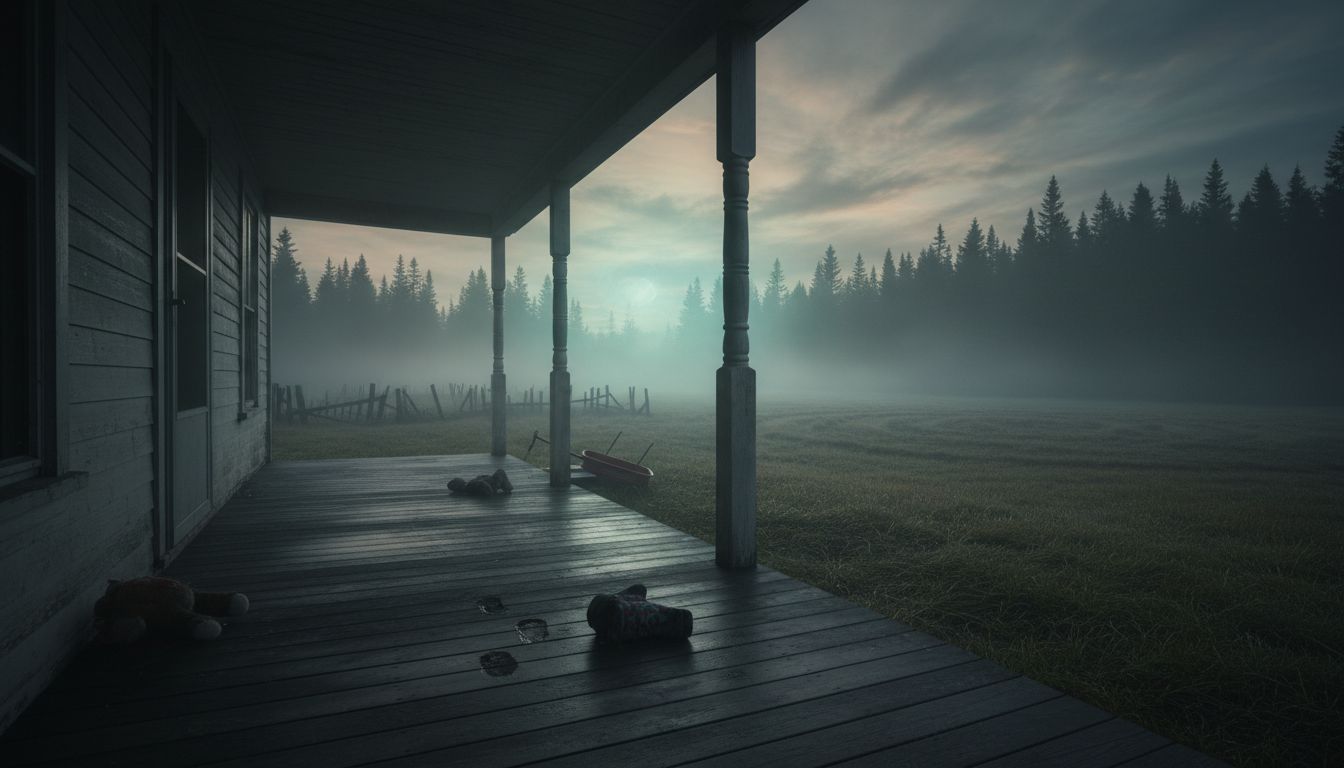
In early May 2025, six‑year‑old Lilly Sullivan and her four‑year‑old brother Jack vanished from their isolated home on Gairloch Road in Lansdowne Station, Nova Scotia. The children were last seen by their mother‑in‑law, Janie Mackenzie, when she stepped outside her motorhome and observed her daughter‑in‑law, pregnant with a second child, standing alone on the muddy driveway. Within minutes the mother‑in‑law called police to report that Lilly and Jack were missing. The case has since become one of the province’s most perplexing disappearances, with only a tiny bootprint and a fragment of Lilly’s blanket recovered as physical evidence.
Investigation
Nova Scotia Police Service (NSPS) opened a missing‑persons investigation on May 2, 2025. According to the police file, the children’s bedroom showed no sign of forced entry, and there were no footprints leading away from the house beyond the solitary bootprint found near the driveway’s edge. “We have no indication of abduction, assault, or foul play at the scene,” said Detective Michele Hart, the lead investigator, in a statement to the media on May 10. The lack of cell service in Lansdowne Station, confirmed by multiple telecom providers, hampered immediate communication and delayed the arrival of emergency responders by roughly thirty minutes.
The investigation also examined the possibility of a vehicle accident or a sudden medical emergency. However, the remote, marsh‑filled terrain surrounding the property makes a concealed accident unlikely. “The area is heavily wooded and boggy; a child could become trapped, but we would expect to find signs of disturbance—muddy footprints, broken branches, or a body in the water,” noted forensic analyst Dr. Alan Morrison. None of these indicators have been located.
Search Efforts
A coordinated search operation involving NSPS, the Royal Canadian Mounted Police, local volunteers, and a team of wilderness rescue specialists was launched within 24 hours. Over 150 volunteers combed the surrounding forest, bogs, and abandoned farm fields for days, using trained dogs, drones, and infrared cameras. “We’ve covered more than 30 kilometres of terrain, yet the only new clue remains that single bootprint and a strip of fabric that matches Lilly’s blanket,” said Chief Search Coordinator Rachel LeBlanc.
The search was hampered by the region’s unpredictable spring weather, with heavy rain turning trails into quagmires. Satellite connections, already unreliable in the area, failed intermittently, limiting real‑time coordination. Despite multiple sweeps in the summer and a renewed effort in early autumn, the search has not yielded additional evidence.
Community Impact
Lansdowne Station, a hamlet of fewer than 150 residents, has long been described as a place where “the anonymity of the place is what the few people who call it home appreciate.” The disappearance shattered that quiet routine. Residents recall the Sullivan family as “quiet, hardworking, and well‑liked,” according to neighbor Tom Rainey, who said, “We all knew the kids; they played in the yard, helped with chores. Their loss feels personal to everyone here.”
The community’s grief has manifested in vigils, a makeshift memorial at the driveway, and a fundraiser that has raised over CAD 30,000 for the family’s ongoing expenses. “We’re trying to keep hope alive, but each day without answers feels heavier,” said Belynda Gray, the children’s paternal grandmother, who has been flipping through photographs of Lilly and Jack since the disappearance.
Ongoing Questions
Nearly a year after the children vanished, the case remains open and unsolved. Police continue to review aerial imagery, interview locals, and re‑examine the bootprint for potential DNA or trace evidence. “We are not ruling out any scenario, and we will pursue any lead, no matter how small,” Detective Hart affirmed.
Experts in missing‑children cases caution that remote, sparsely populated areas present unique challenges. Dr. Morrison explains, “When a disappearance occurs in a setting with limited infrastructure, the window for effective intervention narrows dramatically. The longer the delay, the more the environment can obscure evidence.”
For now, the Sullivan family endures an agonizing uncertainty, and Lansdowne Station remains a community marked by a lingering mystery that defies easy explanation. The hope, as expressed by many volunteers, is that renewed attention and technological advances may eventually illuminate what happened to Lilly and Jack.
The Walrus continues to monitor the case and will update readers as new information emerges.