Early Life and Career
Douglas Scott Rogo (1935‑1990) emerged in the 1960s as one of the most prolific writers on the paranormal. After serving in the U.S. Navy, he earned a degree in journalism and began contributing to The American Weekly and The New York Times before turning his investigative instincts toward phenomena that mainstream science largely ignored. Over three decades, Rogo authored more than twenty books, ranging from “Phone Calls From the Dead” to “ESP: A Scientific Evaluation.” His work combined field interviews, archival research, and a willingness to test claims under controlled conditions, earning him both a devoted readership and criticism from skeptics.
Investigations and Publications
Rogo’s most notable projects involved documenting alleged cases of psychokinesis, remote viewing, and after‑life communications. He served on the editorial board of the Journal of Parapsychology and was a regular speaker at the Society for Psychical Research. In interviews, he emphasized a “balanced approach” that neither dismissed reports outright nor accepted them without evidence.” His books often featured first‑hand accounts from individuals claiming to have received messages from deceased relatives, as well as analyses of laboratory experiments conducted at institutions such as the Stanford Research Institute. While some scholars praised his thoroughness, others warned that his enthusiasm sometimes outpaced the empirical rigor required for scientific validation.
The 1990 Murder
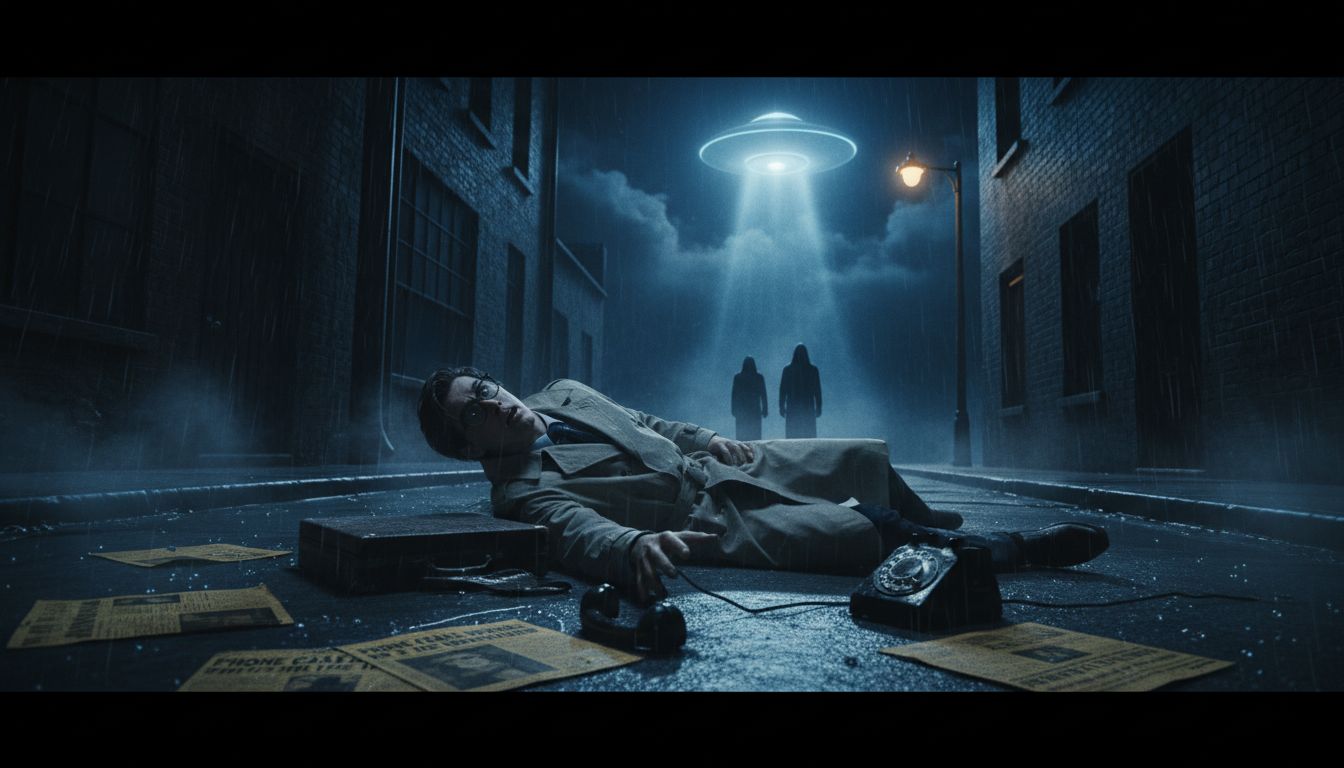
On the night of June 20, 1990, Rogo was found dead in the parking lot of his Manhattan apartment building, the victim of a single gunshot wound to the head. Police classified the case as a homicide, but early investigations yielded few leads. Friends described the scene as “uncharacteristically brutal” yet noted no signs of a struggle or robbery, fueling speculation that the killing might have been linked to his controversial research. The case quickly entered the annals of unsolved murders, with media outlets occasionally revisiting it in the context of “paranormal conspiracies,” despite a lack of concrete evidence tying any suspect to his work.
Breakthrough in the Case
Decades later, Jerry Clark—Rogo’s longtime collaborator and co‑author on several projects—provided a definitive update. In a 2024 interview with The History Forum, Clark disclosed that law enforcement had eventually identified a suspect, a local contract killer with a history of unrelated violent crimes. The individual was arrested in 1995, convicted of second‑degree murder in 1996, and served a 25‑year sentence before being released on parole in 2021. Clark stressed that “the motive had nothing to do with the paranormal; it was a personal dispute that escalated tragically.” He added that the conviction, though delayed, finally allowed Rogo’s family to obtain closure after more than three decades of uncertainty.
Legacy and Reflection
Rogo’s death, while a personal tragedy, also underscores the challenges faced by researchers operating at the fringe of mainstream science. His extensive bibliography continues to be cited in contemporary studies of anomalous experiences, and his methodological insistence on documentation remains a benchmark for serious paranormal inquiry. The resolution of his murder case, confirmed by a close associate, helps separate the man’s scholarly contributions from the sensational narratives that sometimes surround them. As the field of parapsychology evolves, Douglas Scott Rogo’s commitment to rigorous investigation endures as a reminder that curiosity, when coupled with disciplined research, can survive even the darkest of circumstances.