Overview
The 1953 Robertson Panel has long been cited by UFO researchers as a turning point in the United States’ handling of unidentified aerial phenomena (UAP). A new multi‑author study, UFOs and Government: A Historical Inquiry, argues that the panel marked the formalization of a systematic disinformation effort aimed at shaping public perception. The study’s authors trace a line from the panel’s recommendations to later government actions, suggesting that the intent was less about scientific clarification and more about controlling the narrative during a period of heightened Cold‑War anxiety.
The 1953 Robertson Panel
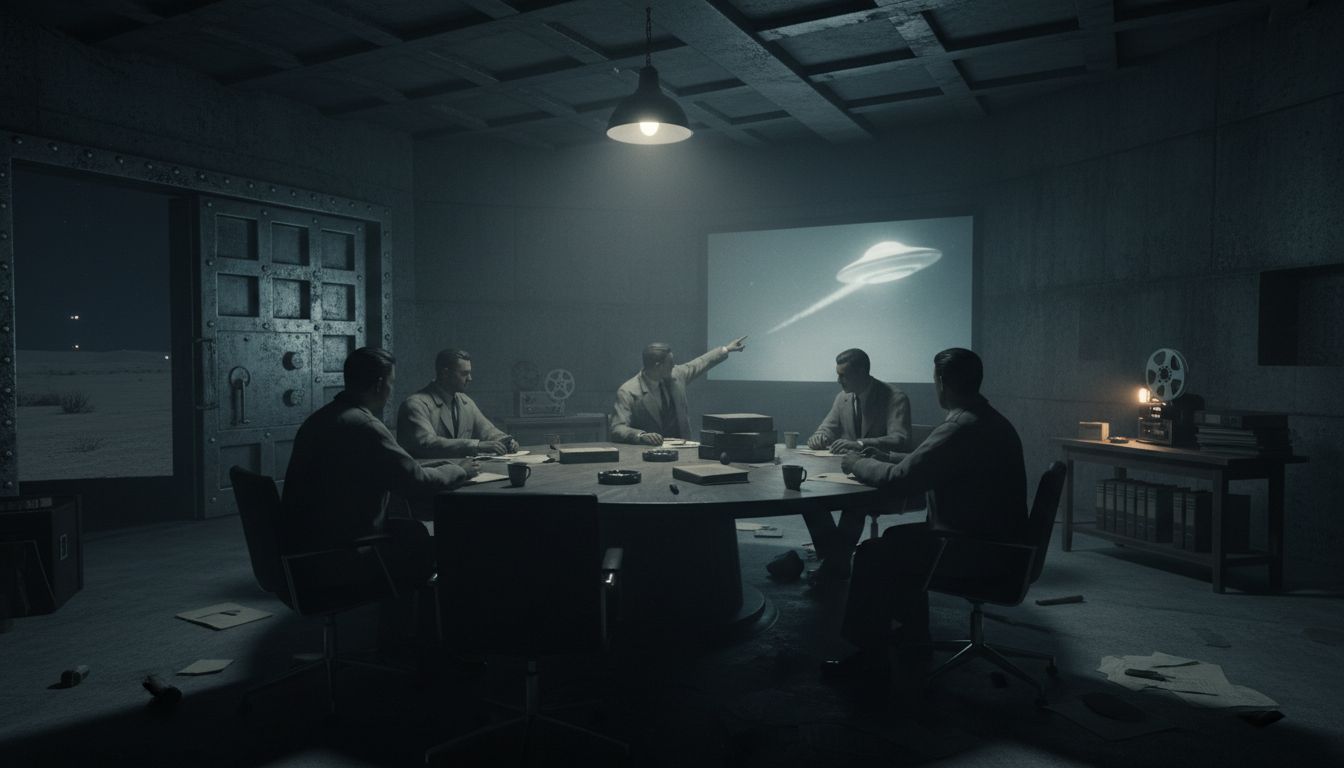
Convened by the Advanced Research Projects Agency (ARPA) and chaired by physicist Howard Percy Robertson, the panel assembled leading scientists, military officers, and intelligence officials to evaluate the “flying saucer” craze that had surged after Kenneth Arnold’s 1947 sighting and the infamous Roswell recovery claim. In a briefing to the Air Force, the panel concluded that the phenomenon “does not contain any pattern or purpose that we can relate to any conceivable threat to the United States,” a statement that was later used to justify public‑information campaigns that downplayed or dismissed sightings. The Historical Inquiry study notes that the panel’s final report recommended “the use of psychological operations to reduce public interest,” a recommendation that appears to have informed subsequent Air Force projects such as Project Blue Book and later, the 2020s establishment of the Unidentified Aerial Phenomena Task Force.
Global UFO Reports and Patterns
While the Robertson Panel focused on domestic concerns, the same decade saw a surge in international UFO incidents that echo the patterns identified in the U.S. case. In Italy during the early 1950s, several dozen alleged abductions were reported, most notably the “Milan Lights” episode of 1954, where witnesses described elongated, humanoid figures emerging from luminous craft. Across the Atlantic, the 1983 Welsh crash—often referred to as the “Rhosllanerchrugog incident”—involved a low‑altitude, metallic object that struck a farmhouse, leaving behind scorch marks and a brief, unexplained radio silence in local communications. Researchers argue that these cases share common elements: high‑altitude radar contacts, rapid‑response military interceptions, and a subsequent lack of official documentation, suggesting a global consistency in how authorities have managed anomalous sightings.
Scholarly Perspectives
Prominent ufologist Jacques Vallée has long warned against treating UFO reports as isolated curiosities. In a recent interview, Vallée emphasized that “the phenomenon exhibits a cultural feedback loop; the way governments respond influences the way the public reports, which in turn shapes policy.” The Historical Inquiry authors echo this view, citing declassified memos that reveal coordinated briefings to media outlets following the Robertson Panel, aimed at framing UFOs as “weather balloons” or “optical illusions.” The study’s interdisciplinary team—comprising historians, political scientists, and former intelligence officers—concludes that the disinformation strategy was not merely reactive but an integral component of Cold‑War information warfare.
Continuing Impact and Policy
Decades after the panel’s recommendations, the legacy of the 1953 meeting persists in contemporary policy debates. In 2023, the Department of Defense released a preliminary report acknowledging “unidentified aerial phenomena” and pledged greater transparency, yet critics note that the language mirrors the skeptical framing first articulated by the Robertson Panel. Advocacy groups, bolstered by the Historical Inquiry findings, are calling for an independent congressional inquiry to assess whether past disinformation campaigns have impeded scientific investigation. As the U.S. and allied nations grapple with renewed sightings and advanced sensor data, the question remains whether the government’s historic approach—rooted in the 1953 meeting—will evolve or continue to shape public discourse on the unknown.