Overview
A seemingly unremarkable radio broadcast from 1953 has resurfaced as a cornerstone in one of the more enigmatic UFO cases of the 20th century, according to a recent exploration by researcher Bill Chalker. The incident, long forgotten by its primary witness, only returned to consciousness a decade later, setting off a chain of events that would blur the lines between UFO encounters and paranormal phenomena. This case, later termed the “haunted abductee” incident by Chalker, now stands as a compelling example of how memory, media, and mystery can intersect in the study of unexplained aerial phenomena.
The Disappearance and the Light
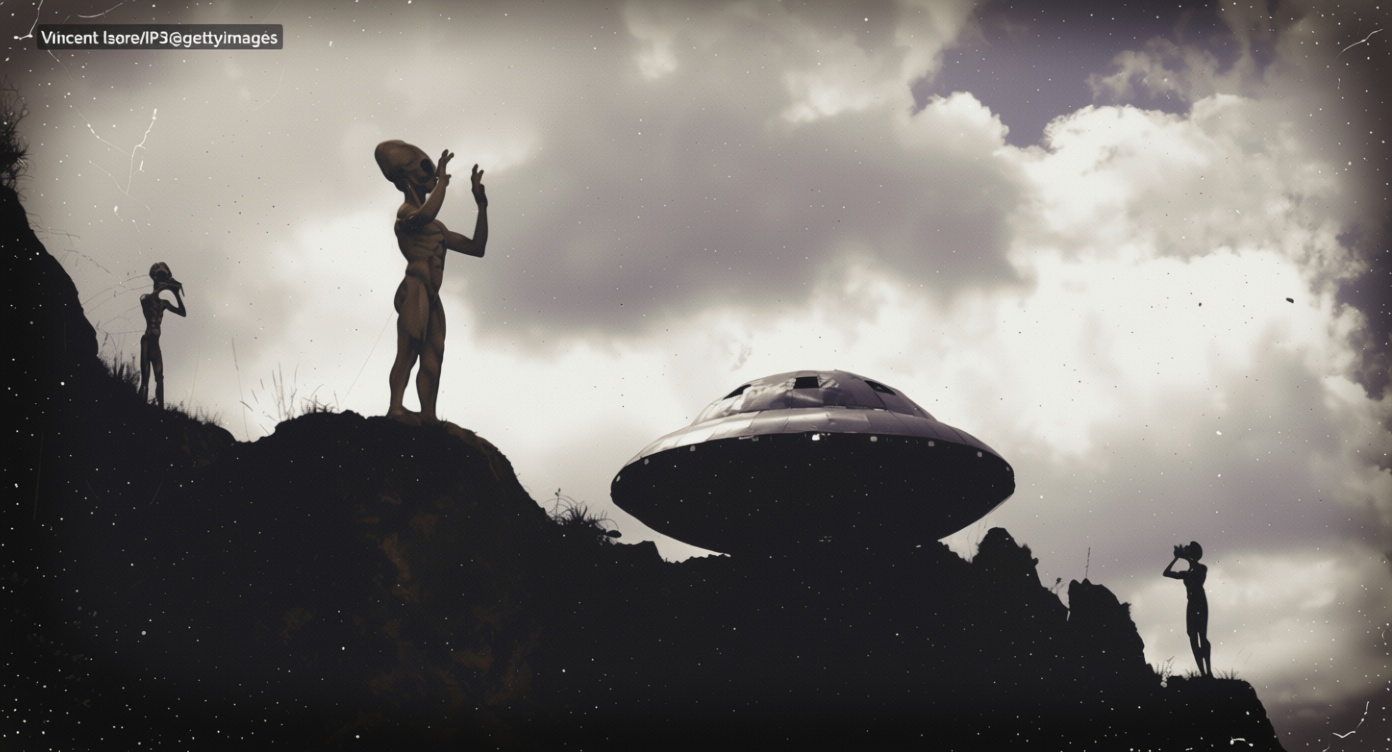
The story begins on a scorching July day, recounted in vivid detail by the unidentified witness. A group of children and their teacher, Mr. Rice, were playing near a quarry when, inexplicably, everyone but the narrator vanished. The silence and heat pressed in, leaving the lone boy disoriented and irritated. As he sought shade and tried to shake off the oddity, a sudden, unnatural light pierced through the trees, immobilizing him and heralding the approach of several small, silent figures.
This early episode, marked by both physical and psychological strangeness, would be buried in the witness’s memory for years—only resurfacing after the accidental discovery of an old radio recording. Such memory lapses are not uncommon in reported UFO encounters, suggesting a deeper, possibly psychological, dimension to these experiences.
The Radio Show and Its Unusual Callers
Decades later, David A. Hazel, a researcher, stumbled upon a tape of a live call-in radio show broadcast on Toronto’s CFGM station, hosted by Ron Knight. During the show, local UFO investigator Henry McKay fielded live sightings from listeners. One caller, Joseph Scott, described seeing “an object that looks like a Christmas tree and triangle with blue, red, white lights flashing like a psychedelic meat club,” a sighting corroborated by two other witnesses on site.
The program took an even stranger turn when a second, unidentified caller joined in, insisting on speaking directly with McKay. This individual, later given the pseudonym “Jerry Armstrong,” challenged McKay’s expertise and questioned his intellect regarding the field of ufology. Despite Knight’s attempts to manage the discussion and obtain Armstrong’s real identity, the caller remained evasive, citing “a very strong reason” for withholding his background. The conversation, while tense, ultimately ended on polite terms, but left listeners with a sense of unresolved intrigue.
Paranormal Overtones and Contested Narratives
Bill Chalker’s framing of the case as a “haunted abductee” scenario is key to its enduring fascination. The Armstrong incident is not simply a claim of a UFO sighting, but rather an early example of a case where UFO and psychic phenomena appear intertwined—a theme that would dominate later abductee literature. Chalker’s analysis reflects the ongoing debate within UFO circles about the boundaries between conventional explanations (such as misidentified aircraft or psychological events) and more unconventional or parapsychological interpretations.
The video also draws connections to the infamous Roswell incident, highlighting how political bias and editorial control, such as that seen in the Roswell Wikipedia entry, can shape public perception and scholarly debate. This underscores the deep divide between mainstream and alternative researchers, as well as the challenges of documenting anomalous events in a way that satisfies both skeptics and believers.
Legacy and Ongoing Mysteries
The Armstrong case, as reconstructed from radio archives and witness testimony, remains an open question in the annals of UFO research. It serves as a reminder of how seemingly mundane events—a lost memory, a late-night radio call—can catalyze decades of speculation and investigation. As Chalker's work suggests, the intersection of memory, media, and mystery continues to fuel both controversy and curiosity in the ongoing quest to understand unexplained aerial phenomena.